Margins
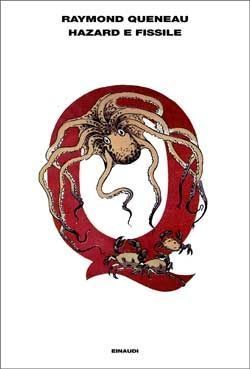
Hazard e Fissile book cover
Hazard e Fissile
2009
First Published
3.15
Average Rating
64
Number of Pages
L’ultimo romanzo pubblicato di Raymond Queneau è anche il suo primo. “Hazard e Fissile” – ritrovato inedito tra le carte dello scrittore e pubblicato in Francia nel 2009 – è la prima incursione del giovane Queneau, allora surrealista praticante e aspirante biografo di Fantômas, nel campo della narrativa. Hazzard e Fissile sono alla ricerca delle fantomatiche «piovre ammaestrate della Guinea», mentre nel buio il cattivissimo Funesto Agrippa tesse le sue esoteriche trame e la bella Jacqueline recita il ruolo della femme fatale innocente e svampita. Ma ci sono anche il banchiere Minoff e il pugile nero Jim Jim «che aveva l’accento alsaziano», e il clàun triste Calvario Mitaine. Sopra tutti e tutto, però, c’è la scrittura frizzante e funambolica del Queneau piú scanzonato, quello di “Troppo buoni con le donne” e dei “Téxticules” e ci sono anche, in embrione, molti degli artifici e dei meccanismi che lo scrittore metterà in opera nei capolavori della maturità. Un “feuilletton” in miniatura, novanta pagine di puro wit dove il linguaggio si diverte come un topo nel formaggio.

Avg Rating
3.15
Number of Ratings
59
5 STARS
8%
4 STARS
31%
3 STARS
34%
2 STARS
22%
1 STARS
5%
goodreads

Author

Raymond Queneau
Raymond Queneau
Author · 27 books

Novelist, poet, and critic Raymond Queneau, was born in Le Havre in 1903, and went to Paris when he was 17. For some time he joined André Breton's Surrealist group, but after only a brief stint he dissociated himself. Now, seeing Queneau's work in retrospect, it seems inevitable. The Surrealists tried to achieve a sort of pure expression from the unconscious, without mediation of the author's self-aware "persona." Queneau's texts, on the contrary, are quite deliberate products of the author's conscious mind, of his memory, and his intentionality. Although Queneau's novels give an impression of enormous spontaneity, they were in fact painstakingly conceived in every small detail. He even once remarked that he simply could not leave to hazard the task of determining the number of chapters of a book. Talking about his first novel, Le Chiendent (usually translated as The Bark Tree), he pointed out that it had 91 sections, because 91 was the sum of the first 13 numbers, and also the product of two numbers he was particularly fond of: 7 and 13.

548 Market St PMB 65688, San Francisco California 94104-5401 USA
© 2025 Paratext Inc. All rights reserved