1989
First Published
4.07
Average Rating
344
Number of Pages
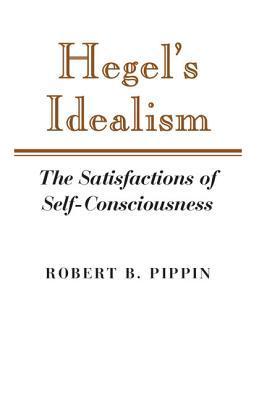
This is the most important book on Hegel to have appeared in the past ten years. The author offers a completely new interpretation of Hegel's idealism that focuses on Hegel's appropriation and development of Kant's theoretical project. Hegel is presented neither as a pre-critical metaphysician nor as a social theorist, but as a critical philosopher whose disagreements with Kant, especially on the issue of intuitions, enrich the idealist arguments against empiricism, realism, and naturalism. In the face of the dismissal of absolute idealism as either unintelligible or implausible, Pippin explains and defends an original account of the philosophical basis for Hegel's claims about the historical and social nature of self-consciousness and of knowledge itself.

Avg Rating
4.07
Number of Ratings
71
5 STARS
34%
4 STARS
45%
3 STARS
18%
2 STARS
0%
1 STARS
3%
goodreads
Author

Robert B. Pippin
Author · 13 books
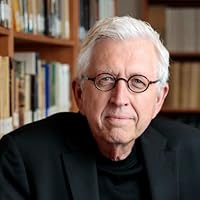
Robert B. Pippin is the Evelyn Stefansson Nef Distinguished Service Professor in the Committee on Social Thought, the Department of Philosophy, and the College at the University of Chicago. He is the author of several books and articles on German idealism and later German philosophy, including Kant's Theory of Form; Hegel's Idealism: The Satisfactions of Self-Consciousness; Modernism as a Philosophical Problem; and Idealism as Modernism: Hegelian Variations. In addition he has published on issues in political philosophy, theories of self-consciousness, the nature of conceptual change, and the problem of freedom. He also wrote a book about literature and philosophy: Henry James and Modern Moral Life. A collection of his essays in German, Die Verwirklichung der Freiheit, appeared in 2005, as did The Persistence of Subjectivity: On the Kantian Aftermath, and his book on Nietzsche, Nietzsche, moraliste français: La conception nietzschéenne d'une psychologie philosophique, appeared in 2006. Fatalism in American Film Noir: Some Cinematic Philosophy appeared in 2012. He was twice an Alexander von Humboldt fellow, is a winner of the Mellon Distinguished Achievement Award in the Humanities, and was recently a fellow at the Wissenschaftskolleg zu Berlin. He is a fellow of the American Academy of Arts and Sciences and is a member of the American Philosophical Society. He is also a member of the German National Academy of Arts and Sciences.