


Margins
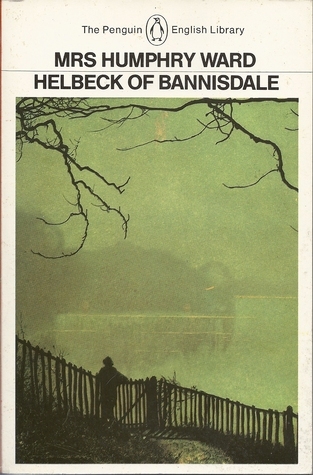
Helbeck of Bannisdale book cover
Helbeck of Bannisdale
1898
First Published
3.72
Average Rating
374
Number of Pages

Written in 1898, Helbeck of Bannisdale has as its theme ‘the love between man and woman’ which must inevitably and tragically clash with their personal believes. Reflecting the religious preoccupations of the period, Mrs Ward takes for her herione, as Charlotte Brontë did in Villette, a young woman whose Catholic lover requires her to accept the role his traditions impose upon women, but like Lucy Snowe, Laura Fountain insist on claiming the freedom of thought, speech and action which she believes to be her right. Intellectually and emotionally rejecting his religious beliefs, Laura, with her ‘most surprising gift of happiness’, is nevertheless drawn to the aloof Alan Helbeck. Yet even their life-enhancing love for each other cannot prevent the coming tragedy. In her impressive characterization, delicacy of touch and acuteness of observation, Mary Ward justifiably earns her comparison the George Eliot and Charlotte Brontë: but it is her insight into the human heart and her subtle treatment of love and conflict that make this work a classic.
Avg Rating
3.72
Number of Ratings
57
5 STARS
28%
4 STARS
33%
3 STARS
25%
2 STARS
11%
1 STARS
4%
goodreads

Author

Mrs. Humphry Ward
Mrs. Humphry Ward
Author · 13 books
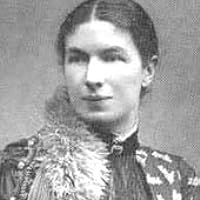
Mary Augusta Ward CBE (nee Arnold) was a British novelist who wrote under her married name as Mrs. Humphry Ward. Mary Augusta Arnold was born in Hobart, Tasmania, Australia, into a prominent intellectual family of writers and educationalists. Mary was the daughter of Tom Arnold, a professor of literature, and Julia Sorrell. Her uncle was the poet Matthew Arnold and her grandfather Thomas Arnold, the famous headmaster of Rugby School. Her sister Julia married Leonard Huxley, the son of Thomas Huxley, and their sons were Julian and Aldous Huxley. The Arnolds and the Huxleys were an important influence on British intellectual life.Mary's father Tom Arnold was appointed inspector of schools in Van Diemen's Land (now Tasmania) and commenced his role on 15 January 1850. Tom Arnold was received into the Roman Catholic Church on 12 January 1856, which made him so unpopular in his job (and with his wife) that he resigned and left for England with his family in July 1856. Mary Arnold had her fifth birthday the month before they left, and had no further connection with Tasmania. Tom Arnold was ratified as chair of English literature at the contemplated Catholic university, Dublin, after some delay. Mary Augusta Ward died in London, England, and was interred at Aldbury in Hertfordshire, near her beloved country home Stocks.
548 Market St PMB 65688, San Francisco California 94104-5401 USA
© 2025 Paratext Inc. All rights reserved