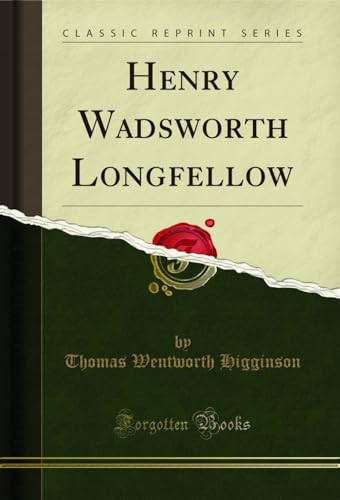
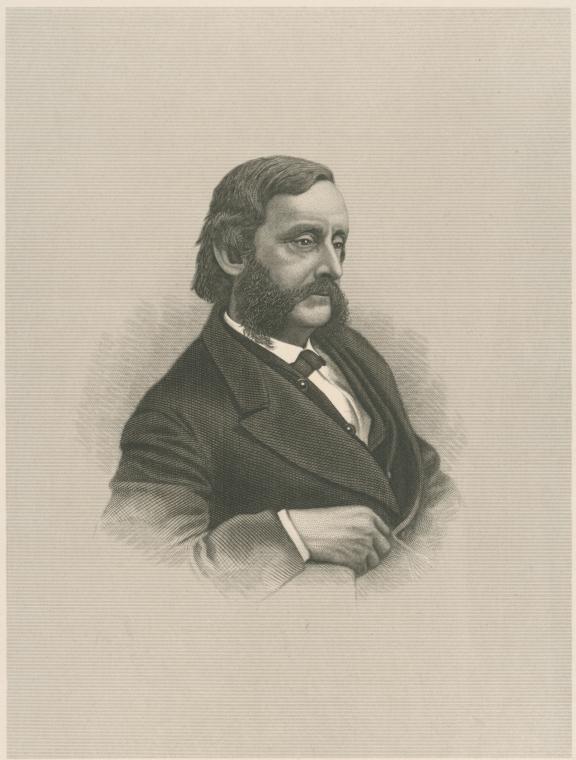
Thomas Wentworth Higginson (December 22, 1823 - May 9, 1911) was an American Unitarian minister, author, abolitionist, and soldier. He was active in the American Abolitionism movement during the 1840s and 1850s, identifying himself with disunion and militant abolitionism. He was a member of the Secret Six who supported John Brown. During the Civil War, he served as colonel of the 1st South Carolina Volunteers, the first federally authorized black regiment, from 1862-1864. Following the war, Higginson devoted much of the rest of his life to fighting for the rights of freed slaves, women and other disfranchised peoples. Higginson was born in Cambridge, Massachusetts on December 22, 1823. He was a descendant of Francis Higginson, a Puritan minister and emigrant to the colony of Massachusetts Bay. His father, Stephen Higginson (born Salem, Massachusetts, November 20, 1770; died Cambridge, Massachusetts, February 20, 1834), was a merchant and philanthropist in Boston and steward of Harvard University from 1818 until 1834. His grandfather, also named Stephen Higginson, was a member of the Continental Congress. He was a distant cousin of Henry Lee Higginson, founder of the Boston Symphony Orchestra, a great grandson of his grandfather.[1] A third great grand father was New Hampshire Lieutenant-Governor John Wentworth.