Margins
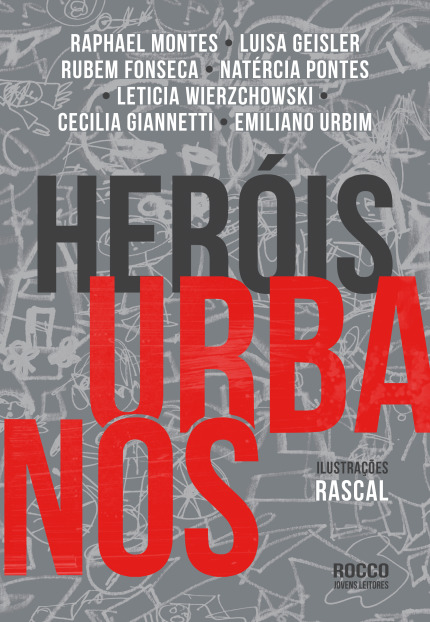
Heróis urbanos book cover
Heróis urbanos
1900
First Published
3.48
Average Rating
184
Number of Pages
Reunindo jovens e veteranos da ficção brasileira – Raphael Montes, Luisa Geisler, Rubem Fonseca, Natércia Pontes, Leticia Wierzchowski, Cecilia Giannetti e Emiliano Urbim –, a coletânea de contos para jovens “Heróis Urbanos” desconstrói o arquétipo do herói presente na cultura pop, com uma galeria de personagens cheios de complexidade e contradições saídos do cotidiano urbano. Desprovidos de poderes especiais, os protagonistas dessas histórias narradas em linguagem crua vagam anônimos pelas metrópoles contemporâneas, colocando em xeque o bom e o mau, o certo e o errado, o heroísmo e a vilania, como uma cabeleireira que lida com o surgimento de um serial killer numa favela, ou uma garota precoce que gerencia um negócio inusitado na escola.

Avg Rating
3.48
Number of Ratings
27
5 STARS
11%
4 STARS
33%
3 STARS
48%
2 STARS
7%
1 STARS
0%
goodreads

Authors

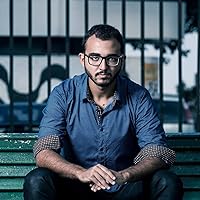
Raphael Montes
Raphael Montes
Author · 12 books

Lawyer and writer Raphael Montes was born in 1990, in Rio de Janeiro. His short stories have been published in several mystery anthologies, as well as magazines. At the age of 20, he impressed critics and public alike with Roulette (Editora Benvirá), an action-packed crime novel that was a finalist in the 2010 Benvirá Literature Prize, the Brazilian National Library’s 2012 Machado de Assis Prize and the prestigious 2013 São Paulo Literature Prize, and has sold over 15 thousand copies. At 24, he published his second novel, Perfect Days (Companhia das Letras), which has been phenomenally successful: translation rights have been sold to 13 territories (USA, Canada, England, France, Spain, Italy, Portugal, Germany, Turkey, Holland, Macau, Hong Kong and Taiwan) and it occupied bestseller lists for many weeks.

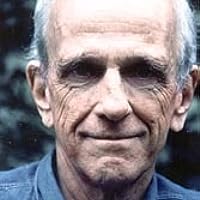
Rubem Fonseca
Rubem Fonseca
Author · 36 books

He is an important brazilian writer (novelist, short story writer and screenwriter), born in Juiz de Fora, state of Minas Gerais, but he lived for most of his life in Rio de Janeiro. In 1952, he started his career in the police and became a policy commissioner. Even though, he refuses to do interviews and is a very reclusive person, much like Thomas Pynchon, who is a personal friend of Fonseca. His writing is pretty dark and gritty, filled with violence and sexual content, and it usually happens in a very urban setting. He says that a writer should have the courage to show what most people are afraid to say. His work is considered groundbreaking in Brazilian literature, up until then mostly focused on rural settings and usually treating cities with a very biased point-of-view. Almost all Brazilian contemporary writers acknowledge Fonseca's importance, and quite a few authors from the newer generation, such as Patrícia Melo or Luis Ruffato, say that he's a huge influence. He started his career with short stories, and they are usually considered to be the best part of his work. His first popular novel was "A Grande Arte" (High Art), but "Agosto" is usually considered to be his best work. In 2003, he won the Camões Prize - considered to be the most important award in the Portuguese language - and the Juan Rulfo Prize - award for Latin American and the Caribbean literature.

548 Market St PMB 65688, San Francisco California 94104-5401 USA
© 2026 Paratext Inc. All rights reserved