



Margins
Hippocrates | Galen book cover
Hippocrates | Galen
1952
First Published
3.17
Average Rating
215
Number of Pages

Great Books of the Western World, Volume 10 of 54 The collection compiles history's greatest written works, from the ancient classics to more recent masterpieces, and contains 517 works from 130 of the most renowned minds throughout history. Collection ISBN: 0852291639 Nineteenth printing, 1971 Content of this volume: Hippocratic Writings *The Oath *On Ancient Medicine *On Airs, Waters, and Places *The Book of Prognostics *On Regimen in Acute Diseases *Of the Epidemics *On Injuries of the Head *On the Surgery *On Fractures *On the Articulations *Instruments of Reduction *Aphorisms *The Law *On Ulcers *On Fistulae *On Hemorrhoids *On the Sacred Disease Galen *On the Natural Faculties
Avg Rating
3.17
Number of Ratings
35
5 STARS
14%
4 STARS
17%
3 STARS
43%
2 STARS
23%
1 STARS
3%
goodreads

Authors

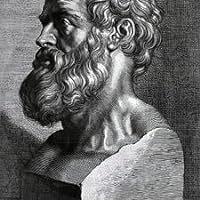
Hippocrates
Hippocrates
Author · 12 books

Hippocrates of Cos or Hippokrates of Kos (ca. 460 BC – ca. 370 BC) was an ancient Greek physician of the Age of Pericles, and was considered one of the most outstanding figures in the history of medicine. He is referred to as the "father of medicine" in recognition of his lasting contributions to the field as the founder of the Hippocratic School of medicine. This intellectual school revolutionized medicine in ancient Greece, establishing it as a discipline distinct from other fields that it had traditionally been associated with (notably theurgy and philosophy), thus making medicine a profession. However, the achievements of the writers of the Corpus, the practitioners of Hippocratic medicine, and the actions of Hippocrates himself are often commingled; thus very little is known about what Hippocrates actually thought, wrote, and did. Nevertheless, Hippocrates is commonly portrayed as the paragon of the ancient physician. In particular, he is credited with greatly advancing the systematic study of clinical medicine, summing up the medical knowledge of previous schools, and prescribing practices for physicians through the Hippocratic Oath and other works.

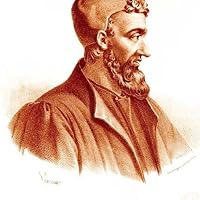
Galen
Galen
Author · 6 books

Aelius Galenus or Claudius Galenus (AD 129–c. 200/c. 216), better known as Galen of Pergamon (modern-day Bergama, Turkey), was a prominent Roman (of Greek ethnicity) physician, surgeon and philosopher. Arguably the most accomplished of all medical researchers of antiquity, Galen contributed greatly to the understanding of numerous scientific disciplines, including anatomy, physiology, pathology, pharmacology, and neurology, as well as philosophy and logic. The son of Aelius Nicon, a wealthy architect with scholarly interests, Galen received a comprehensive education that prepared him for a successful career as a physician and philosopher. He traveled extensively, exposing himself to a wide variety of medical theories and discoveries before settling in Rome, where he served prominent members of Roman society and eventually was given the position of personal physician to several emperors. Galen's understanding of anatomy and medicine was principally influenced by the then-current theory of humorism, as advanced by many ancient Greek physicians such as Hippocrates. His theories dominated and influenced Western medical science for more than 1,300 years. His anatomical reports, based mainly on dissection of monkeys, especially the Barbary Macaque, and pigs, remained uncontested until 1543, when printed descriptions and illustrations of human dissections were published in the seminal work De humani corporis fabrica by Andreas Vesalius where Galen's physiological theory was accommodated to these new observations. Galen's theory of the physiology of the circulatory system endured until 1628, when William Harvey published his treatise entitled De motu cordis, in which he established that blood circulates, with the heart acting as a pump. Medical students continued to study Galen's writings until well into the 19th century. Galen conducted many nerve ligation experiments that supported the theory, which is still accepted today, that the brain controls all the motions of the muscles by means of the cranial and peripheral nervous systems. Galen saw himself as both a physician and a philosopher, as he wrote in his treatise entitled That the Best Physician is also a Philosopher. Galen was very interested in the debate between the rationalist and empiricist medical sects, and his use of direct observation, dissection and vivisection represents a complex middle ground between the extremes of those two viewpoints. Many of his works have been preserved and/or translated from the original Greek, although many were destroyed and some credited to him are believed to be spurious. Although there is some debate over the date of his death, he was no younger than seventy when he died.

548 Market St PMB 65688, San Francisco California 94104-5401 USA
© 2026 Paratext Inc. All rights reserved