Margins
Historias de cine book cover
Historias de cine
2017
First Published
4.33
Average Rating
380
Number of Pages

Los relatos de los grandes maestros de la literatura que dieron origen a las más inolvidables obras del séptimo arte. Los pájaros, Rashomon, Le plaisir, Cuentos de la luna pálida, La paura, Ellos y ellas, El hombre que mató a Liberty Valance, Una historia inmortal, Une femme douce, Dublineses, Testigo de cargo El distinto poder evocador de las palabras y de las imágenes es lo que diferencia principalmente los discursos compositivos de la literatura y del cine. Aunque, por su naturaleza concreta, el séptimo arte es incapaz de servirse de la capacidad sugestiva de la escritura, la verdadera ficción cinematográfica siempre encuentra la manera de metamorfosearse y, mediante un lenguaje propio, erigirse como una creación totalmente nueva y autónoma, sin por ello renunciar al espíritu de la narración original. Esta exquisita antología recoge once relatos—precedidos por una breve introducción sobre el texto y su adaptación fílmica—de algunos de los escritores más destacados de la literatura universal, que además de poseer en sí mismos una calidad ejemplar, dieron lugar a indiscutibles obras maestras de la gran pantalla.

Avg Rating
4.33
Number of Ratings
6
5 STARS
50%
4 STARS
33%
3 STARS
17%
2 STARS
0%
1 STARS
0%
goodreads

Authors

Daphne du Maurier
Daphne du Maurier
Author · 76 books

Daphne du Maurier was born on 13 May 1907 at 24 Cumberland Terrace, Regent's Park, London, the middle of three daughters of prominent actor-manager Sir Gerald du Maurier and actress Muriel, née Beaumont. In many ways her life resembles a fairy tale. Born into a family with a rich artistic and historical background, her paternal grandfather was author and Punch cartoonist George du Maurier, who created the character of Svengali in the 1894 novel Trilby, and her mother was a maternal niece of journalist, author, and lecturer Comyns Beaumont. She and her sisters were indulged as a children and grew up enjoying enormous freedom from financial and parental restraint. Her elder sister, Angela du Maurier, also became a writer, and her younger sister Jeanne was a painter. She spent her youth sailing boats, travelling on the Continent with friends, and writing stories. Her family connections helped her establish her literary career, and she published some of her early work in Beaumont's Bystander magazine. A prestigious publishing house accepted her first novel when she was in her early twenties, and its publication brought her not only fame but the attentions of a handsome soldier, Major (later Lieutenant-General Sir) Frederick Browning, whom she married. She continued writing under her maiden name, and her subsequent novels became bestsellers, earning her enormous wealth and fame. Many have been successfully adapted into films, including the novels Rebecca, Frenchman's Creek, My Cousin Rachel, and Jamaica Inn, and the short stories The Birds and Don't Look Now/Not After Midnight. While Alfred Hitchcock's films based upon her novels proceeded to make her one of the best-known authors in the world, she enjoyed the life of a fairy princess in a mansion in Cornwall called Menabilly, which served as the model for Manderley in Rebecca. Daphne du Maurier was obsessed with the past. She intensively researched the lives of Francis and Anthony Bacon, the history of Cornwall, the Regency period, and nineteenth-century France and England. Above all, however, she was obsessed with her own family history, which she chronicled in Gerald: A Portrait, a biography of her father; The du Mauriers, a study of her family which focused on her grandfather, George du Maurier, the novelist and illustrator for Punch; The Glassblowers, a novel based upon the lives of her du Maurier ancestors; and Growing Pains, an autobiography that ignores nearly 50 years of her life in favour of the joyful and more romantic period of her youth. Daphne du Maurier can best be understood in terms of her remarkable and paradoxical family, the ghosts which haunted her life and fiction. While contemporary writers were dealing critically with such subjects as the war, alienation, religion, poverty, Marxism, psychology and art, and experimenting with new techniques such as the stream of consciousness, du Maurier produced 'old-fashioned' novels with straightforward narratives that appealed to a popular audience's love of fantasy, adventure, sexuality and mystery. At an early age, she recognised that her readership was comprised principally of women, and she cultivated their loyal following through several decades by embodying their desires and dreams in her novels and short stories. In some of her novels, however, she went beyond the technique of the formulaic romance to achieve a powerful psychological realism reflecting her intense feelings about her father, and to a lesser degree, her mother. This vision, which underlies Julius, Rebecca and The Parasites, is that of an author overwhelmed by the memory of her father's commanding presence. In Julius and The Parasites, for example, she introduces the image of a domineering but deadly father and the daring subject of incest. In Rebecca, on the other hand, du Maurier fuses psychological realism with a sophisticated version of the Cinderella story. The nameless heroine has

Ueda Akinari
Ueda Akinari
Author · 8 books
Ueda Akinari or Ueda Shūsei (上田 秋成) was a Japanese author, scholar and waka poet, and a prominent literary figure in 18th century Japan. He was an early writer in the yomihon genre and his two masterpieces, Ugetsu Monogatari ("Tales of Rain and the Moon") and Harusame Monogatari ("Tales of Spring Rain"), are central to the canon of Japanese literature.
Ryūnosuke Akutagawa
Ryūnosuke Akutagawa
Author · 86 books

Akutagawa Ryūnosuke (芥川 龍之介) was one of the first prewar Japanese writers to achieve a wide foreign readership, partly because of his technical virtuosity, partly because his work seemed to represent imaginative fiction as opposed to the mundane accounts of the I-novelists of the time, partly because of his brilliant joining of traditional material to a modern sensibility, and partly because of film director Kurosawa Akira's masterful adaptation of two of his short stories for the screen. Akutagawa was born in the Kyōbashi district Tokyo as the eldest son of a dairy operator named Shinbara Toshizō and his wife Fuku. He was named "Ryūnosuke" ("Dragon Offshoot") because he was born in the Year of the Dragon, in the Month of the Dragon, on the Day of the Dragon, and at the Hour of the Dragon (8 a.m.). Seven months after Akutagawa's birth, his mother went insane and he was adopted by her older brother, taking the Akutagawa family name. Despite the shadow this experience cast over Akutagawa's life, he benefited from the traditional literary atmosphere of his uncle's home, located in what had been the "downtown" section of Edo. At school Akutagawa was an outstanding student, excelling in the Chinese classics. He entered the First High School in 1910, striking up relationships with such classmates as Kikuchi Kan, Kume Masao, Yamamoto Yūzō, and Tsuchiya Bunmei. Immersing himself in Western literature, he increasingly came to look for meaning in art rather than in life. In 1913, he entered Tokyo Imperial University, majoring in English literature. The next year, Akutagawa and his former high school friends revived the journal Shinshichō (New Currents of Thought), publishing translations of William Butler Yeats and Anatole France along with original works of their own. Akutagawa published the story Rashōmon in the magazine Teikoku bungaku (Imperial Literature) in 1915. The story, which went largely unnoticed, grew out of the egoism Akutagawa confronted after experiencing disappointment in love. The same year, Akutagawa started going to the meetings held every Thursday at the house of Natsume Sōseki, and thereafter considered himself Sōseki's disciple. The lapsed Shinshichō was revived yet again in 1916, and Sōseki lavished praise on Akutagawa's story Hana (The Nose) when it appeared in the first issue of that magazine. After graduating from Tokyo University, Akutagawa earned a reputation as a highly skilled stylist whose stories reinterpreted classical works and historical incidents from a distinctly modern standpoint. His overriding themes became the ugliness of human egoism and the value of art, themes that received expression in a number of brilliant, tightly organized short stories conventionally categorized as Edo-mono (stories set in the Edo period), ōchō-mono (stories set in the Heian period), Kirishitan-mono (stories dealing with premodern Christians in Japan), and kaika-mono (stories of the early Meiji period). The Edo-mono include Gesaku zanmai (A Life Devoted to Gesaku, 1917) and Kareno-shō (Gleanings from a Withered Field, 1918); the ōchō-mono are perhaps best represented by Jigoku hen (Hell Screen, 1918); the Kirishitan-mono include Hokōnin no shi (The Death of a Christian, 1918), and kaika-mono include Butōkai(The Ball, 1920). Akutagawa married Tsukamoto Fumiko in 1918 and the following year left his post as English instructor at the naval academy in Yokosuka, becoming an employee of the Mainichi Shinbun. This period was a productive one, as has already been noted, and the success of stories like Mikan (Mandarin Oranges, 1919) and Aki (Autumn, 1920) prompted him to turn his attention increasingly to modern materials. This, along with the introspection occasioned by growing health and nervous problems, resulted in a series of autobiographically-based stories known as Yasukichi-mono, after the name of the main character. Works such as Daidōji Shinsuke no hansei(The Early Life of

Dorothy M. Johnson
Author · 11 books

Dorothy Marie Johnson (December 19, 1905–November 11, 1984) was an American author best known for her Western fiction. https://en.wikipedia.org/wiki/Dorothy...

Isak Dinesen
Isak Dinesen
Author · 27 books

Pseudonym used by the Danish author Karen Blixen. Baroness Karen von Blixen-Finecke (Danish: [kʰɑːɑn ˈb̥leɡ̊sn̩]; 17 April 1885 – 7 September 1962), born Karen Christentze Dinesen, was a Danish author, also known by the pen name Isak Dinesen, who wrote works in Danish, French and English. She also at times used the pen names Tania Blixen, Osceola, and Pierre Andrézel. Blixen is best known for Out of Africa, an account of her life while living in Kenya, and for one of her stories, Babette's Feast, both of which have been adapted into Academy Award-winning motion pictures. She is also noted for her Seven Gothic Tales, particularly in Denmark. (wikipedia)

Stefan Zweig
Stefan Zweig
Author · 230 books

Stefan Zweig was one of the world's most famous writers during the 1920s and 1930s, especially in the U.S., South America, and Europe. He produced novels, plays, biographies, and journalist pieces. Among his most famous works are Beware of Pity, Letter from an Unknown Woman, and Mary, Queen of Scotland and the Isles. He and his second wife committed suicide in 1942. Zweig studied in Austria, France, and Germany before settling in Salzburg in 1913. In 1934, driven into exile by the Nazis, he emigrated to England and then, in 1940, to Brazil by way of New York. Finding only growing loneliness and disillusionment in their new surroundings, he and his second wife committed suicide. Zweig's interest in psychology and the teachings of Sigmund Freud led to his most characteristic work, the subtle portrayal of character. Zweig's essays include studies of Honoré de Balzac, Charles Dickens, and Fyodor Dostoevsky (Drei Meister, 1920; Three Masters) and of Friedrich Hölderlin, Heinrich von Kleist, and Friedrich Nietzsche (Der Kampf mit dem Dämon, 1925; Master Builders). He achieved popularity with Sternstunden der Menschheit (1928; The Tide of Fortune), five historical portraits in miniature. He wrote full-scale, intuitive rather than objective, biographies of the French statesman Joseph Fouché (1929), Mary Stuart (1935), and others. His stories include those in Verwirrung der Gefühle (1925; Conflicts). He also wrote a psychological novel, Ungeduld des Herzens (1938; Beware of Pity), and translated works of Charles Baudelaire, Paul Verlaine, and Emile Verhaeren. Most recently, his works provided the inspiration for 2014 film The Grand Budapest Hotel.

Fyodor Dostoevsky
Fyodor Dostoevsky
Author · 278 books

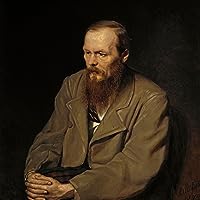
Fyodor Mikhailovich Dostoevsky was a Russian novelist, short story writer, essayist, and journalist. His literary works explore human psychology in the troubled political, social, and spiritual atmospheres of 19th-century Russia, and engage with a variety of philosophical and religious themes. His most acclaimed novels include Crime and Punishment (1866), The Idiot (1869), Demons (1872), and The Brothers Karamazov (1880). Many literary critics rate him as one of the greatest novelists in all of world literature, as multiple of his works are considered highly influential masterpieces. His 1864 novella Notes from Underground is considered to be one of the first works of existentialist literature. As such, he is also looked upon as a philosopher and theologian as well. (Russian: Фёдор Михайлович Достоевский) (see also Fiodor Dostoïevski)

Guy de Maupassant
Guy de Maupassant
Author · 292 books
Henri René Albert Guy de Maupassant was a popular 19th-century French writer. He is one of the fathers of the modern short story. A protege of Flaubert, Maupassant's short stories are characterized by their economy of style and their efficient effortless dénouement. He also wrote six short novels. A number of his stories often denote the futility of war and the innocent civilians who get crushed in it - many are set during the Franco-Prussian War of the 1870s.
Agatha Christie
Agatha Christie
Author · 741 books

Agatha Christie is the top-selling author of all time, with a legacy spanning 66 crime novels, 14 plays, and six romance novels under a pseudonym. Her works have sold over two billion copies globally, translated into at least 103 languages, making her the most translated author. She introduced the world to iconic characters Hercule Poirot and Miss Jane Marple, and wrote *The Mousetrap*, the record-holding longest-running play in modern theater. The youngest in the Miller family, her experience as a nurse during WWI and later roles in pharmacies during both World Wars deeply influenced her mystery novels, often featuring poisons. Christie’s writing career launched in 1920 with *The Mysterious Affair at Styles*. Her life was as captivating as her fiction, notably her 1926 disappearance after her first husband’s affair became public, sparking a nationwide search. Christie's second marriage to archaeologist Max Mallowan enriched her life and work, with travels and homes like the Greenway Estate and Abney Hall providing settings for several novels. Her marriage to Mallowan lasted until her death in 1976. Christie's contributions to literature earned her the title Commander of the Order of the British Empire, solidifying her place in literary history.

548 Market St PMB 65688, San Francisco California 94104-5401 USA
© 2026 Paratext Inc. All rights reserved