Margins
Sign in
Margins
548 Market St PMB 65688, San Francisco California 94104-5401 USA
hello@margins.app
·
+1 (650) 223-5283
Privacy Policy
·
Terms of Use
© 2026 Paratext Inc. All rights reserved
Historical atlas of world mythology
Historical atlas of world mythology
Series · 7 books · 1988-2015
By
Joseph Campbell
Books in series
#1.1
Historical Atlas of World Mythology, Vol. 1
1988
Compares and contrasts the themes of myths and legends in different cultures around the world
#1.2
Historical Atlas of World Mythology 1
1988
Anthropological theory
#2.1
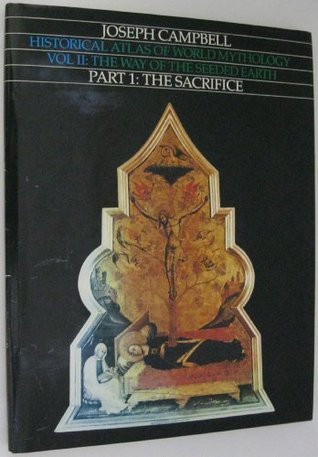
The Way of the Seeded Earth, Part 1
1988
The Way of the Seeded Earth Vol. 2, Pt. 1 : The Sacrifice (Historical Atlas of World Mythology Ser., Vol. II)
#2.3
Historical Atlas of World Mythology, Vol 2, Part 3
1988
Compares and contrasts the themes of myths and legends in different cultures around the world
#3
Historical Atlas World Myth, Vol 3
2006
#11
I.E – Living Peoples of the Equatorial Forest
2014
In the next installment in the release of the Historical Atlas of World Mythology—Digital Edition, Joseph Campbell explores the mythologies and cultures of the hunting-gathering tribes of the equatorial rain forests. Using the myths and rituals of tribes from Central Africa, the Indian Ocean and the Pacific as his lens, the eminent mythologist looks at the ways in which these tribes' myths are similar, the ways in which they are distinct, and what that tells us about the tribes themselves and the jungle environment in which they live. Joseph Campbell's multivolume Historical Atlas of World Mythology, his magnum opus, marked the culmination of his brilliant career as scholar, writer, teacher, and one of the foremost interpreters of our most sacred traditions. Campbell described his work as an attempt to tell humankind's "One Great Story" — our saga of spiritual awakening and the subsequent development of the many different mythological perspectives that have shaped us throughout time. His central theme is that our seemingly disparate spiritual traditions are neither discrete nor unique, but rather each is simply an "ethnic manifestation" of one or another of those "elemental ideals" that have forever transfixed the human psyche.
#12
I.D
2015
Enter the Way of the Animal PowersThe first law of life in the animal kingdom — "to eat, or to be eaten" — remained for Early Man, the Hunter, the first structuring law of his own address to the world. This was most emphatically so on those vast, northern animal plains of the Upper Paleolithic Great Hunt, onto which Neanderthal Man was apparently the first of humankind to venture. — Joseph Campbell In this installment in the release of he Historical Atlas of World Mythology—Digital Edition, Joseph Campbell explores the mythologies and cultures of the migratory hunting tribes from the days of the great ritual caves like Lascaux and Trois Frères to the modern-day !Kung of the Kalahari desert. Exploring both the beautiful artifacts and the amazing stories that these cultures have left behind, Campbell examines just what it means for humans to live in close relationship with both prey and predator. The animals become more than sustenance; for such tribes they become mythic neighbors who are part of a covenant where to eat and to be eaten is part of cycle, a sacred bond that gives spiritual shape to the daily struggle—human and animal—to survive. Joseph Campbell's multivolume Historical Atlas of World Mythology, his magnum opus, marked the culmination of his brilliant career as scholar, writer, teacher, and one of the foremost interpreters of our most sacred traditions. Campbell described his work as an attempt to tell humankind's "One Great Story" — our saga of spiritual awakening and the subsequent development of the many different mythological perspectives that have shaped us throughout time. His central theme is that our seemingly disparate spiritual traditions are neither discrete nor unique, but rather each is simply an "ethnic manifestation" of one or another of those "elemental ideals" that have forever transfixed the human psyche.
Author
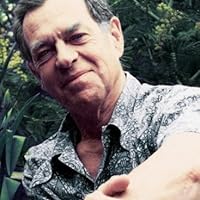
Joseph Campbell
Author · 69 books