


Feast your eyes on this luxurious hardback anthology of 18 classic tales of horror, presented with gilded page edges, patterned endpapers and a striking, gold-embossed cover design. The 18 terrifying tales in this collection are created by some of literature's finest writers of horror, including Edgar Allan Poe, William Hope Hodgson, and Bram Stoker. In stories filled with death, obsession, and paranoia, you will encounter hideous demons, abandoned castles, and gruesome discoveries. So settle down and prepare to be petrified. Tales include: • The Invisible Giant by Bram Stoker • The Tapestried Chamber by Sir Walter Scott • A Warning to the Curious by M.R. James • The Invisible Girl by Mary Shelley • A Dead Secret by Lafcadio Hearn • The Room in the Tower by E.F. Benson • The Whistling Room by William Hope Hodgson • The Horror at Red Hook by H.P. Lovecraft • The Ghost and the Bone-setter by J. Sheridan Le Fanu • and more...
Authors

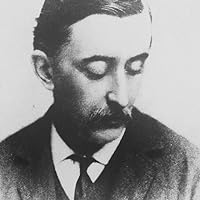
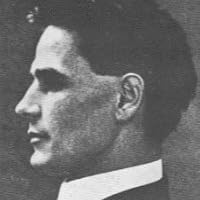
Greek-born American writer Lafcadio Hearn spent 15 years in Japan; people note his collections of stories and essays, including Kokoro (1896), under pen name Koizumi Yakumo. Rosa Cassimati (Ρόζα Αντωνίου Κασιμάτη in Greek), a Greek woman, bore Patrick Lafcadio Hearn (Πατρίκιος Λευκάδιος Χερν in Greek or 小泉八雲 in Japanese), a son, to Charles Hearn, an army doctor from Ireland. After making remarkable works in America as a journalist, he went to Japan in 1890 as a journey report writer of a magazine. He arrived in Yokohama, but because of a dissatisfaction with the contract, he quickly quit the job. He afterward moved to Matsué as an English teacher of Shimané prefectural middle school. In Matsué, he got acquainted with Nishida Sentarô, a colleague teacher and his lifelong friend, and married Koizumi Setsu, a daughter of a samurai. In 1891, he moved to Kumamoto and taught at the fifth high school for three years. Kanô Jigorô, the president of the school of that time, spread judo to the world. Hearn worked as a journalist in Kôbé and afterward in 1896 got Japanese citizenship and a new name, Koizumi Yakumo. He took this name from "Kojiki," a Japanese ancient myth, which roughly translates as "the place where the clouds are born". On that year, he moved to Tôkyô and began to teach at the Imperial University of Tôkyô. He got respect of students, many of whom made a remarkable literary career. In addition, he wrote much reports of Japan and published in America. So many people read his works as an introduction of Japan. He quit the Imperial University in 1903 and began to teach at Waseda University on the year next. Nevertheless, after only a half year, he died of angina pectoris.

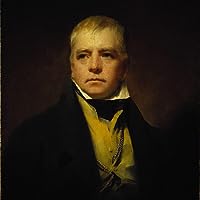
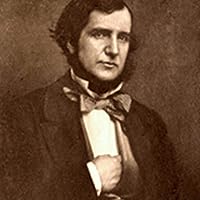
Librarian Note: There is more than one author in the GoodReads database with this name. British writer Sir Walter Scott popularized and refined a genre of ballads and historical novels; his works include Waverley (1814) and Ivanhoe (1819). Sir Walter Alva Scott created and called a series. Scott arranged the plots and characters so that the reader enters into the lives of great and ordinary persons, caught in violent, dramatic changes. Work of Scott shows the influence of the 18th century Enlightenment. He thought of every basically decent human, regardless of class, religion, politics, or ancestry. A major theme tolerates. They express his theory in the need for social progress that rejects not the traditions of the past. He first portrayed peasant characters sympathetically and realistically and equally justly portrayed merchants, soldiers, and even kings. In central themes, cultures conflict and oppose. Normans and Saxons warred. In The Talisman (1825), Christians and Muslims conflict. He deals with clashes between the new English and the old Scottish culture. Other great include Old Mortality (1816), The Heart of Midlothian (1819), and Saint Ronan's Well (1824). His series includes Rob Roy (1817), A Legend of Montrose (1819), and Quentin Durward (1823). Amiability, generosity, and modesty made Scott popular with his contemporaries. He also famously entertained on a grand scale at Abbotsford, his Scottish estate.


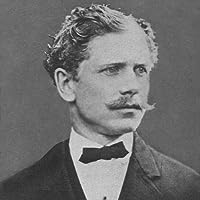
Ambrose Gwinnett Bierce (1842-1914) was an American editorialist, journalist, short story writer, fabulist and satirist. Today, he is best known for his short story, An Occurrence at Owl Creek Bridge and his satirical lexicon, The Devil's Dictionary. The sardonic view of human nature that informed his work – along with his vehemence as a critic, with his motto "nothing matters" – earned him the nickname "Bitter Bierce." Despite his reputation as a searing critic, however, Bierce was known to encourage younger writers, including poet George Sterling and fiction writer W. C. Morrow. Bierce employed a distinctive style of writing, especially in his stories. This style often embraces an abrupt beginning, dark imagery, vague references to time, limited descriptions, the theme of war, and impossible events. Bierce disappeared in December 1913 at the age of 71. He is believed to have traveled to Mexico to gain a firsthand perspective on that country's ongoing revolution. Despite an abundance of theories, Bierce's ultimate fate remains a mystery. He wrote in one of his final letters: "Good-bye. If you hear of my being stood up against a Mexican stone wall and shot to rags, please know that I think it is a pretty good way to depart this life. It beats old age, disease, or falling down the cellar stairs. To be a Gringo in Mexico—ah, that is euthanasia!"


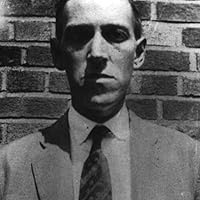
Howard Phillips Lovecraft, of Providence, Rhode Island, was an American author of horror, fantasy and science fiction. Lovecraft's major inspiration and invention was cosmic horror: life is incomprehensible to human minds and the universe is fundamentally alien. Those who genuinely reason, like his protagonists, gamble with sanity. Lovecraft has developed a cult following for his Cthulhu Mythos, a series of loosely interconnected fictions featuring a pantheon of human-nullifying entities, as well as the Necronomicon, a fictional grimoire of magical rites and forbidden lore. His works were deeply pessimistic and cynical, challenging the values of the Enlightenment, Romanticism and Christianity. Lovecraft's protagonists usually achieve the mirror-opposite of traditional gnosis and mysticism by momentarily glimpsing the horror of ultimate reality. Although Lovecraft's readership was limited during his life, his reputation has grown over the decades. He is now commonly regarded as one of the most influential horror writers of the 20th Century, exerting widespread and indirect influence, and frequently compared to Edgar Allan Poe. — Wikipedia

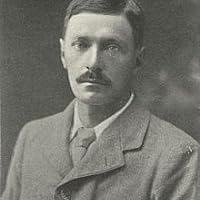
Edward Frederic "E. F." Benson was an English novelist, biographer, memoirist, archaeologist and short story writer. E. F. Benson was the younger brother of A.C. Benson, who wrote the words to "Land of Hope and Glory", Robert Hugh Benson, author of several novels and Roman Catholic apologetic works, and Margaret Benson, an author and amateur Egyptologist. Benson died during 1940 of throat cancer at the University College Hospital, London. He is buried in the cemetery at Rye, East Sussex. Last paragraph from Wikipedia