Margins
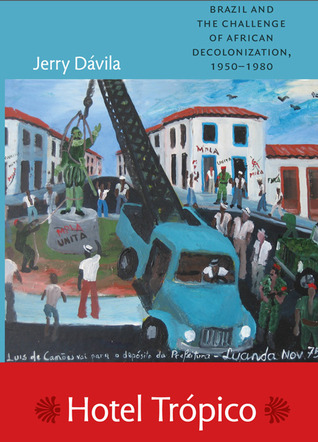
Hotel Tropico book cover
Hotel Tropico
Brazil and the Challenge of African Decolonization, 1950-1980
2010
First Published
4.25
Average Rating
328
Number of Pages
In the wake of African decolonization, Brazil attempted to forge connections with newly independent countries. In the early 1960s it launched an effort to establish diplomatic ties with Africa; in the 1970s it undertook trade campaigns to open African markets to Brazilian technology. Hotel Trópico reveals the perceptions, particularly regarding race, of the diplomats and intellectuals who traveled to Africa on Brazil’s behalf. Jerry Dávila analyzes how their actions were shaped by ideas of Brazil as an emerging world power, ready to expand its sphere of influence; of Africa as the natural place to assert that influence, given its historical slave-trade ties to Brazil; and of twentieth-century Brazil as a “racial democracy,” a uniquely harmonious mix of races and cultures. While the experiences of Brazilian policymakers and diplomats in Africa reflected the logic of racial democracy, they also exposed ruptures in this interpretation of Brazilian identity. Did Brazil share a “lusotropical” identity with Portugal and its African colonies, so that it was bound to support Portuguese colonialism at the expense of Brazil’s ties with African nations? Or was Brazil a country of “Africans of every color,” compelled to support decolonization in its role as a natural leader in the South Atlantic? Drawing on interviews with retired Brazilian diplomats and intellectuals, Dávila shows the Brazilian belief in racial democracy to be about not only race but also Portuguese ethnicity.

Avg Rating
4.25
Number of Ratings
24
5 STARS
50%
4 STARS
29%
3 STARS
17%
2 STARS
4%
1 STARS
0%
goodreads

Author

Jerry Dávila
Jerry Dávila
Author · 3 books

Jerry Dávila holds the Jorge Paulo Lemann Chair in Brazilian History at the University of Illinois. He currently serves as Executive Director of the Illinois Global Institute, established in 2019 to advance UIUC's work with international area studies centers and global themes. Dávila's research focuses on in the influence of racial thought in public policy in Brazil, as well as the state and social movements in the twentieth century. He is the author of several books including Hotel Trópico: Brazil and the Challenge of African Decolonization (Duke, 2010), recipient of the Latin Studies Association Brazil Section Book Prize; and of Diploma of Whiteness: Race and Social Policy in Brazil, 1917-1945 (Duke, 2003). In 2000, Dávila taught as a Fulbright Lecturer at the University of São Paulo, and in 2005, he held the Fulbright Distinguished Chair in American Studies at the Catholic University in Rio de Janeiro. He has also received the National Endowment for the Humanities Fellowship and the Fulbright-Hays Research Fellowship. He has written for publications including the New York Times and the Cairo Review about the experiences of military rule and redemocratization in Brazil, Argentina and Chile, the subject of his Dictatorship in South America (Wiley, 2013). Dávila is also a co-author of A History of World Societies (Macmillan, 2018). He is past-president of the Conference on Latin American History, the affiliate of the American Historical Association dedicated to the study of Latin America.

548 Market St PMB 65688, San Francisco California 94104-5401 USA
© 2025 Paratext Inc. All rights reserved