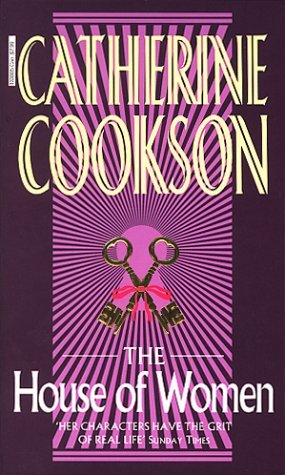
Emma funnell is the matriarch of Bramble House, built for her as a wedding gift. Now, in 1968, she is in her seventies, with the avowed intent of living to be a hundred. And, as she has always done, she continues to rule the roost, for apart from herself three generations of the Funnell family live in the house—all of them women. There is widowed daughter Victoria, increasingly a hypochondriac; granddaughter Lizzie, who bears the brunt of running the house, as well as enduring a loveless marriage to Len Hammond; and Peggy, her sixteen-year-old daughter, now trying to find the courage to drop the bombshell of her pregnancy into their midst. This explosive situation provides the springboard for a powerful and absorbing novel that explores, over a period of fifteen years, all that fate holds in store for the dwellers in THE HOUSE OF WOMEN. The story Reaches its climax with a frank confrontation of a major social issue of today.
Author

Catherine Cookson was born in Tyne Dock, the illegitimate daughter of a poverty-stricken woman, Kate, who Catherine believed was her older sister. Catherine began work in service but eventually moved south to Hastings, where she met and married Tom Cookson, a local grammar-school master. Although she was originally acclaimed as a regional writer - her novel The Round Tower won the Winifred Holtby Award for the best regional novel of 1968 - her readership quickly spread throughout the world, and her many best-selling novels established her as one of the most popular contemporary woman novelist. She received an OBE in 1985, was created a Dame of the British Empire in 1993, and was appointed an Honorary Fellow of St Hilda's College, Oxford, in 1997. For many years she lived near Newcastle upon Tyne.