Margins


548 Market St PMB 65688, San Francisco California 94104-5401 USA
© 2026 Paratext Inc. All rights reserved

Howard Gardner is the John H. and Elisabeth A. Hobbs Professor of Cognition and Education at the Harvard Graduate School of Education. He also holds positions as Adjunct Professor of Psychology at Harvard University and Senior Director of Harvard Project Zero. Among numerous honors, Gardner received a MacArthur Prize Fellowship in 1981. He has received honorary degrees from 26 colleges and universities, including institutions in Bulgaria, Chile, Greece, Ireland, Israel, Italy, and South Korea. In 2005 and again in 2008, he was selected by Foreign Policy and Prospect magazines as one of the 100 most influential public intellectuals in the world. The author of 25 books translated into 28 languages, and several hundred articles, Gardner is best known in educational circles for his theory of multiple intelligences, a critique of the notion that there exists but a single human intelligence that can be adequately assessed by standard psychometric instruments. During the past two decades, Gardner and colleagues at Project Zero have been involved in the design of performance-based assessments; education for understanding; the use of multiple intelligences to achieve more personalized curriculum, instruction, and pedagogy; and the quality of interdisciplinary efforts in education. Since the middle 1990s, in collaboration with psychologist Mihaly Csikszentmihalyi and William Damon, Gardner has directed the GoodWork Project—a study of work that is excellent, engaging, and ethical. More recently, with long time Project Zero colleagues Lynn Barendsen and Wendy Fischman, he has conducted reflection sessions designed to enhance the understanding and incidence of good work among young people. With Carrie James and other colleagues at Project Zero, he is also investigating the nature of trust in contemporary society and ethical dimensions entailed in the use of the new digital media. Among new research undertakings are a study of effective collaboration among non-profit institutions in education and a study of conceptions of quality, nationally and internationally, in the contemporary era. In 2008 he delivered a set of three lectures at New York's Museum of Modern Art on the topic "The True, The Beautiful, and The Good: econsiderations in a post-modern, digital era." from http://www.howardgardner.com/bio/bio....

A Memoir from the Creator of Multiple Intelligences Theory
2020

1973

1982

The Significance of Children's Drawings
1980

The Art and Science of Changing Our Own and Other Peoples Minds
2004

An Anatomy of Creativity as Seen Through the Lives of Freud, Einstein, Picasso, Stravinsky, Eliot, G
1993

What All Students Should Understand
1999

Portraits Of 4 Exceptional Individuals And An Examination Of Our Own Extraordinariness
1993

2005

The Theory Of Multiple Intelligences
1983

When Excellence and Ethics Meet
2001

Multiple Intelligences for the 21st Century
1999

An Anatomy Of Leadership
1995
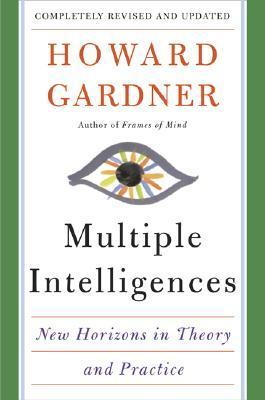
New Horizons in Theory and Practice
1993

How Leading Professionals Act (or Don't Act) Responsibly
2007

A Psychological Study of the Artistic Process
1973

The Selected Works of Howard Gardner
2005

A History of the Cognitive Revolution
1985

How Children Think And How Schools Should Teach
1991

1975

1989

Educating for the Virtues in the Age of Truthiness and Twitter
2010