Margins
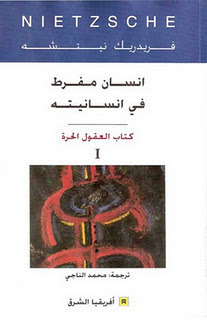
Human, All Too Human book cover
Human, All Too Human
A Book for Free Spirits, Part 1
1878
First Published
4.05
Average Rating
384
Number of Pages
Nietzsche's essay, Richard Wagner in Bayreuth, appeared in 1876, and his next publication was his present work, which was issued in 1878. A comparison of the books will show that the two years of meditation intervening had brought about a great change in Nietzsche's views, his style of expressing them, and the form in which they were cast. The Dionysian, overflowing with life, gives way to an Apollonian thinker with a touch of pessimism. The long essay form is abandoned, and instead we have a series of aphorisms, some tinged with melancholy, others with satire, several, especially towards the end, with Nietzschian wit at its best, and a few at the beginning so very abstruse as to require careful study. Since the Bayreuth festivals of 1876, Nietzsche had gradually come to see Wagner as he really was. The ideal musician that Nietzsche had pictured in his own mind turned out to be nothing more than a rather dilettante philosopher, an opportunistic decadent with a suspicious tendency towards Christianity. The young philosopher thereupon proceeded to shake off the influence which the musician had exercised upon him.

Avg Rating
4.05
Number of Ratings
792
5 STARS
39%
4 STARS
36%
3 STARS
18%
2 STARS
4%
1 STARS
3%
goodreads

Author

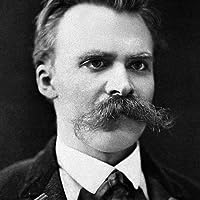
Friedrich Nietzsche
Friedrich Nietzsche
Author · 110 books

Friedrich Wilhelm Nietzsche (Ph.D., Philology, Leipzig University, 1869) was a German philosopher of the late 19th century who challenged the foundations of Christianity and traditional morality. He was interested in the enhancement of individual and cultural health, and believed in life, creativity, power, and the realities of the world we live in, rather than those situated in a world beyond. Central to his philosophy is the idea of “life-affirmation,” which involves a questioning of all doctrines that drain life's expansive energies, however socially prevalent those views might be. Often referred to as one of the first existentialist philosophers along with Søren Kierkegaard (1813–1855). From the Stanford Encyclopedia of Philosophy

548 Market St PMB 65688, San Francisco California 94104-5401 USA
© 2025 Paratext Inc. All rights reserved