Margins
Human Rights in History book cover 1
Human Rights in History book cover 2
Human Rights in History book cover 3
Human Rights in History
Series · 23
books · 2007-2020

Books in series

Human Rights Activism and the End of the Cold War book cover
#2

Human Rights Activism and the End of the Cold War

A Transnational History of the Helsinki Network

2007

Two of the most pressing questions facing international historians today are how and why the Cold War ended. Human Rights Activism and the End of the Cold War explores how, in the aftermath of the signing of the Helsinki Final Act in 1975, a transnational network of activists committed to human rights in the Soviet Union and Eastern Europe made the topic a central element in East-West diplomacy. As a result, human rights eventually became an important element of Cold War diplomacy and a central component of détente. Sarah B. Snyder demonstrates how this network influenced both Western and Eastern governments to pursue policies that fostered the rise of organized dissent in Eastern Europe, freedom of movement for East Germans, and improved human rights practices in the Soviet Union – all factors in the end of the Cold War.
René Cassin and Human Rights book cover
#3

René Cassin and Human Rights

From the Great War to the Universal Declaration

2013

Through the life of one extraordinary man, this biography reveals what the term human rights meant to the men and women who endured two world wars, and how this major political and intellectual movement ultimately inspired and enshrined the Universal Declaration of Human Rights. René Cassin was a man of his generation, committed to moving from war to peace through international law, and whose work won him the Nobel Peace Prize in 1968. His life crossed all the major events of the first seventy years of the twentieth century, and illustrates the hopes, aspirations, failures and achievements of an entire generation. It shows how today's human rights regimes emerged from the First World War as a pacifist response to that catastrophe and how, after 1945, human rights became a way to go beyond the dangers of absolute state sovereignty, helping to create today's European project.
Humanitarian Photography book cover
#4

Humanitarian Photography

A History

2015

For well over a century, humanitarians and their organizations have used photographic imagery and the latest media technologies to raise public awareness and funds to alleviate human suffering. This volume examines the historical evolution of what we today call “humanitarian photography” – the mobilization of photography in the service of humanitarian initiatives across state boundaries – and asks how we can account for the shift from the fitful and debated use of photography for humanitarian purposes in the late nineteenth century to our current situation in which photographers market themselves as “humanitarian photographers.” This book is the first to investigate how humanitarian photography emerged and how it operated in diverse political, institutional, and social contexts, bringing together more than a dozen scholars working on the history of humanitarianism, international organizations and nongovernmental organizations, and visual culture in Africa, Asia, the Middle East, Europe, and the United States. Based on original archival research and informed by current historical and theoretical approaches, the chapters explore the history of the mobilization of images and emotions in the globalization of humanitarian agendas up to the present.
The Emergence of Humanitarian Intervention book cover
#6

The Emergence of Humanitarian Intervention

Ideas and Practice from the Nineteenth Century to the Present

2015

How should the international community react when a government transgresses humanitarian norms and violates the human rights of its own nationals? And where does the responsibility lie to protect people from such acts of violation? In this profound study, Fabian Klose unites a team of leading scholars to investigate some of the most complex and controversial debates regarding the legitimacy of protecting humanitarian norms and universal human rights by non-violent and violent means. Charting the development of humanitarian intervention from its origins in the nineteenth century through to the present day, the book surveys the philosophical and legal rationales of enforcing humanitarian norms by military means, and how attitudes to military intervention on humanitarian grounds have changed over the course of three centuries. Drawing from a wide range of disciplines, the authors lend a fresh perspective to contemporary dilemmas using case studies from Europe, the United States, Africa and Asia.
The Right of Self-Determination of Peoples book cover
#7

The Right of Self-Determination of Peoples

The Domestication of an Illusion

2015

The right of self-determination of peoples holds out the promise of sovereign statehood for all peoples and a domination-free international order. But it also harbors the danger of state fragmentation that can threaten international stability if claims of self-determination lead to secessions. Covering both the late eighteenth- and early nineteenth-century independence movements in the Americas and the twentieth-century decolonization worldwide, this book examines the conceptual and political history of the right of self-determination of peoples. It addresses the political contexts in which the right and concept were formulated and the practices developed to restrain its potentially anarchic character, its inception in anti-colonialism, nationalism, and the labor movement, its instrumentalization at the end of the First World War in a formidable duel that Wilson lost to Lenin, its abuse by Hitler, the path after the Second World War to its recognition as a human right in 1966, and its continuing impact after decolonization.
Idealism beyond Borders book cover
#8

Idealism beyond Borders

The French Revolutionary Left and the Rise of Humanitarianism, 1954–1988

2015

This is a major new account of how modern humanitarian action was shaped by transformations in the French intellectual and political landscape from the 1950s to the 1980s. Eleanor Davey reveals how radical left third-worldism was displaced by the 'sans-frontiériste' movement as the dominant way of approaching suffering in what was then called the third world. Third-worldism regarded these regions as the motor for international revolution, but revolutionary zeal disintegrated as a number of its regimes took on violent and dictatorial forms. Instead, the radical humanitarianism of the 'sans-frontiériste' movement pioneered by Médecins Sans Frontières emerged as an alternative model for international aid. Covering a period of major international upheavals and domestic change in France, Davey demonstrates the importance of memories of the Second World War in political activism and humanitarian action, and underlines the powerful legacies of Cold War politics for international affairs since the fall of the Iron Curtain.
The Making of International Human Rights book cover
#9

The Making of International Human Rights

The 1960s, Decolonization, and the Reconstruction of Global Values

2016

This book fundamentally reinterprets the history of international human rights in the post-1945 era by documenting how pivotal the Global South was for their breakthrough. In stark contrast to other contemporary human rights historians who have focused almost exclusively on the 1940s and the 1970s - heavily privileging Western agency - Steven L. B. Jensen convincingly argues that it was in the 1960s that universal human rights had their breakthrough. This is a ground-breaking work that places race and religion at the center of these developments and focuses on a core group of states who led the human rights breakthrough, namely Jamaica, Liberia, Ghana, and the Philippines. They transformed the norms upon which the international community today is built. Their efforts in the 1960s post-colonial moment laid the foundation - in profound and surprising ways - for the so-called human rights revolution in the 1970s, when Western activists and states began to embrace human rights.
The Care of the Witness book cover
#11

The Care of the Witness

A Contemporary History of Testimony in Crises

2016

During the twentieth century, witnessing grew to be not just a widespread solution for coping with political atrocities but also an intricate problem. As the personal experience of victims, soldiers, and aid workers acquired unparalleled authority as a source of moral and political truth, the capacity to generate adequate testimonies based on this experience was repeatedly called into question. Michal Givoni's book follows the trail of the problems, torments, and crises that became commingled with witnessing to genocide, disaster, and war over the course of the twentieth century. By juxtaposing episodes of reflexive witnessing to the Great War, the Jewish Holocaust, and third world emergencies, The Care of the Witness explores the shifting roles and responsibilities of witnesses in history and the contribution that the troubles of witnessing made to the ethical consolidation of the witness as the leading figure of nongovernmental politics.
Religious Freedom and the Universal Declaration of Human Rights book cover
#12

Religious Freedom and the Universal Declaration of Human Rights

2017

Article 18 of the Universal Declaration of Human Rights (1948) is widely considered to be the most influential statement on religious freedom in human history. Religious Freedom and the Universal Declaration of Human Rights provides a groundbreaking account of its origins and developments, examining the background, key players, and outcomes of Article 18, and setting it within the broader discourse around international religious freedom in the 1940s. Taking issue with standard accounts that see the text of the Universal Declaration as humanity's joint response to the atrocities of World War II, it shows instead how central features of Article 18 were intimately connected to the political projects and visions of particular actors involved in the start-up of the UN Human Rights program. This will be essential reading for anyone grappling with the historical and contemporary meaning of human rights and religious freedom.
The Biafran War and Postcolonial Humanitarianism book cover
#13

The Biafran War and Postcolonial Humanitarianism

Spectacles of Suffering

2017

In the summer of 1968, audiences around the globe were shocked when newspapers and television stations confronted them with photographs of starving children in the secessionist Republic of Biafra. This global concern fundamentally changed how the Nigerian Civil War was an African civil war that had been fought for one year without fostering any substantial interest from international publics became 'Biafra' - the epitome of humanitarian crisis. Based on archival research from North America, Western Europe and Sub-Saharan Africa, this book is the first comprehensive study of the global history of the conflict. A major addition to the flourishing history of human rights and humanitarianism, it argues that the global moment 'Biafra' is closely linked to the ascendance of human rights, humanitarianism, and Holocaust memory in a postcolonial world. The conflict was a key episode for the re-structuring of the relations between the West and the Third World.
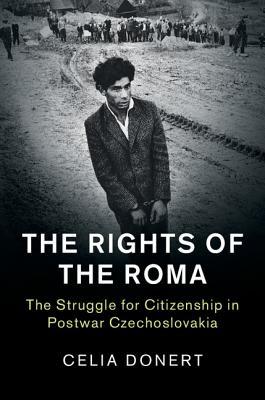
The Rights of the Roma book cover
#14

The Rights of the Roma

The Struggle for Citizenship in Postwar Czechoslovakia

2017

The Rights of the Roma writes Romani struggles for citizenship into the history of human rights in socialist and post-socialist Eastern Europe. If Roma have typically appeared in human rights narratives as victims, Celia Donert here draws on extensive original research in Czech and Slovak archives, sociological and ethnographic studies, and oral histories to foreground Romani activists as subjects and actors. Through a vivid social and political history of Roma in Czechoslovakia, she provides a new interpretation of the history of human rights by highlighting the role of Socialist regimes in constructing social citizenship in postwar Eastern Europe. The post-socialist human rights movement did not spring from the dissident movements of the 1970s, but rather emerged in response to the collapse of socialist citizenship after 1989. A timely study as Europe faces a major refugee crisis which raises questions about the historical roots of nationalist and xenophobic attitudes towards non-citizens.
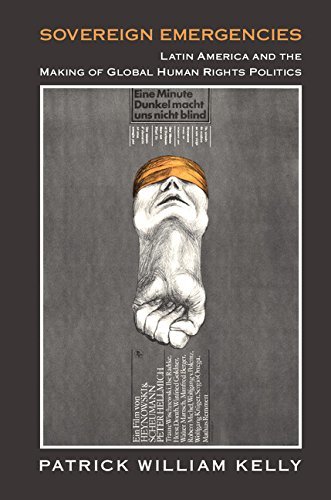
Sovereign Emergencies book cover
#15

Sovereign Emergencies

Latin America and the Making of Global Human Rights Politics

2018

The concern over rising state violence, above all in Latin America, triggered an unprecedented turn to a global politics of human rights in the 1970s. Patrick William Kelly argues that Latin America played the most pivotal role in these sweeping changes, for it was both the target of human rights advocacy and the site of a series of significant developments for regional and global human rights politics. Drawing on case studies of Brazil, Chile, and Argentina, Kelly examines the crystallization of new understandings of sovereignty and social activism based on individual human rights. Activists and politicians articulated a new practice of human rights that blurred the borders of the nation-state to endow an individual with a set of rights protected by international law. Yet the rights revolution came at a the Marxist critique of US imperialism and global capitalism was slowly supplanted by the minimalist plea not to be tortured.
Human Rights on Trial book cover
#16

Human Rights on Trial

A Genealogy of the Critique of Human Rights

2018

The first systematic analysis of the arguments made against human rights from the French Revolution to the present day. Through the writings of Edmund Burke, Jeremy Bentham, Auguste Comte, Louis de Bonald, Joseph de Maistre, Karl Marx, Carl Schmitt and Hannah Arendt, the authors explore the divergences and convergences between these 'classical' arguments against human rights and the contemporary critiques made both in Anglo-American and French political philosophy. Human Rights on Trial is unique in its marriage of history of ideas with normative theory, and its integration of British/North American and continental debates on human rights. It offers a powerful rebuttal of the dominant belief in a sharp division between human rights today and the rights of man proclaimed at the end of the eighteenth century. It also offers a strong framework for a democratic defence of human rights.
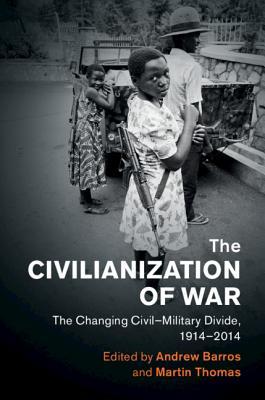
The Civilianization of War book cover
#17

The Civilianization of War

The Changing Civil–Military Divide, 1914–2014

2018

Distinguishing between civilians and combatants is a central aspect of modern conflicts. Yet such distinctions are rarely upheld in practice. The Civilianization of War offers new ways of understanding civilians' exposure to violence in war. Each chapter explores a particular approach to the political, legal, or cultural distinctions between civilians and combatants during twentieth-century and contemporary conflicts. The volume as a whole suggests that the distinction between combatants and non-combatants is dynamic and oft-times unpredictable, rather than fixed and reciprocally understood. Contributors offer new insights into why civilian targeting has become a strategy for some, and how in practice its avoidance can be so difficult to achieve. Several discuss distinct population groups that have been particularly exposed to wartime violence, including urban populations facing aerial bombing, child soldiers, captives, and victims of sexual violence. The book thus offers multiple perspectives on the civil–military divide within modern conflicts, an issue whose powerful contemporary resonance is all too apparent.
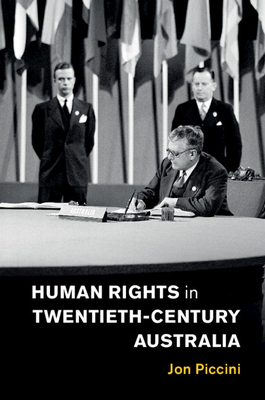
Human Rights in Twentieth-Century Australia book cover
#18

Human Rights in Twentieth-Century Australia

2019

This groundbreaking study understands the 'long history' of human rights in Australia from the moment of their supposed invention in the 1940s to official incorporation into the Australian government bureaucracy in the 1980s. To do so, a wide cast of individuals, institutions and publics from across the political spectrum are surveyed, who translated global ideas into local settings and made meaning of a foreign discourse to suit local concerns and predilections. These individuals created new organisations to spread the message of human rights or found older institutions amenable to their newfound concerns, adopting rights language with a mixture of enthusiasm and opportunism. Governments, on the other hand, engaged with or ignored human rights as its shifting meanings, international currency and domestic reception ebbed and flowed. Finally, individuals understood and (re)translated human rights ideas throughout this writing letters, books or poems and sympathising in new, global ways.
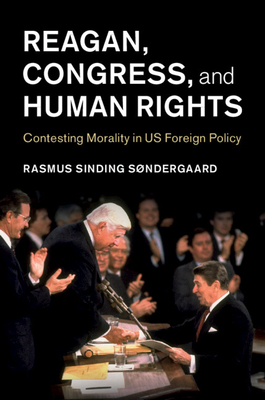
Reagan, Congress, and Human Rights book cover
#19

Reagan, Congress, and Human Rights

Contesting Morality in US Foreign Policy

2020

This book traces the role of human rights concerns in US foreign policy during the 1980s, focusing on the struggle among the Reagan administration and members of Congress. It demonstrates how congressional pressure led the administration to reconsider its approach to human rights and craft a conservative human rights policy centered on democracy promotion and anti-communism – a decision which would have profound implications for American attention to human rights. Based on extensive archival research and interviews, Rasmus Sinding Søndergaard combines a comprehensive overview of human rights in American foreign relations with in-depth case studies of how human rights shaped US foreign policy toward Soviet Jewry, South African apartheid, and Nicaragua. Tracing the motivations behind human rights activism, this book demonstrates how liberals, moderates, and conservatives selectively invoked human rights to further their agendas, ultimately contributing to the establishment of human rights as a core moral language in US foreign policy.
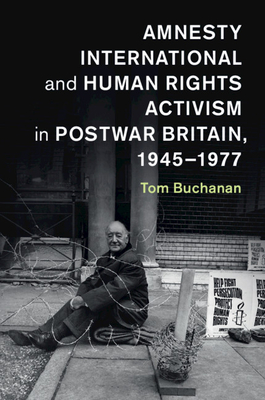
Amnesty International and Human Rights Activism in Postwar Britain, 1945–1977 book cover
#21

Amnesty International and Human Rights Activism in Postwar Britain, 1945–1977

2020

In this definitive new account of the emergence of human rights activism in post-war Britain, Tom Buchanan shows how disparate individuals, organisations and causes gradually came to acquire a common identity as 'human rights activists'. This was a slow process whereby a coalition of activists, working on causes ranging from anti-fascism, anti-apartheid and decolonisation to civil liberties and the peace movement, began to come together under the banner of human rights. The launch of Amnesty International in 1961, and its landmark winning of the Nobel Peace Prize in 1977 provided a model and inspiration to many new activist movements in 'the field of human rights', and helped to affect major changes towards public and political attitudes towards human rights issues across the globe.
The Past Can't Heal Us book cover
#23

The Past Can't Heal Us

The Dangers of Mandating Memory in the Name of Human Rights

2020

In this innovative study, Lea David critically investigates the relationship between human rights and memory, suggesting that, instead of understanding human rights in a normative fashion, human rights should be treated as an ideology. Conceptualizing human rights as an ideology gives us useful theoretical and methodological tools to recognize the real impact human rights has on the ground. David traces the rise of the global phenomenon that is the human rights memorialization agenda, termed 'Moral Remembrance', and explores what happens once this agenda becomes implemented. Based on evidence from the Western Balkans and Israel/Palestine, she argues that the human rights memorialization agenda does not lead to a better appreciation of human rights but, contrary to what would be expected, it merely serves to strengthen national sentiments, divisions and animosities along ethnic lines, and leads to the new forms of societal inequalities that are closely connected to different forms of corruptions.
Decolonization, Self-Determination, and the Rise of Global Human Rights Politics book cover
#24

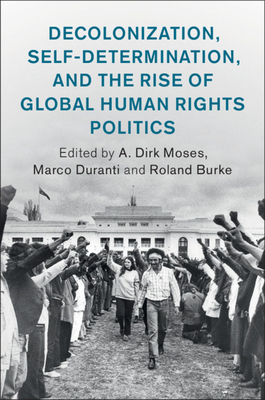
Decolonization, Self-Determination, and the Rise of Global Human Rights Politics

2020

This volume presents the first global history of human rights politics in the age of decolonization. The conflict between independence movements and colonial powers shaped the global human rights order that emerged after the Second World War. It was also critical to the genesis of contemporary human rights organizations and humanitarian movements. Anti-colonial forces mobilized human rights and other rights language in their campaigns for self-determination. In response, European empires harnessed the new international politics of human rights for their own ends, claiming that their rule, with its promise of 'development,' was the authentic vehicle for realizing them. Ranging from the postwar partitions and the wars of independence to Indigenous rights activism and post-colonial memory, this volume offers new insights into the history and legacies of human rights, self-determination, and empire to the present day.
Nationals Abroad book cover
#25

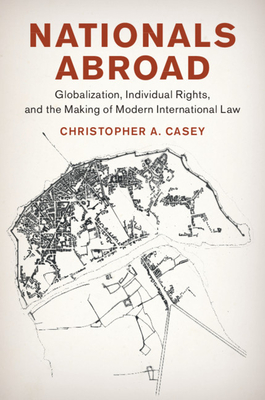
Nationals Abroad

Globalization, Individual Rights, and the Making of Modern International Law

2020

It is a fundamental term of the social contract that people trade allegiance for protection. In the nineteenth century, as millions of people made their way around the world, they entangled the world in web of allegiance that had enormous political consequences. Nationality was increasingly difficult to define. Just who was a national in a world where millions lived well beyond the borders of their sovereign state? As the nineteenth century gave way to the twentieth, jurists and policymakers began to think of ways to cut the web of obligation that had enabled world politics. They proposed to modernize international law to include subjects other than the state. Many of these experiments failed. But, by the mid-twentieth century, an international legal system predicated upon absolute universality and operated by intergovernmental organizations came to the fore. Under this system, individuals gradually became subjects of international law outside of their personal citizenship, culminating with the establishment of international courts of human rights after the Second World War.
Jewish Internationalism and Human Rights after the Holocaust book cover
#26

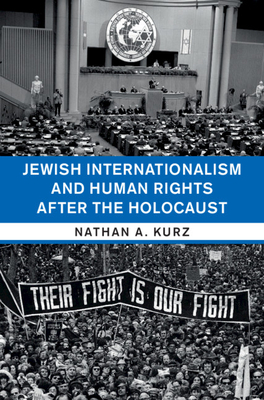
Jewish Internationalism and Human Rights after the Holocaust

2020

Nathan A. Kurz charts the fraught relationship between Jewish internationalism and international rights protection in the second half of the twentieth century. For nearly a century, Jewish lawyers and advocacy groups in Western Europe and the United States had pioneered forms of international rights protection, tying the defense of Jews to norms and rules that aspired to curb the worst behavior of rapacious nation-states. In the wake of the Holocaust and the creation of the State of Israel, however, Jewish activists discovered they could no longer promote the same norms, laws and innovations without fear they could soon apply to the Jewish state. Using previously unexamined sources, Nathan Kurz examines the transformation of Jewish internationalism from an effort to constrain the power of nation-states to one focused on cementing Israel's legitimacy and its status as a haven for refugees from across the Jewish diaspora.
Humanitarianism and Human Rights book cover
#28

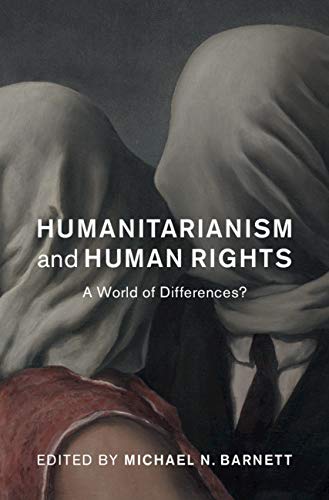
Humanitarianism and Human Rights

A World of Differences?

2020

This book explores the fluctuating relationship between human rights and humanitarianism. For most of their lives, human rights and humanitarianism have been distant cousins. Humanitarianism focused on situations in faraway places dealing with large-scale loss of life that demanded urgent attention whilst human rights advanced the cause of individual liberty and equality at home. However, the twentieth century saw the two coming much more directly into dialogue, particularly following the end of the Cold War, as both began working in war zones and post-conflict situations. Leading scholars probe how the shifting meanings of human rights and humanitarianism converge and diverge from a variety of disciplinary perspectives ranging from philosophical inquiries that consider whether and how differences are constructed at the level of ethics, obligations, and duties, to historical inquiries that attempt to locate core differences within and between historical periods, and to practice-oriented perspectives that suggest how differences are created and recreated in response to concrete problems and through different kinds of organised activities with different goals and meanings.
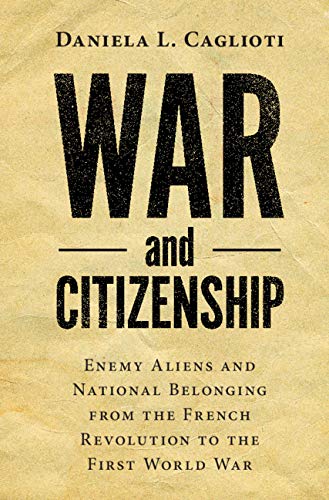
War and Citizenship book cover
#29

War and Citizenship

Enemy Aliens and National Belonging from the French Revolution to the First World War

2020

What did it mean to be an alien, and in particular an enemy alien, in the interstate conflicts that occurred over the nineteenth century and that climaxed in the First World War? In this ambitious and broad-ranging study, Daniela L. Caglioti highlights the many ways in which belligerent countries throughout the world mobilized populations along the member/non-member divide, redefined inclusion and exclusion, and refashioned notions and practices of citizenship. She examines what it meant to be an alien in wartime, how the treatment of aliens in wartime interfered with sovereignty and the rule of law, and how that treatment affected population policies, individual and human rights, and conceptions of belonging. Concentrating on the gulf between citizens and foreigners and on the dilemma of balancing rights and security in wartime, Caglioti highlights how each country, regardless of its political system, chose national security even if this meant reducing freedom, discriminating among citizens and non-citizens, and violating international law.


Authors

Antoine Prost
Antoine Prost
Author · 2 books

Né en 1933 à Lons-le Saunier (Jura), Antoine Prost affiche une formation classique : khâgne au lycée du Parc (Lyon), puis Ecole normale supérieure (Paris) suivi d’une agrégation d’histoire. Professeur au lycée Pothier (Orléans) puis assistant, maître-assistant à la Sorbonne il exerce ensuite à l’Université d’Orléans (1969-1979) et à Paris-1 (1979-1998). Historien spécialiste de la société française au 20è siècle, il scrute les groupes sociaux, les institutions et les mentalités. De même il est spécialiste des questions d’éducation, collaborant à la définition des politiques d’éducation depuis 1964. Directeur du Centre de recherches sur l’histoire des mouvements sociaux et du syndicalisme (Centre d’histoire sociale du 20è siècle), il est aussi Président de l’association Le Mouvement social et de l’association des amis du Maitron. Ses chroniques radio « Si nous vivions en 1913 » ont été diffusées dans la Matinale de France Inter, au cours de l'été 2013. Distinctions : Commandeur de l’Ordre national du Mérite – Commandeur de la Légion d’honneur – Commandeur des Palmes académiques http://www.franceinter.fr/personne-an...

Sarah B. Snyder
Author · 2 books
A specialist in the history of the Cold War, human rights activism, and U.S. human rights policy, Sarah B. Snyder is a professor in the School of International Service at American University. Snyder received her Ph.D. from Georgetown, a M.A. from University College London, and a B.A. with honors from Brown University.
548 Market St PMB 65688, San Francisco California 94104-5401 USA
© 2025 Paratext Inc. All rights reserved