Margins
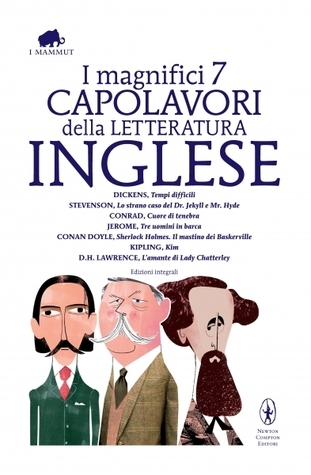
I magnifici 7 capolavori della letteratura inglese book cover
I magnifici 7 capolavori della letteratura inglese
2013
First Published
4.00
Average Rating
1136
Number of Pages
Sono qui raccolte sette opere della letteratura inglese che, oltre a essere veri capolavori, sono ormai così famose, anche per essere divenute film di successo, da essere conosciute da un pubblico vasto ed eterogeneo. In Tempi difficili, sullo sfondo ideologico dell'epoca (utilitarismo, pragmatismo, liberalismo), Dickens svolge il conflitto tra il cinismo e la rigidità degli aristocratici e dei nuovi industriali e l'umanità vitale ed emarginata della libera gente del circo. Al variegato e vivace mondo di Dickens fa da contrappunto la densa e minacciosa atmosfera noir de Lo strano caso del Dr. Jekyll e Mr. Hyde, che, oltre a essere una esplicita metafora della eterna lotta tra il bene e il male, è soprattutto un attacco che Stevenson ha voluto sferrare contro la repressiva e puritana letteratura inglese del periodo vittoriano. Dalle tenebrose nebbie londinesi si passa poi all'esplorazione delle oscurità dell'animo umano, descritte metaforicamente da Conrad in Cuore di tenebra attraverso un viaggio nel cuore più profondo dell'Africa. Di tutt'altro genere il viaggio che Jerome fa compiere, con maestria e varietà di invenzioni umoristiche, ai suoi Tre uomini in barca. Sherlock Holmes, qui alle prese con un incubo dal sapore gotico nel Mastino dei Baskerville. Kim il racconto dello strenuo tentativo di riconciliare due culture quanto mai opposte. L'amante di Lady Chatterley, che fu messo al bando in Inghilterra per il grande scandalo suscitato.

Avg Rating
4.00
Number of Ratings
5
5 STARS
40%
4 STARS
20%
3 STARS
40%
2 STARS
0%
1 STARS
0%
goodreads

Authors

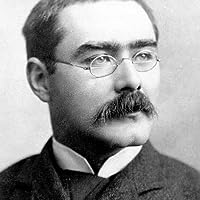
Rudyard Kipling
Rudyard Kipling
Author · 242 books

Joseph Rudyard Kipling was a journalist, short-story writer, poet, and novelist. Kipling's works of fiction include The Jungle Book (1894), Kim (1901), and many short stories, including The Man Who Would Be King (1888). His poems include Mandalay (1890), Gunga Din (1890), The Gods of the Copybook Headings (1919), The White Man's Burden (1899), and If— (1910). He is regarded as a major innovator in the art of the short story; his children's books are classics of children's literature; and one critic described his work as exhibiting "a versatile and luminous narrative gift". Kipling was one of the most popular writers in the United Kingdom, in both prose and verse, in the late 19th and early 20th centuries. Henry James said: "Kipling strikes me personally as the most complete man of genius (as distinct from fine intelligence) that I have ever known." In 1907, at the age of 41, he was awarded the Nobel Prize in Literature, making him the first English-language writer to receive the prize, and its youngest recipient to date. He was also sounded out for the British Poet Laureateship and on several occasions for a knighthood, both of which he declined. Awarded the Nobel Prize in Literature in 1907 "in consideration of the power of observation, originality of imagination, virility of ideas and remarkable talent for narration which characterize the creations of this world-famous author." Kipling kept writing until the early 1930s, but at a slower pace and with much less success than before. On the night of 12 January 1936, Kipling suffered a haemorrhage in his small intestine. He underwent surgery, but died less than a week later on 18 January 1936 at the age of 70 of a perforated duodenal ulcer. Kipling's death had in fact previously been incorrectly announced in a magazine, to which he wrote, "I've just read that I am dead. Don't forget to delete me from your list of subscribers."

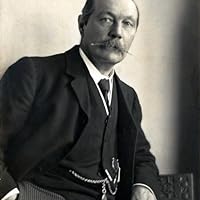
Arthur Conan Doyle
Arthur Conan Doyle
Author · 663 books

Sir Arthur Ignatius Conan Doyle was born the third of ten siblings on 22 May 1859 in Edinburgh, Scotland. His father, Charles Altamont Doyle, a talented illustrator, was born in England of Irish descent, and his mother, born Mary Foley, was Irish. They were married in 1855. Although he is now referred to as "Conan Doyle", the origin of this compound surname (if that is how he meant it to be understood) is uncertain. His baptism record in the registry of St Mary's Cathedral in Edinburgh gives 'Arthur Ignatius Conan' as his Christian name, and simply 'Doyle' as his surname. It also names Michael Conan as his godfather. At the age of nine Conan Doyle was sent to the Roman Catholic Jesuit preparatory school, Hodder Place, Stonyhurst. He then went on to Stonyhurst College, leaving in 1875. From 1876 to 1881 he studied medicine at the University of Edinburgh. This required that he provide periodic medical assistance in the towns of Aston (now a district of Birmingham) and Sheffield. While studying, Conan Doyle began writing short stories. His first published story appeared in "Chambers' Edinburgh Journal" before he was 20. Following his graduation, he was employed as a ship's doctor on the SS Mayumba during a voyage to the West African coast. He completed his doctorate on the subject of tabes dorsalis in 1885. In 1885 Conan Doyle married Louisa (or Louise) Hawkins, known as "Touie". She suffered from tuberculosis and died on 4 July 1906. The following year he married Jean Elizabeth Leckie, whom he had first met and fallen in love with in 1897. Due to his sense of loyalty he had maintained a purely platonic relationship with Jean while his first wife was alive. Jean died in London on 27 June 1940. Conan Doyle fathered five children. Two with his first wife—Mary Louise (28 January 1889 – 12 June 1976), and Arthur Alleyne Kingsley, known as Kingsley (15 November 1892 – 28 October 1918). With his second wife he had three children—Denis Percy Stewart (17 March 1909 – 9 March 1955), second husband in 1936 of Georgian Princess Nina Mdivani (circa 1910 – 19 February 1987; former sister-in-law of Barbara Hutton); Adrian Malcolm (19 November 1910–3 June 1970) and Jean Lena Annette (21 December 1912–18 November 1997). Conan Doyle was found clutching his chest in the hall of Windlesham, his house in Crowborough, East Sussex, on 7 July 1930. He had died of a heart attack at age 71. His last words were directed toward his wife: "You are wonderful." The epitaph on his gravestone in the churchyard at Minstead in the New Forest, Hampshire, reads: STEEL TRUE BLADE STRAIGHT ARTHUR CONAN DOYLE KNIGHT PATRIOT, PHYSICIAN & MAN OF LETTERS Conan Doyle's house, Undershaw, located in Hindhead, south of London, where he had lived for a decade, had been a hotel and restaurant between 1924 and 2004. It now stands empty while conservationists and Conan Doyle fans fight to preserve it. A statue honours Conan Doyle at Crowborough Cross in Crowborough, where Conan Doyle lived for 23 years. There is also a statue of Sherlock Holmes in Picardy Place, Edinburgh, close to the house where Conan Doyle was born. Series: * Sherlock Holmes

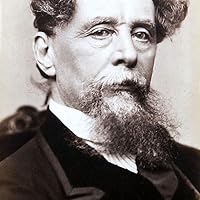
Charles Dickens
Charles Dickens
Author · 356 books

Charles John Huffam Dickens (1812-1870) was a writer and social critic who created some of the world's best-known fictional characters and is regarded as the greatest novelist of the Victorian era. His works enjoyed unprecedented popularity during his lifetime, and by the twentieth century critics and scholars had recognised him as a literary genius. His novels and short stories enjoy lasting popularity. Dickens left school to work in a factory when his father was incarcerated in a debtors' prison. Despite his lack of formal education, he edited a weekly journal for 20 years, wrote 15 novels, five novellas, hundreds of short stories and non-fiction articles, lectured and performed extensively, was an indefatigable letter writer, and campaigned vigorously for children's rights, education, and other social reforms. Dickens was regarded as the literary colossus of his age. His 1843 novella, A Christmas Carol, remains popular and continues to inspire adaptations in every artistic genre. Oliver Twist and Great Expectations are also frequently adapted, and, like many of his novels, evoke images of early Victorian London. His 1859 novel, A Tale of Two Cities, set in London and Paris, is his best-known work of historical fiction. Dickens' creative genius has been praised by fellow writers—from Leo Tolstoy to George Orwell and G. K. Chesterton—for its realism, comedy, prose style, unique characterisations, and social criticism. On the other hand, Oscar Wilde, Henry James, and Virginia Woolf complained of a lack of psychological depth, loose writing, and a vein of saccharine sentimentalism. The term Dickensian is used to describe something that is reminiscent of Dickens and his writings, such as poor social conditions or comically repulsive characters. On 8 June 1870, Dickens suffered another stroke at his home after a full day's work on Edwin Drood. He never regained consciousness, and the next day he died at Gad's Hill Place. Contrary to his wish to be buried at Rochester Cathedral "in an inexpensive, unostentatious, and strictly private manner," he was laid to rest in the Poets' Corner of Westminster Abbey. A printed epitaph circulated at the time of the funeral reads: "To the Memory of Charles Dickens (England's most popular author) who died at his residence, Higham, near Rochester, Kent, 9 June 1870, aged 58 years. He was a sympathiser with the poor, the suffering, and the oppressed; and by his death, one of England's greatest writers is lost to the world." His last words were: "On the ground", in response to his sister-in-law Georgina's request that he lie down. (from Wikipedia)

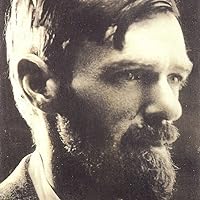
D.H. Lawrence
D.H. Lawrence
Author · 166 books

David Herbert Richards Lawrence was an English writer of the 20th century, whose prolific and diverse output included novels, short stories, poems, plays, essays, travel books, paintings, translations, literary criticism, and personal letters. His collected works represent an extended reflection upon the dehumanizing effects of modernity and industrialisation. In them, Lawrence confronts issues relating to emotional health and vitality, spontaneity, human sexuality and instinct. Lawrence's opinions earned him many enemies and he endured official persecution, censorship, and misrepresentation of his creative work throughout the second half of his life, much of which he spent in a voluntary exile he called his "savage pilgrimage." At the time of his death, his public reputation was that of a pornographer who had wasted his considerable talents. E. M. Forster, in an obituary notice, challenged this widely held view, describing him as "the greatest imaginative novelist of our generation." Later, the influential Cambridge critic F. R. Leavis championed both his artistic integrity and his moral seriousness, placing much of Lawrence's fiction within the canonical "great tradition" of the English novel. He is now generally valued as a visionary thinker and a significant representative of modernism in English literature. http://en.wikipedia.org/wiki/D.H.\_Law...

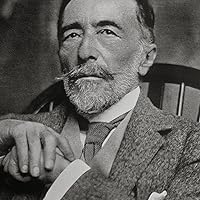
Joseph Conrad
Joseph Conrad
Author · 113 books

Joseph Conrad (born Józef Teodor Konrad Korzeniowski ) was a Polish-born English novelist who today is most famous for Heart of Darkness, his fictionalized account of Colonial Africa. Conrad left his native Poland in his middle teens to avoid conscription into the Russian Army. He joined the French Merchant Marine and briefly employed himself as a wartime gunrunner. He then began to work aboard British ships, learning English from his shipmates. He was made a Master Mariner, and served more than sixteen years before an event inspired him to try his hand at writing. He was hired to take a steamship into Africa, and according to Conrad, the experience of seeing firsthand the horrors of colonial rule left him a changed man. Joseph Conrad settled in England in 1894, the year before he published his first novel. He was deeply interested in a small number of writers both in French and English whose work he studied carefully. This was useful when, because a need to come to terms with his experience, lead him to write Heart of Darkness, in 1899, which was followed by other fictionalized explorations of his life. He has been lauded as one of the most powerful, insightful, and disturbing novelists in the English canon despite coming to English later in life, which allowed him to combine it with the sensibilities of French, Russian, and Polish literature.

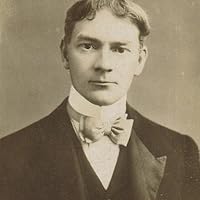
Jerome K. Jerome
Jerome K. Jerome
Author · 45 books

English author Jerome Klapka Jerome, best known for the humorous travelogue Three Men in a Boat . See http://en.wikipedia.org/wiki/Jerome\_K...

548 Market St PMB 65688, San Francisco California 94104-5401 USA
© 2025 Paratext Inc. All rights reserved