


Margins
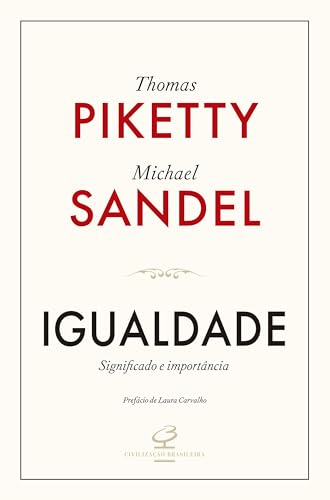
Igualdade book cover
Igualdade
Significado e importância
2025
First Published
4.57
Average Rating
97
Number of Pages

Significado e importância reúne o renomado economista Thomas Piketty, de O capital no século XXI, e o aclamado filósofo Michael Sandel, de Justiça, com prefácio da economista Laura Carvalho, de Valsa brasileira. Em um diálogo fascinante, Thomas Piketty e Michael Sandel, dois dos pensadores mais influentes da atualidade, debatem por que a igualdade é tão importante. Além disso, debatem o que cidadãos e governo devem fazer para diminuir os abismos sociais. Abordando economia, filosofia, história e atualidades, Piketty e Sandel refletem sobre o quanto já avançamos rumo à igualdade. E, ao mesmo tempo, tratam diretamente das grandes diferenças que perpetuam, tanto nacional quanto globalmente, na acumulação de riqueza, na distribuição de renda, no poder hegemônico e no status quo. O que pode ser feito em uma época de forte instabilidade política e crise ambiental? Os autores concordam plenamente em diversos mais investimentos inclusivos em saúde e educação, aumento do imposto progressivo, restrição do poder político dos ricos e controle na intervenção de mercados. Mas quão rápido e longe podemos ir? Devemos priorizar a mudança econômica ou a social? Tendo em vista o ressurgimento de movimentos nacionalistas, quais são as perspectivas de mudança? Qual deve ser a relação da esquerda com princípios como patriotismo e solidariedade quando eles entram em conflito com os desafios da migração em massa e das mudanças climáticas? Observar Piketty e Sandel esmiuçando essas e outras questões da atualidade é ter não só um vislumbre de novas possibilidades de mudança e justiça, mas também da dura verdade de que o progresso em direção à igualdade nunca é rápido ou sem graves conflitos sociais e lutas políticas. Esta edição conta com o prefácio da economista Laura Carvalho, autora dos livros Valsa do boom ao caos econômico e o vírus e a volta do Estado (ambos pela Todavia). “Um renomado economista político encontra um renomado filósofo político nesta discussão sobre desigualdade e suas soluções. [...] Eles apresentam uma solução que é surpreendente, intrigante e vale a pena tentar.” — Kirkus Reviews “Poderoso. [...] Um lembrete de por que a desigualdade importa.” — Andrew Leigh, The Age “Um apelo para resgatar os autênticos princípios da social-democracia de maneira a enfrentar grandes desafios, como a transição verde.” — The Guardian “Muito acessível. [...] Eles são, sem dúvida, o polo oposto da guerra de Trump e Musk contra o Estado, a tributação, a regulamentação e a igualdade.” — The Irish Times
Avg Rating
4.57
Number of Ratings
14
5 STARS
57%
4 STARS
43%
3 STARS
0%
2 STARS
0%
1 STARS
0%
goodreads

Authors

Michael J. Sandel
Michael J. Sandel
Author · 12 books
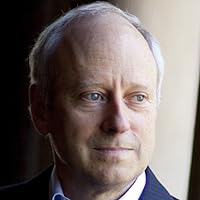
Michael J. Sandel is an American political philosopher who lives in Brookline, Massachusetts. He is the Anne T. and Robert M. Bass Professor of Government at Harvard University, where he has taught since 1980. He is best known for the Harvard course 'Justice', which is available to view online, and for his critique of John Rawls' A Theory of Justice in his first book, Liberalism and the Limits of Justice (1982). He was elected a Fellow of the American Academy of Arts and Sciences in 2002.
Thomas Piketty
Thomas Piketty
Author · 19 books

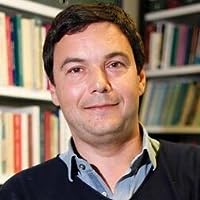
Thomas Piketty (French: [tɔma pikɛti]; born May 7, 1971) is a French economist who works on wealth and income inequality. He is the director of studies at the École des hautes études en sciences sociales (EHESS) and professor at the Paris School of Economics. He is the author of the best selling book Capital in the Twenty-First Century (2013), which emphasizes the themes of his work on wealth concentrations and distribution over the past 250 years. The book argues that the rate of capital return in developed countries is persistently greater than the rate of economic growth, and that this will cause wealth inequality to increase in the future. To address this problem, he proposes redistribution through a global tax on wealth. Piketty was born on May 7, 1971, in the Parisian suburb of Clichy. He gained a C-stream (scientific) Baccalauréat, and after taking scientific preparatory classes, he entered the École Normale Supérieure (ENS) at the age of 18, where he studied mathematics and economics. At the age of 22, Piketty was awarded his Ph.D. for a thesis on wealth redistribution, which he wrote at the EHESS and the London School of Economics under Roger Guesnerie. After earning his PhD, Piketty taught from 1993 to 1995 as an assistant professor in the Department of Economics at the Massachusetts Institute of Technology. In 1995, he joined the French National Centre for Scientific Research (CNRS) as a researcher, and in 2000 he became director of studies at EHESS. Piketty won the 2002 prize for the best young economist in France, and according to a list dated November 11, 2003, he is a member of the scientific orientation board of the association "À gauche, en Europe", founded by Michel Rocard and Dominique Strauss-Kahn. In 2006 Piketty became the first head of the Paris School of Economics, which he helped set up. He left after a few months to serve as an economic advisor to Socialist Party candidate Ségolène Royal during the French presidential campaign. Piketty resumed teaching at the Paris School of Economics in 2007. He is a columnist for the French newspaper Libération, and occasionally writes op-eds for Le Monde. In April 2012, Piketty co-authored along with 42 colleagues an open letter in support of then-PS candidate for the French presidency François Hollande. Hollande won the contest against the incumbent Nicolas Sarkozy in May of that year. In 2013, Piketty won the biennial Yrjö Jahnsson Award, for the economist under age 45 who has "made a contribution in theoretical and applied research that is significant to the study of economics in Europe." Piketty specializes in economic inequality, taking a historic and statistical approach. His work looks at the rate of capital accumulation in relation to economic growth over a two hundred year spread from the nineteenth century to the present. His novel use of tax records enabled him to gather data on the very top economic elite, who had previously been understudied, and to ascertain their rate of accumulation of wealth and how this compared to the rest of society and economy. His most recent book, Capital in the Twenty-First Century, relies on economic data going back 250 years to show that an ever-rising concentration of wealth is not self-correcting. To address this problem, he proposes redistribution through a global tax on wealth.

548 Market St PMB 65688, San Francisco California 94104-5401 USA
© 2026 Paratext Inc. All rights reserved