


Margins
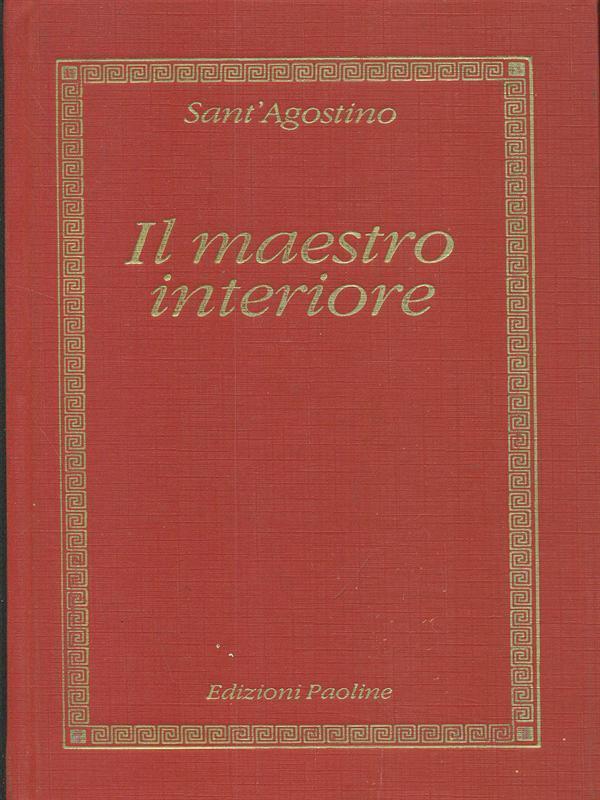
Il maestro interiore book cover
Il maestro interiore
Sant'Agostino
1987
First Published
4.33
Average Rating
85
Number of Pages

Agostino si ispira alla filosofia platonica, ma, a differenza di Platone, che faceva del conoscere un ricordare, egli ammette una speciale "Illuminazione" dell'Intelligenza da parte di Dio, che produce nella nostra mente le idee. Questa illuminazione è una luce che l'anima riceve da Dio e, mediante questa luce, si comunica all'uomo la verità, cioè le essenze universali della realtà, che sono in lui dall'eternità in quanto Dio è Verbo, cioè sapienza. L'illuminazione divina non è semplice atto venuto nel momento della creazione, ma un'assistenza continua da parte dell'anima dell'uomo, è un atto di Grazia, di amore, col quale Dio calma l'inquietudine umana che le cose sensibili non possono appagare. Perciò, Dio è considerato come un maestro interiore, che partecipa alla Verità ed acquista lo Spirito di chi sa ascoltarlo. - Il vero apprendimento avviene solo quando riusciamo ad andare oltre le parole comprendendone il loro vero significato. - Si conosce veramente non quando impariamo ciò che pensa o dice il maestro, ma quando tali pensieri risuonano in noi e riusciamo a riconoscerli nel nostro intimo come veri. - Per Agostino è Cristo il vero maestro, perché Egli abita nell' uomo interiore. L' apprendimento della verità si verifica solo a prezzo di un impegno personale e non è dato dall'esterno.
Avg Rating
4.33
Number of Ratings
3
5 STARS
33%
4 STARS
67%
3 STARS
0%
2 STARS
0%
1 STARS
0%
goodreads

Author

Augustine of Hippo
Augustine of Hippo
Author · 88 books

Aurelius Augustinus Hipponensis, in English Augustine of Hippo, also known as St. Augustine, St. Austin, was bishop of Hippo Regius (present-day Annaba, Algeria). He was a Latin philosopher and theologian from the Africa Province of the Roman Empire and is generally considered as one of the greatest Christian thinkers of all times. His writings were very influential in the development of Western Christianity. According to his contemporary Jerome, Augustine "established anew the ancient Faith." In his early years he was heavily influenced by Manichaeism and afterward by the Neo-Platonism of Plotinus. After his conversion to Christianity and his baptism in 387, Augustine developed his own approach to philosophy and theology, accommodating a variety of methods and different perspectives. He believed that the grace of Christ was indispensable to human freedom, and he framed the concepts of original sin and just war. When the Western Roman Empire was starting to disintegrate, Augustine developed the concept of the Catholic Church as a spiritual City of God (in a book of the same name), distinct from the material Earthly City. His thoughts profoundly influenced the medieval worldview. Augustine's City of God was closely identified with the Church, the community that worshiped the Trinity. In the Catholic Church and the Anglican Communion, he is a saint and pre-eminent Doctor of the Church. Many Protestants, especially Calvinists, consider him to be one of the theological fathers of the Protestant Reformation due to his teaching on salvation and divine grace. In the Eastern Orthodox Church he is also considered a saint. He carries the additional title of Blessed. Among the Orthodox, he is called "Blessed Augustine" or "St. Augustine the Blessed". Santo Agostinho

548 Market St PMB 65688, San Francisco California 94104-5401 USA
© 2026 Paratext Inc. All rights reserved