Margins
Images of America: Georgia book cover 1
Images of America: Georgia book cover 2
Images of America: Georgia book cover 3
Images of America: Georgia
Series · 7 books · 2002-2015

Books in series

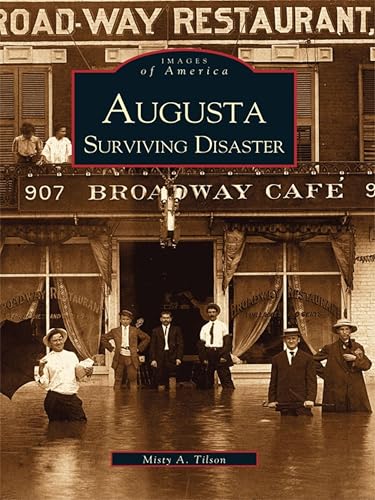
Augusta Surviving Disaster book cover
#14

Augusta Surviving Disaster

2002

Surviving Disaster allows readers to glimpse the changes that mother nature and human error have wrought on the landscape and design of the �Garden City.� These disasters did not only alter the city�s landscape; many were the impetus for change in Augusta. The ravaging floods led to the construction of the levee along the Savannah River in 1919, to prevent flooding, and spurred the creation of the Clark Hill Dam and Reservoir. Within this volume, readers will get a glimpse of the damagecaused by the floodwaters of the Savannah River and the Augusta Canal. The remains of St. Paul�s Episcopal Church, as well as other homes and businesses, after the Great Fire of 1916 are captured. Historic photographs reveal the damaged remains of the Lower Market after the 1878 tornado. Culled from the extensive collection of the Augusta Museum of History and the personal collection ofJoseph M. Lee III, these images provide testimony to the resiliency of the human spirit and the courage to move forward and rebuild. The citizens of Augusta have a long history of uniting for the common good, and this volume is a tribute to those who overcameobstacles to create the thriving community that exists today.
Calhoun book cover
#27

Calhoun

2015

Read of Calhoun's many influences on transportation, in wartime, and in the commerce of the South. Calhoun, the seat of Gordon County, is situated in the rolling Ridge and Valley geologic region of northwest Georgia. The long valley formed a natural migration pattern that influenced the area's settlement and is a strong economic factor today. Transportation arteries, from rivers to railroads to highways, remain a critical part of the city's development. The Cherokee Indians began the infamous Trail of Tears march near Calhoun. Later, Gen. William T. Sherman almost destroyed the village as he led his troops to the Battle of Atlanta. The region's cotton farmers supplied the early tufted-textile industry that evolved into enormous carpet and floor-covering businesses.
Centers for Disease Control and Prevention book cover
#31

Centers for Disease Control and Prevention

2015

For over 60 years, the Centers for Disease Control and Prevention has worked tirelessly to address infectious diseases and other health hazards. Through the vision of Dr. Joseph W. Mountin, the Communicable Disease Center was created in 1946 as the successor to Malaria Control in War Areas (MCWA), a division of the Public Health Service based in Atlanta. The new agency, CDC, was charged with monitoring and controlling malaria, typhus, and other infectious diseases nationwide. Successful in addressing a wide array of health emergencies—including polio, measles, influenza, Legionnaires' disease, toxic shock syndrome, and the Ebola virus—one of the CDC's crowning achievements was its role in the global eradication of smallpox. Known today as the Centers for Disease Control and Prevention, it is recognized as the nation's premier health promotion, prevention, and preparedness agency and a global leader in public health. Discover how a bad batch of polio vaccine brought a nationwide immunization campaign to a standstill, how the mysterious Legionnaires' disease sparked nationwide panic and how, today, CDC scientists are at the forefront of prevention research.

Douglasville book cover
#45

Douglasville

2014

The formation of Douglasville coincided when New South ideals were reshaping villages into railroad towns across the South during Reconstruction. In 1875, business and political leaders worked from the ground up to provide Douglasville with each component of a New South town, including a railroad, cotton mill, hotel, bank, and a commercial district. Today, the central business district is listed in the National Register of Historic Places and presents a snapshot regarding how the town fathers actualized their vision of industry and enterprise. Douglasville’s founders would be pleased if they visited the town they created 138 years ago. It has entered the 21st century as a vibrant city with a thriving historic district, as well as a destination for businesses ranging from Google to the American Red Cross.
Fort McAllister book cover
#64

Fort McAllister

2004

Many earthen fortifications defended the city of Savannah and its numerous water approaches after the Civil War broke out. One of these defenses, Fort McAllister, protected the entrance to the Ogeechee River and the strategic railroad and highway bridges upstream. From November 1862 to March 1863 the U.S. Navy bombarded the fort seven different times without success. The fort finally fell to General Sherman in December 1864; ironically, the final threat the fort faced was not from an enemy trying to get up the river, but from one trying to get down the river to the sea. In the 1920s auto magnate Henry Ford renovated the fort and focused new attention on its history. In 1960 the State of Georgia built on Ford's work and opened the fort as a State Historic Site to mark the centennial of the Civil War. Today visitors can quietly wander the massive, earthen walls and gun positions, gaze across the wide river and expansive marshes, and ponder the thundering, blazing reality that once played on this ground.
Gay and Lesbian Atlanta book cover
#71

Gay and Lesbian Atlanta

2008

For much of the 20th century, Atlanta was a magnet drawing newcomers from around the nation. Atlanta's growth from a small Southern town to a Sunbelt colossus in many ways parallels the changes that shaped America during those 100 years: industrialization, technological innovation, suburbanization, and battles over racial equality. Largely overlooked in the Atlanta story, however, are the experiences of lesbians and gay men. In a city governed by powerful business interests and an ethos of Christian conservatism, gays and lesbians maneuvered in ways both large and small, public and private, to find personal happiness, professional fulfillment, and, eventually, a political voice. Until recently, Atlanta's gay and lesbian history survived and perished with the memories of the men and women who lived it. Now a small part of that history has been preserved in this collection of unforgettable images.
Warm Springs book cover
#161

Warm Springs

2005

"The Spirit of Warm Springs" is what Franklin D. Roosevelt described as the peaceful atmosphere and healing qualities he found along the slopes of Georgia's Pine Mountain. But long before FDR, the warm springs attracted people. Legend has it the Creek Indians used them for healing. European settlers used them as a revenue source. In the 1800s, the springs became a resort area, and the village of Warm Springs, Georgia, was founded. Rail brought visitors to this farming community for decades until travelers sought different destinations. By the 1920s, Warm Springs began slipping into the Great Depression. Destiny intervened when Franklin Roosevelt arrived in Warm Springs seeking a cure for his polio. After his first visit, he was able to move his leg. The news drew others afflicted with polio. Warm Springs provided FDR with hope. He returned the gift through New Deal programs and the March of Dimes while restoring hope in America. The waters are still used for healing, the town of Warm Springs thrives, and FDR's Little White House is a memorial to "the foremost statesman and political leader" of the 20th century.

Authors

548 Market St PMB 65688, San Francisco California 94104-5401 USA
© 2026 Paratext Inc. All rights reserved
Images of America: Georgia