From award-winning poet Benjamin Alire Sáenz comes In Perfect Light, a haunting novel depicting the cruelties of cultural displacement and the resilience of those who are left in its aftermath. In Perfect Light is the story of two strong-willed people who are forever altered by a single tragedy. After Andés Segovia's parents are killed in a car accident when he is still a young boy, his older brother decides to steal the family away to Juárez, Mexico. That decision, made with the best intentions, sets into motion the unraveling of an American family. Years later, his family destroyed, Andés is left to make sense of the chaos—but he is ill-equipped to make sense of his life. He begins a dark journey toward self-destruction, his talent and brilliance brought down by the weight of a burden too frightening and maddening to bear alone. The manifestation of this frustration is a singular rage that finds an outlet in a dark and seedy El Paso bar—leading him improbably to Grace Delgado. Recently confronted with her own sense of isolation and mortality, Grace is an unlikely angel, a therapist who agrees to treat Andés after he is arrested in the United States. The two are suspicious of each other, yet they slowly arrive at a tentative working relationship that allows each of them to examine his and her own fragile and damaged past. Andés begins to confront what lies behind his own violence, and Grace begins to understand how she has contributed to her own self-exile and isolation. What begins as an intriguing favor to a friend becomes Grace's lifeline—even as secrets surrounding the death of Andés' parents threaten to strain the connection irreparably. With the urgent, unflinching vision of a true storyteller and the precise, arresting language of a poet, Sáenz's In Perfect Light bears witness to the cruelty of circumstance and, more than offering escape, the novel offers the possibility of salvation.
Author
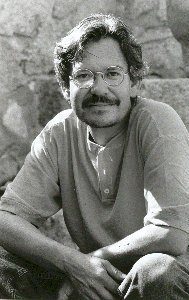
Benjamin Alire Sáenz (born 16 August 1954) is an award-winning American poet, novelist and writer of children's books. He was born at Old Picacho, New Mexico, the fourth of seven children, and was raised on a small farm near Mesilla, New Mexico. He graduated from Las Cruces High School in 1972. That fall, he entered St. Thomas Seminary in Denver, Colorado where he received a B.A. degree in Humanities and Philosophy in 1977. He studied Theology at the University of Louvain in Leuven, Belgium from 1977 to 1981. He was a priest for a few years in El Paso, Texas before leaving the order. In 1985, he returned to school, and studied English and Creative Writing at the University of Texas at El Paso where he earned an M.A. degree in Creative Writing. He then spent a year at the University of Iowa as a PhD student in American Literature. A year later, he was awarded a Wallace E. Stegner fellowship. While at Stanford University under the guidance of Denise Levertov, he completed his first book of poems, Calendar of Dust, which won an American Book Award in 1992. He entered the Ph.D. program at Stanford and continued his studies for two more years. Before completing his Ph.D., he moved back to the border and began teaching at the University of Texas at El Paso in the bilingual MFA program. His first novel, Carry Me Like Water was a saga that brought together the Victorian novel and the Latin American tradition of magic realism and received much critical attention. In The Book of What Remains (Copper Canyon Press, 2010), his fifth book of poems, he writes to the core truth of life's ever-shifting memories. Set along the Mexican border, the contrast between the desert's austere beauty and the brutality of border politics mirrors humanity's capacity for both generosity and cruelty. In 2005, he curated a show of photographs by Julian Cardona. He continues to teach in the Creative Writing Department at the University of Texas at El Paso.