Margins




548 Market St PMB 65688, San Francisco California 94104-5401 USA
© 2026 Paratext Inc. All rights reserved
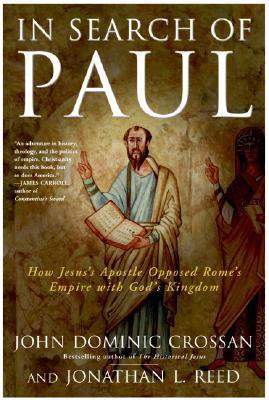
s/t: How Jesus' Apostle Opposed Rome's Empire with God's Kingdom John Dominic Crossan, the eminent historical Jesus scholar, and Jonathan L. Reed, an expert in biblical archaeology, reveal through archaeology and textual scholarship that Paul, like Jesus, focused on championing the Kingdom of God—a realm of justice and equality—against the dominant, worldly powers of the Roman empire. Many theories exist about who Paul was, what he believed, and what role he played in the origins of Christianity. Using archaeological and textual evidence, and taking advantage of recent major discoveries in Italy, Greece, Turkey & Syria, Crossan and Reed show that Paul was a fallible but dedicated successor to Jesus, carrying on Jesus' mission of inaugurating the Kingdom of God on earth in opposition to the reign of Rome. Against the concrete backdrop of first–century Grego–Roman and Jewish life, In Search of Paul reveals the work of Paul as never before, showing how and why the liberating messages and practices of equality, caring for the poor, and a just society under God's rules, not Rome's, were so appealing. Readers interested in Paul as a historical figure and his place in the development of Christianity; Readers interested in archaeology & anthropology.