Margins
Margins
Sign in
Margins
Subscribe to our newsletter
548 Market St PMB 65688, San Francisco California 94104-5401 USA
hello@margins.app
·
+1 (650) 223-5283
Privacy Policy
·
Terms of Use
© 2026 Paratext Inc. All rights reserved
📚
India
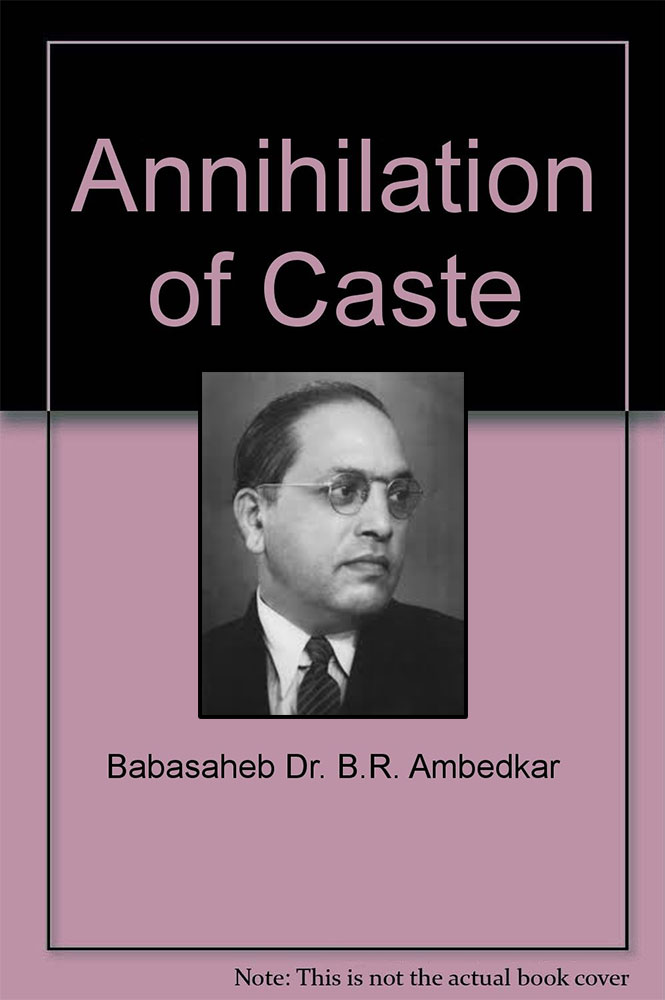
Annihilation of Caste
1936
B.R. Ambedkar
“What the Communist Manifesto is to the capitalist world, Annihilation of Caste is to India.” —Anand Teltumbde, author of The Persistence of Caste B.R. Ambedkar’s Annihilation of Caste is one of the most important, yet neglected, works of political writing from India. Written in 1936, it is an audacious denunciation of Hinduism and its caste system. Ambedkar – a figure like W.E.B. Du Bois – offers a scholarly critique of Hindu scriptures, scriptures that sanction a rigidly hierarchical and iniquitous social system. The world’s best-known Hindu, Mahatma Gandhi, responded publicly to the provocation. The hatchet was never buried.
Why I Assassinated Mahatma Gandhi
1993
Nathuram Godse
Godse approached Gandhi on January 30, 1948 during the evening prayer at 5:15PM. When Godse bowed, one of the girls flanking and supporting Gandhi, said to Godse, "Brother, Bapu is already late" and tried to put him off, but he pushed her aside and shot Gandhi in the chest three times at point-blank range with a semi-automatic pistol. Gandhi was taken to Birla-House, where he later died. This is the autobiography of Gandhi's killer. (Excerpt from Wikipedia)
The Doctor and The Saint
The Ambedkar-Gandhi Debate: Caste, Race, and Annihilation of Caste
Arundhati Roy
To best understand and address the inequality in India today, Arundhati Roy insists we must examine both the political development and influence of M. K. Gandhi and why B. R. Ambedkar’s brilliant challenge to his near-divine status was suppressed by India’s elite. In Roy’s analysis, we see that Ambedkar’s fight for justice was systematically sidelined in favor of policies that reinforced caste, resulting in the current nation of India: independent of British rule, globally powerful, and marked to this day by the caste system. This book situates Ambedkar’s arguments in their vital historical context—namely, as an extended public political debate with Mohandas Gandhi. “For more than half a century—throughout his adult life—[Gandhi’s] pronouncements on the inherent qualities of black Africans, untouchables and the laboring classes remained consistently insulting,” writes Roy. “His refusal to allow working-class people and untouchables to create their own political organizations and elect their own representatives remained consistent too.” In The Doctor and the Saint, Roy exposes some uncomfortable, controversial, and even surprising truths about the political thought and career of India’s most famous and most revered figure. In doing so she makes the case for why Ambedkar’s revolutionary intellectual achievements must be resurrected, not only in India but throughout the world. “Arundhati Roy is incandescent in her brilliance and her fearlessness.” —Junot Díaz “The fierceness with which Arundhati Roy loves humanity moves my heart.” —Alice Walker
📚 India