Margins
International Geophysics book cover 1
International Geophysics book cover 2
International Geophysics book cover 3
International Geophysics
Series · 27
books · 1963-2010

Books in series

An Introduction to Atmospheric Physics book cover
#25

An Introduction to Atmospheric Physics

1963

This book is addressed to those who wish to understand the relationship between atmospheric phenomena and the nature of matter as expressed in the principles of physics. The interesting atmospheric phenomena are more than applications of gravitation, of thermodynamics, of hydrodynamics, or of electrodynamics; and mastery of the results of controlled experiment and of the related theory alone does not imply an understanding of atmospheric phenomena. This distinction arises because the extent and the complexity of the atmosphere permit effects and interactions that are entirely negligible in the laboratory or are deliberately excluded from it. the objective of laboratory physics is, by isolating the relevant variables, to reveal the fundamental properties of matter; whereas the objective of atmospheric physics, or of any observational science, is to understand those phenomena that are characteristic of the whole system. For these reasons the exposition of atmospheric physics requires substantial extensions of classical physics. It also requires that understanding be based on a coherent "way of seeing" the ensemble of atmospheric phenomena. Only then is understanding likely to stimulate still more general insights.
Atmosphere-Ocean Dynamics book cover
#30

Atmosphere-Ocean Dynamics

1982

A systematic, unifying approach to the dynamics of the ocean and atmosphere is given in this book, with emphasis on the larger-scale motions (from a few kilometers to global scale). The foundations of the subject (the equations of state and dynamical equations) are covered in some detail, so that students with training in mathematics should find it a self-contained text. Knowledge of fluid mechanics is helpful but not essential. Simple mathematical models are used to demonstrate the fundamental dynamical principles with plentiful illustrations from field and laboratory.
Geophysical Data Analysis book cover
#45

Geophysical Data Analysis

Discrete Inverse Theory

1984

Please use extracts from reviews of first edition Key Features • Updated and thoroughly revised edition • additional material on geophysical/acoustic tomography • Detailed discussion of application of inverse theory to tectonic, gravitational and geomagnetic studies
El Niño, La Niña, and the Southern Oscillation book cover
#46

El Niño, La Niña, and the Southern Oscillation

1989

El Nino and the Southern Oscillation is by far the most striking phenomenon caused by the interplay of ocean and atmosphere. It can be explained neither in strictly oceanographic nor strictly meteorological terms. This volume provides a brief history of the subject, summarizes the oceanographic and meteorological observations and theories, and discusses the recent advances in computer modeling studies of the phenomenon.
Fluid Mechanics of the Atmosphere book cover
#47

Fluid Mechanics of the Atmosphere

1991

Fluid Mechanics of the Atmosphere presents the fundamental equations which govern most of the flow problems studied by atmospheric scientists. The equations are derived in a systematic way that is intended to facilitate critical evaluation. The goal of this text is twofold. First the book supplies the student a background familiarity in the underlying physics behind the mathematics. Second it explores some systematic methods of relating these physics to atmospheric problems, including rotating frames of reference effects, vorticity dynamics, and turbulence effects on closure. Key Features • Stresses vorticity, principles of scaling, and turbulence • Extensively illustrated • Includes end-of-chapter summaries and problem sets • Classroom tested for five years
Atmospheric Ultraviolet Remote Sensing book cover
#52

Atmospheric Ultraviolet Remote Sensing

1992

This book is an introduction to the use of the ultraviolet for remote sensing of the Earth's atmosphere. It covers the Earth's UV radiative environment, experimental techniques, and current applications. it is my intention to provide the information needed to "make a first approximation" concerning the use of the ultraviolet and to provide access through the literature for a more thorough study. \* Contains recent UV applications not previously available in book form such as ozone, auroral images, and ionospheric sensing \* Features broad coverage of fundamentals of atmospheric geophysics with values for fluxes, cross-sections, and radiances \* Covers techniques that illustrate principles of measurements with typical values \* Contains numerous references to original literature
An Introduction to Mining Seismology book cover
#55

An Introduction to Mining Seismology

1994

An Introduction to Mining Seismology describes comprehensively the modern methods and techniques used to monitor and study seismicity and rockbursts in mines. Key case histories from various worldwide mining districts clearly illustrate and skillfully emphasize the practical aspects of mining seismology. This text is intended as a handbook for geophysicists and mining and rock mechanics engineers working at mines. It will also serve as an essential reference tool for seismologists working at research institutions on local seismicity not necessarily induced by mining.
Global Physical Climatology book cover
#56

Global Physical Climatology

1994

Global Physical Climatology is an introductory text devoted to the fundamental physical principles and problems of climate sensitivity and change. Addressing some of the most critical issues in climatology, this text features incisive coverage of topics that are central to understanding orbital parameter theory for past climate changes, and for anthropogenic and natural causes of near-future changes—Key Features \* Covers the physics of climate change \* Examines the nature of the current climate and its previous changes \* Explores the sensitivity of climate and the mechanisms by which humans are likely to produce near-future climate changes \* Provides instructive end-of-chapter exercises and appendices
Modern Global Seismology book cover
#58

Modern Global Seismology

1995

Intended as an introduction to the field, Modern Global Seismology is a complete, self-contained primer on seismology. It features extensive coverage of all related aspects, from observational data through prediction, emphasizing the fundamental theories and physics governing seismic waves—both natural and anthropogenic. Based on thoroughly class-tested material, the text provides a unique perspective on the earths large-scale internal structure and dynamic processes, particularly earthquake sources, and on the application of theory to the dynamic processes of the earths upper skin. Authored by two experts in the field of geophysics. this insightful text is designed for the first-year graduate course in seismology. Exploration seismologists will also find it an invaluable resource on topics such as elastic-wave propagation, seismicinstrumentation, and seismogram analysis useful in interpreting their high-resolution images of structure for oil and mineral resource exploration.
Calculating the Weather book cover
#60

Calculating the Weather

Meteorology in the 20th Century

1995

During the course of this century, meteorology has become unified, physics-based, and highly computational. Calculating the Meteorology in the 20th Century explains this transformation by examining thevarious roles of computation throughout the history of meteorology, giving most attention to the period from World War I to the 1960s. The electronic digital computer, a product of World War II, led to great advances in empirical, theoretical, and practical meteorology. At the same time, the use of the computer led to the discovery of so-called"chaotic systems,"and to the recognition that there may well be fundamental limits to predicting the weather.One of the very few books covering 20th century meteorology, this text is an excellent supplement to any course in general meteorology, forecasting, or history of science.Key Features\ Provides a narrative account of the growth of meteorology in the 20th century\ Explains how forecasting the weather became a physics-based science\ Studies the impact of the computer on meteorology and thus provides an example of science transformed by the computer\ Describes three traditions in \ The empirical tradition of gathering data and making inferences\ A theoretical tradition of explaining atmospheric motions by means of the laws of physics\ The practical tradition of predicting the weather\ Analyzes the increasing role of calculation within each of the traditions and explains how electronic digital computers made possible many connections between traditions
Fundamentals of Atmospheric Physics book cover
#61

Fundamentals of Atmospheric Physics

1996

This text, designed for seniors and graduate students in atmospheric physics, provides a comprehensive mathematical explication of how the atmosphere operates. Subjects treated include thermodynamics of gases, atmospheric radiation, aerosol and clouds, atmospheric motion, hydrostatic equilibrium and stability, and atmospheric waves.
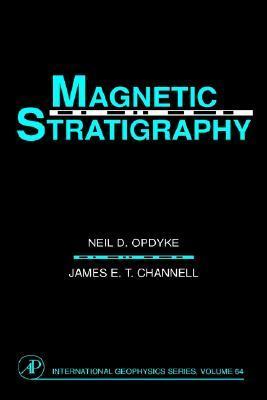
Magnetic Stratigraphy book cover
#64

Magnetic Stratigraphy

1996

Magnetic Stratigraphy is the most comprehensive book written in the English language on the subject of magnetic polarity stratigraphy and time scales. This volume presents the entirety of the known geomagneticrecord, which now extends back about 300 million years. The book includes the results of current research on sea floor spreading, magnetic stratigraphy of the Pliocene and Pleistocene, and postulations on the Paleozoic. Also included are both historicalbackground and applications of magnetostratigraphy. Individual chapters on correlation are presented, using changes in magnetic properties and secular variation. Key Features \* Discusses pioneering work in the use of marine sediments to investigate the Earths magnetic field \* Serves as a guide for students wishing to begin studies in magnetostratigraphy \* Provides a comprehensive guide to magnetic polarity stratigraphy including up-to-date geomagnetic polarity time scales \* Correlates magnetic stratigraphics from marine and non-marine Cenozoic sequences \* Details reversal history of the magnetic field for the last 350 million years \* Discusses correlation using magnetic dipole intensity changes \* Up-to-date correlation of biostratigraphy with magnetic stratigraphy through the late Jurassic
Small Scale Processes in Geophysical Fluid Flows book cover
#67

Small Scale Processes in Geophysical Fluid Flows

2000

While ocean waves are the most visible example of oceanic mixing processes, this macroscale mixing process represents but one end of the spectrum of mixing processes operating in the ocean. At the scale of a typical phytoplanktoic diatom or larval fish inhabiting these seas, the most important mixing processes occur on the molecular scale - at the scale of turbulence. Physical-biological interactions at this scale are of paramount importance to the productivity of the seas (fisheries) and the heat balance that controls large scale ocean climate phenomena such as El Niño and tornadoes. This book grew out of the need for a comprehensive treatment of the diverse elements of geophysical fluid flow at the microscale. Kantha and Clayson have arranged a logial exposition of the various mixing processes operating within and between the oceans and its boundaries with the atmosphere and ocean floor. The authors' intent is to develop a volume that would provide a comprehensive treatment of the fundamental elements of ocean mixing so that students, academics, and professional fluid dynamicists and oceanographers can access this essential information from one source. This volume will serve as both a valuable reference tool for mathematically inclined limnologists, oceanographers and fluid modelers. \ Simple models of oceanic and atmospheric boundary layers are discussed\ Comprehensive and up-to-date review\ Useful for graduate level course\ Essential for modeling the oceans and the atmosphere\* Color Plates
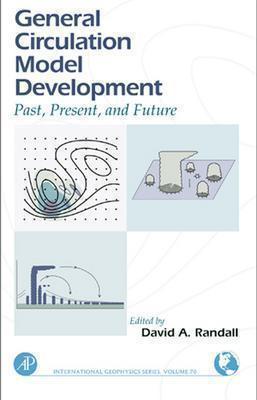
General Circulation Model Development book cover
#70

General Circulation Model Development

Past, Present, and Future

2000

General circulation models (GCMs) are the fundamental components of the numerical models used for global weather prediction and anthropogenic climate change simulations. This volume honors the influence of Professor Akio Arakawa's pioneering work at the University of California, Los Angeles, by presenting up-to-date contributions on topics ranging from numerical methods to cumulus parameterization. Professor Randall, the editor, has woven penetrating chapters on the history of GCMs and their applications with detailed articles on ocean modeling and GCM development and insightful discussions on the future of atmospheric GCM development into a comprehensive work. FEATURES: \* Foreword by Norman Phillips \* Authoritative overviews of current issues and ideas on global circulation modeling by leading experts \* Retrospective and forward-looking chapters by Akio Arakawa of UCLA \* Historical perspectives on the early years of general circulation modeling \* Indispensable reference for researchers and graduate students
Earth System Science book cover
#72

Earth System Science

From Biogeochemical Cycles to Global Changes

2000

Over the last decade, the study of cycles as a model for the earth's changing climate has become a new science. Earth Systems Science is the basis for understanding all aspects of anthropogenic global change, such as chemically forced global climate change. The work is aimed at those students interested in the emerging scientific discipline. Earth Systems Science is an integrated discipline that has been rapidly developing over the last two decades. New information is included in this updated edition so that the text remains relevant. This volume contains five new chapters, but of special importance is the inclusion of an expanded set of student exercises. The two senior authors are leading scientists in their fields and have been awarded numerous prizes for their research efforts. \* First edition was widely adopted \* Authors are highly respected in their field \* Global climate change, integral to the book, is now one of the most important issues in atmospheric sciences and oceanography
Chemistry and Physics of Stratospheric Ozone book cover
#74

Chemistry and Physics of Stratospheric Ozone

2000

The Chemistry and Physics of Stratospheric Ozone is a reference and textbook focusing on chemical and physical processes that determine the abundance of stratospheric ozone. The presentations assume knowledge of the atmosphere at the level of an advanced undergraduate in atmospheric sciences, but no specialized knowledge of chemistry or the stratosphere is required. The first part of the book discusses the fundamentals of stratospheric-ozone research, including kinetics, the continuity equation, the concept of lifetimes, and co-ordinate systems. The second part describes the processes that affect stratospheric ozone: chemical production and loss and transport by the circulation of the stratosphere. Catalytic loss is extensively discussed, and the mechanisms that determine the abundance of the important ozone-destroying radicals are thoroughly documented. To conclude, the author examines the causes of the Antarctic "ozone hole" and the effects of the eruption of Mount Pinatubo on the stratosphere. In particular, these perturbations to the stratosphere are used as examples of the feedbacks and interactions between the various processes that work to regulate the abundance of stratospheric ozone.
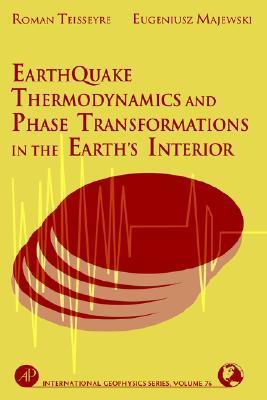
Earthquake Thermodynamics and Phase Transformation in the Earth's Interior book cover
#76

Earthquake Thermodynamics and Phase Transformation in the Earth's Interior

2000

A group of distinguished scientists contributes to the foundations of a new discipline in Earth sciences: earthquake thermodynamics and thermodynamics of formation of the Earth's interior structures. The predictive powers of thermodynamics are so great that those aspiring to model earthquake and the Earth's interior will certainly wish to be able to use the theory. Thermodynamics is our only method of understanding and predicting the behavior of many environmental, atmospheric, and geological processes. The need for Earth scientists to develop a functional knowledge of thermodynamic concepts and methodology is therefore urgent. Sources of an entropy increase the dissipative and self-organizing systems driving the evolution and dynamics of the Universe and Earth through irreversible processes. The non-linear interactions lead to the formation of fractal structures. From the structural phase transformations the important interior boundaries emerge. Non-linear interactions between the defects in solids lead the authors to develop the physics of continua with a dense distribution of defects. Disclinations and dislocations interact during a slow evolution as well as during rapid dynamic events, like earthquakes. Splitting the dynamic processes into the 2D fault done and 3D surrounding space brings a new tool for describing the slip nucleation and propagation along the earthquake faults. Seismic efficiency, rupture velocity, and complexity of seismic source zone are considered from different points of view, fracture band earthquake model is developed on the basis of thermodynamics of line defects, like dislocations. Earthquake thermodynamics offers us a microscopic model of earthquake sources. Physics of defects helps the authors decscribe and explain a number of precursory phenomena caused by the buildup of stresses. Anomalies in electric polarization and electromagnetic radiation prior to earthquakes are considered from this point of view. Through the thermodynamic approach, the authors arrive at the fascinating question of posssibility of earthquake prediction. In general, the Earth is considered here as a multicomponent system. Transport phenomena as well as wave propagation and shock waves are considered in this system subjected also to chemical and phase transformations.
Introduction to Micrometeorology book cover
#79

Introduction to Micrometeorology

1988

Introduction to Micrometeorology is intended as a textbook for courses in micrometeorology for undergraduate students (juniors or seniors) in meteorology or environmental science, as well as for an introductory graduate-level course in boundary-layer meteorology. It will also serve as a good reference for professional meteorologists, environmental scientists and engineers, particularly those interested in problems of air pollution, atmospheric-biospheric interactions, wind-engineering and engineering meteorology. The book outlines basic laws and concepts, before using qualitative descriptions to introduce more complex theories. This new edition is updated and expanded, as are the references. Each chapter features worked-through problems and exercises.
Spectral Imaging of the Atmosphere book cover
#82

Spectral Imaging of the Atmosphere

2002

Optical instruments are routinely employed to obtain a wealth of information about the atmosphere, including its composition, temperature, and winds. A bewildering variety of optical instruments have been proposed over the years, making it difficult to decide which instrument should be chosen to make a specific measurement. Spectral Imaging of the Atmosphere traces the historical development of both spectral and imaging methods and places them in a unified framework relevant to observations of the troposphere, stratosphere, mesosphere and thermosphere. The underlying concepts of various measurement methodologies are presented and paired with appropriate applications. A selection of specific spectral imaging instruments, appropriate to illustrate each conceptual type, is described in detail.Shepherd's work provides both scientists and engineers with an in-depth understanding of the fundamental concepts they need to know in order to plan a program of atmospheric measurements. Expected future methods and developments are also presented. Problems designed to test and enhance the reader's understanding of the material are included in each chapter.Provides a unique and unifed approach to the methodology of optical atmospheric observations from the troposphere through the thermosphere, which allows the practitioner to choose the best instrument for a given measurement.Describes state-of-the-art atmospheric observing instruments with an eye to future developments.Includes problems designed to test and enhance students' unerstanding of the material presented in each chapter.Contains concise descriptions of selected current and planned spectral imagers, including the Fabry-Perot spectrometer, the Michelson interferometer and the diffraction grating spectrometer.Written from a scientific perspective in an engineering framework, this work is accessible to atmospheric scientists and instrumentation engineers alike.
An Introduction to Atmospheric Radiation book cover
#84

An Introduction to Atmospheric Radiation

1980

This Second Edition of An Introduction to Atmospheric Radiation has been extensively revised to address the fundamental study and quantitative measurement of the interactions of solar and terrestrial radiation with molecules, aerosols, and cloud particles in planetary atmospheres. It contains 70% new material, much of it stemming from the investigation of the atmospheric greenhouse effects of external radiative perturbations in climate systems, and the development of methodologies for inferring atmospheric and surface parameters by means of remote sensing. Liou's comprehensive treatment of the fundamentals of atmospheric radiation was developed for students, academics, and researchers in atmospheric sciences, remote sensing, and climate modeling.
An Introduction to Dynamic Meteorology book cover
#88

An Introduction to Dynamic Meteorology

1963

An Introduction to Dynamic Meteorology, Fourth Edition presents a cogent explanation of the fundamentals of meteorology, and explains storm dynamics for weather-oriented meteorologists. This revised edition features updated treatments on climate dynamics, tropical meteorology, middle atmosphere dynamics, and numerical prediction. It contains a wealth of illustrations to elucidate text and equations, plus end-of-chapter problems. This book is recommended for senior and graduate students in meteorology and atmospheric science, as well as atmospheric scientists desiring a broad overview of dynamical meteorology. \ Provides clear physical explanations of key dynamical principles \ Contains a wealth of illustrations to elucidate text and equations, plus end-of-chapter problems \* Holton is one of the leading authorities in contemporary meteorology, and well known for his clear writing style NEW IN THIS EDITION Updated treatments on climate dynamics, tropical meteorology, middle atmosphere dynamics, and numerical prediction
#95

Paleoseismology

1996

The long-awaited for Second Edition is now here!
Nonlinear Ocean Waves and the Inverse Scattering Transform book cover
#97

Nonlinear Ocean Waves and the Inverse Scattering Transform

2010

For more than 200 years, the Fourier Transform has been one of the most important mathematical tools for understanding the dynamics of linear wave trains. Nonlinear Ocean Waves and the Inverse Scattering Transform presents the development of the nonlinear Fourier analysis of measured space and time series, which can be found in a wide variety of physical settings including surface water waves, internal waves, and equatorial Rossby waves. This revolutionary development will allow hyperfast numerical modelling of nonlinear waves, greatly advancing our understanding of oceanic surface and internal waves. Nonlinear Fourier analysis is based upon a generalization of linear Fourier analysis referred to as the inverse scattering transform, the fundamental building block of which is a generalized Fourier series called the Riemann theta function. Elucidating the art and science of implementing these functions in the context of physical and time series analysis is the goal of this book. presents techniques and methods of the inverse scattering transform for data analysis geared toward both the introductory and advanced reader venturing further into mathematical and numerical analysis suitable for classroom teaching as well as research
Storm and Cloud Dynamics book cover
#99

Storm and Cloud Dynamics

1992

Storm and Cloud Dynamics focuses on the dynamics of clouds and of precipitating mesoscale meteorological systems. Clouds and precipitating mesoscale systems represent some of the most important and scientifically exciting weather systems in the world. These are the systems that produce torrential rains, severe winds including downburst and tornadoes, hail, thunder and lightning, and major snow storms. Forecasting such storms represents a major challenge since they are too small to be adequately resolved by conventional observing networks and numerical prediction models.
Statistical Methods in the Atmospheric Sciences (Volume 100) book cover
#100

Statistical Methods in the Atmospheric Sciences (Volume 100)

1995

Praise for the First Edition: "I recommend this book, without hesitation, as either a reference or course text...Wilks' excellent book provides a thorough base in applied statistical methods for atmospheric sciences."—BAMS (Bulletin of the American Meteorological Society) Fundamentally, statistics is concerned with managing data and making inferences and forecasts in the face of uncertainty. It should not be surprising, therefore, that statistical methods have a key role to play in the atmospheric sciences. It is the uncertainty in atmospheric behavior that continues to move research forward and drive innovations in atmospheric modeling and prediction. This revised and expanded text explains the latest statistical methods that are being used to describe, analyze, test and forecast atmospheric data. It features numerous worked examples, illustrations, equations, and exercises with separate solutions. Statistical Methods in the Atmospheric Sciences, Second Edition will help advanced students and professionals understand and communicate what their data sets have to say, and make sense of the scientific literature in meteorology, climatology, and related disciplines. Accessible presentation and explanation of techniques for atmospheric data summarization, analysis, testing and forecasting Many worked examples End-of-chapter exercises, with answers provided

Introduction to Geophysical Fluid Dynamics book cover
#101

Introduction to Geophysical Fluid Dynamics

Physical and Numerical Aspects

1994

Introduction to Geophysical Fluid Dynamics provides an introductory-level exploration of geophysical fluid dynamics (GFD), the principles governing air and water flows on large terrestrial scales. Physical principles are illustrated with the aid of the simplest existing models, and the computer methods are shown in juxtaposition with the equations to which they apply. It explores contemporary topics of climate dynamics and equatorial dynamics, including the Greenhouse Effect, global warming, and the El Nino Southern Oscillation.
An Introduction to Atmospheric Gravity Waves book cover
#102

An Introduction to Atmospheric Gravity Waves

1993

Gravity waves exist in all types of geophysical fluids, such as lakes, oceans, and atmospheres. They play an important role in redistributing energy at disturbances, such as mountains or seamounts and they are routinely studied in meteorology and oceanography, particularly simulation models, atmospheric weather models, turbulence, air pollution, and climate research. An Introduction to Atmospheric Gravity Waves provides readers with a working background of the fundamental physics and mathematics of gravity waves, and introduces a wide variety of applications and numerous recent advances. Nappo provides a concise volume on gravity waves with a lucid discussion of current observational techniques and instrumentation. An accompanying CD-ROM contains real data, computer codes for data analysis, and linear gravity wave models to further enhance the reader's understanding of the book's material. Foreword is written by Prof. George Chimonas, a renowned expert on the interactions of gravity waves with turbulence. CD containing real data, computer codes for data analysis and linear gravity wave models included with the text

Authors

James P. McCalpin
Author · 1 book

James McCalpin (aka Dr. Rox)) is a geologist who performs research and consulting in geological hazards, especially earthquakes and landslides. He studied geology at the University of Texas (BA, 1972), University of Colorado (MS, 1975), and the Colorado School of Mines (PhD, 1981). He was a field geologist for US Geological Survey in Alaska and California (1976-78), and later County Geologist for Jefferson County, Colorado (1981). Then came 10 years as a professor at Utah State University (1982-1991). Since 1991 he's been a full-time consultant in Colorado, heading GEO-HAZ Consulting (www.geohaz.com). For GEO-HAZ projects he travels the globe, having visited 40 countries in the past 22 years, and having learned bad words in many languages and dialects. Dr. Rox also directs the Crestone Science Center in Crestone, Colorado (www.crestonescience.org). His latest book (Crestone: Gateway to the Higher Realms; 2011) is a tell-all guidebook to Crestone, surely one of the wildest, strangest, and most beautiful places on the Planet.

548 Market St PMB 65688, San Francisco California 94104-5401 USA
© 2026 Paratext Inc. All rights reserved