Margins
Intersectionnalité book cover
Intersectionnalité
Une introduction
2023
First Published
3.86
Average Rating
312
Number of Pages
Lieu commun dans les sciences sociales et dans certains cercles militants, féministes et antiracistes en particulier, la notion d’intersectionnalité alimente dernièrement l’une des grandes paniques morales dont notre époque est coutumière : elle serait synonyme de « communautarisme », de « séparatisme ». Ce n’est absolument pas le cas, comme le montre ce livre riche, synthétique et vivant, qui a pour ambition d’introduire le concept auprès d’un large lectorat. Il s’agit d’un outil d’analyse des situations de tort, généralement constituées d’oppressions imbriquées. L’analyse intersectionnelle ne consiste pas à plaquer des notions génériques (la triade « race, classe, genre ») sur des faits, mais à développer une perception fine et située du caractère relationnel des oppressions. L’intersectionnalité est en outre une pratique critique ayant la justice sociale pour horizon. En ce sens, elle ne se réduit pas au champ académique, loin de là. Les autrices font commencer son histoire dans les années 1960-1970, avec les pratiques intellectuelles et politiques de femmes non blanches et, plus spécifiquement encore, avec le féminisme noir et chicano de cette période. Puis elles expliquent comment cette approche s’est institutionnalisée et mondialisée à partir de la fin des années 1980. La pédagogie critique inspirée de Paulo Freire constitue un autre axe généalogique, plus inattendu, développé dans l’ouvrage. Ni communautariste, ni individualiste, ni victimaire, l’approche intersectionnelle souligne donc le caractère social et concret des identités, individuelles comme collectives, dans une perspective émancipatrice.

Avg Rating
3.86
Number of Ratings
7
5 STARS
43%
4 STARS
0%
3 STARS
57%
2 STARS
0%
1 STARS
0%
goodreads

Authors

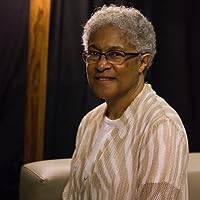
Patricia Hill Collins
Author · 10 books

Patricia Hill Collins (born May 1, 1948) is currently a Distinguished University Professor of Sociology at the University of Maryland, College Park. She is also the former head of the Department of African American Studies at the University of Cincinnati, and the past President of the American Sociological Association Council. Collins' work primarily concerns issues involving feminism and gender within the African-American community. She first came to national attention for her book Black Feminist Thought: Knowledge, Consciousness and the Politics of Empowerment, originally published in 1990. Collins was born in Philadelphia, Pennsylvania in 1948. The only daughter of a factory worker and a secretary, Collins attended the Philadelphia public schools. After obtaining her bachelor's degree from Brandeis University in 1969, she continued on to earn a Master of Arts Degree in Teaching from Harvard University in 1970. From 1970 to 1976, she was a teacher and curriculum specialist at St Joseph Community School, among two others, in Boston. She continued on to become the Director of the Africana Center at Tufts University until 1980, after which she completed her doctorate in sociology back at Brandeis in 1984. While earning her PhD, Collins worked as an assistant professor at the University of Cincinnati beginning in 1982. In 1990, Collins published her first book, "Black Feminist Thought: Knowledge, Consciousness and the Politics of Empowerment". A revised tenth anniversary edition of the book was published in 2000, and subsequently translated into Korean in 2009. While working at Tufts, she married Roger L. Collins in the year 1977, a professor of education at the University of Cincinnati, with whom she has one daughter, Valerie L. Collins. In 1990, Collins was the recipient of the prestigious C. Wright Mills Award. She was later awarded the Jessie Bernard Award by the American Sociological Association in 1993. For her book Black Sexual Politics: African Americans, Gender and the New Racism (Routledge, 2005), she was presented the American Sociological Association Distinguished Scholarly Book Award in 2007. Collins is recognized as a social theorist, drawing from many intellectual traditions; her more than 40 articles and essays have been published in a wide range of fields, including philosophy, history, psychology, and most notably sociology. Moreover, Collins was the recipient of a Sydney Spivack Dissertation Support Award. The University of Cincinnati named Collins The Charles Phelps Taft Professor of Sociology in 1996, making her the first ever African-American, and only the second woman, to hold this position. She received emeritus status in the Spring of 2005, and became a professor of sociology at the University of Maryland, College Park. The University of Maryland named Collins a Distinguished University Professor in 2006. (from Wikipedia)

548 Market St PMB 65688, San Francisco California 94104-5401 USA
© 2025 Paratext Inc. All rights reserved