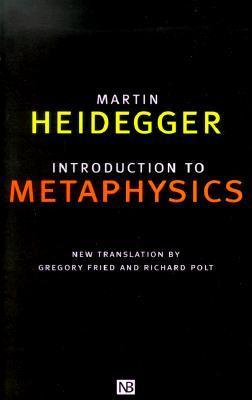
Contains a series of lectures delivered by Heidegger in 1935 at the University of Freiburg. In this work Heidegger presents the broadest and most intelligible account of the problem of being, as he sees this problem. First, he discusses the relevance of it by pointing out how this problem lies at the root not only of the most basic metaphysical questions but also of our human existence in its present historical setting. Then, after a short digression into the grammatical forms and etymological roots of the word "being," Heidegger enters into a lengthy discussion of the meaning of being in Greek thinking, letting pass at the same time no opportunity to stress the impact of this thinking about being on subsequent western speculation. His contention is that the meaning of being in Greek thinking underwent a serious restriction through the opposition that was introduced between being on one hand, and becoming, appearance, thinking and values on the other.