Introduction to Phenomenological Research
1994
First Published
4.42
Average Rating
272
Number of Pages
Introduction to Phenomenological Research, volume 17 of Martin Heidegger's Gesamtausgabe, contains his first lectures given at Marburg in the winter semester of 1923–1924. In these lectures, Heidegger introduces the notion of phenomenology by tracing it back to Aristotle's treatments of phainomenon and logos . This extensive commentary on Aristotle is an important addition to Heidegger's ongoing interpretations which accompany his thinking during the period leading up to Being and Time. Additionally, these lectures develop critical differences between Heidegger's phenomenology and that of Descartes and Husserl and elaborate questions of facticity, everydayness, and flight from existence that are central in his later work. Here, Heidegger dismantles the history of ontology and charts a new course for phenomenology by defining and distinguishing his own methods.

Avg Rating
4.42
Number of Ratings
31
5 STARS
61%
4 STARS
19%
3 STARS
19%
2 STARS
0%
1 STARS
0%
goodreads
Author

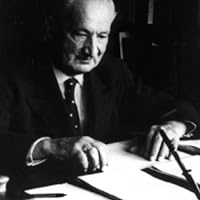
Martin Heidegger
Author · 91 books
Martin Heidegger (1889-1976) was a German philosopher whose work is perhaps most readily associated with phenomenology and existentialism, although his thinking should be identified as part of such philosophical movements only with extreme care and qualification. His ideas have exerted a seminal influence on the development of contemporary European philosophy. They have also had an impact far beyond philosophy, for example in architectural theory (see e.g., Sharr 2007), literary criticism (see e.g., Ziarek 1989), theology (see e.g., Caputo 1993), psychotherapy (see e.g., Binswanger 1943/1964, Guignon 1993) and cognitive science (see e.g., Dreyfus 1992, 2008; Wheeler 2005; Kiverstein and Wheeler forthcoming).