


Margins
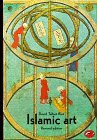
Islamic art book cover
Islamic art
1965
First Published
3.73
Average Rating
288
Number of Pages

Islamic art is the supreme triumph of pattern and colour, qualities which the west has historically underrated, and which make a direct appeal that is impossible to resist. 'Both historical and geographical stages are charted by an ingenious choice of examples in almost every medium. The result is an admirable survey' (The Times Literary Supplement) 249 illustrations, 55 in colour
Avg Rating
3.73
Number of Ratings
64
5 STARS
23%
4 STARS
41%
3 STARS
25%
2 STARS
8%
1 STARS
3%
goodreads

Author

David Talbot Rice
David Talbot Rice
Author · 4 books

David Talbot Rice CBE (11 July 1903 in Rugby – 12 March 1972 in Cheltenham) was an English art historian. His father was "Talbot-Rice" and both he and his wife published using "Talbot Rice" as a surname, but are also sometimes found under "Rice" alone, or "Talbot-Rice". Born in Rugby and brought up in Gloucestershire (England), he was educated at Eton prior to reading archaeology and anthropology at Christ Church, Oxford.[1] At Oxford his circle of friends included Evelyn Waugh and Harold Acton as well as his future wife (Elena) Tamara Abelson (1904–1993) whom he was to marry in 1927. She was a Russian émigrée, who was also an art historian, writing on Byzantine and Central Eastern art and other subjects as Tamara Talbot Rice. Following his graduation, Talbot Rice undertook a number of archaeological digs overseas and developed a passion for all things Byzantine. His expertise in the area of Islamic art was recognised when, in 1932, Samuel Courtauld endowed the Courtauld Institute at the University of London and Talbot Rice was among the first appointments, taking up a position as lecturer. Talbot Rice was subsequently appointed to the Watson Gordon Chair of Fine Art at the University of Edinburgh in 1934, a post he held until his death in 1972. In 1937 he gave the Ilchester Lecture, later published as The Beginnings of Russian Icon Painting. During the Second World War Talbot Rice served with modest distinction as Head of the Near East Section of Military Intelligence (MI3b), which was responsible for Eastern Europe including Yugoslavia but excluding Russia and Scandinavia. Originally commissioned onto the Special List in 1939, he transferred to the Intelligence Corps in 1943. He ended the war with the rank of Major. When peacetime returned he came back to Scotland and established an Honours degree at the University which combined art history and studio art and is still offered today. His ambition to establish an arts centre in the University was realised posthumously when the Talbot Rice Gallery was founded and named after him. From 1952 to 1954, he led the excavations of the Great Palace of Constantinople in Istanbul, Turkey.

548 Market St PMB 65688, San Francisco California 94104-5401 USA
© 2026 Paratext Inc. All rights reserved