When Ettie's husband dies, her daughter Iza insists that her mother give up the family house in the countryside and move to Budapest. Displaced from her community and her home, Ettie tries to find her place in this new life, but can't seem to get it right. She irritates the maid, hangs food outside the window because she mistrusts the fridge and, in her naivety and loneliness, invites a prostitute in for tea. Iza’s Ballad is the story of a woman who loses her life’s companion and a mother trying to get close to a daughter whom she has never truly known. It is about the meeting of the old-fashioned and the modern worlds and the beliefs we construct over a lifetime.
Author
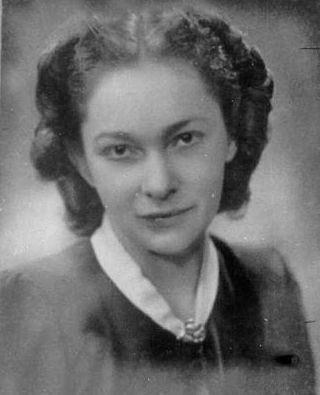
Magda Szabó was a Hungarian writer, arguably Hungary's foremost female novelist. She also wrote dramas, essays, studies, memories and poetry. Born in Debrecen, Szabó graduated at the University of Debrecen as a teacher of Latin and of Hungarian. She started working as a teacher in a Calvinist all-girl school in Debrecen and Hódmezővásárhely. Between 1945 and 1949 she was working in the Ministry of Religion and Education. She married the writer and translator Tibor Szobotka in 1947. She began her writing career as a poet, publishing her first book Bárány ("Lamb") in 1947, which was followed by Vissza az emberig ("Back to the Human") in 1949. In 1949 she was awarded the Baumgarten Prize, which was—for political reasons—withdrawn from her on the very day it was given. She was dismissed from the Ministry in the same year. During the establishment of Stalinist rule from 1949 to 1956, the government did not allow her works to be published. Since her unemployed husband was also stigmatized by the communist regime, she was forced to teach in an elementary school during this period. Her first novel, Freskó ("Fresco"), written in these years was published in 1958 and achieved overwhelming success among readers. Her most widely read novel, Abigél ("Abigail", 1970), is an adventure story about a schoolgirl boarding in eastern Hungary during the war. She received several prizes in Hungary, and her works have been published in 42 countries. In 2003, she was the winner of the French literary prize Prix Femina Étranger for the best foreign novel. Her novel Abigél was popularized through a much-loved television series in 1978. Abigél was also chosen as the sixth most popular novel at the Hungarian version of Big Read. Her three other novels that were in the top 100 are Für Elise , An Old-Fashioned Story , and The Door .