Margins


548 Market St PMB 65688, San Francisco California 94104-5401 USA
© 2026 Paratext Inc. All rights reserved

"James Tiptree Jr." was born Alice Bradley in Chicago in 1915. Her mother was the writer Mary Hastings Bradley; her father, Herbert, was a lawyer and explorer. Throughout her childhood she traveled with her parents, mostly to Africa, but also to India and Southeast Asia. Her early work was as an artist and art critic. During World War II she enlisted in the Army and became the first American female photointelligence officer. In Germany after the war, she met and married her commanding officer, Huntington D. Sheldon. In the early 1950s, both Sheldons joined the then-new CIA; he made it his career, but she resigned in 1955, went back to college, and earned a Ph.D. in experimental psychology. At about this same time, Alli Sheldon started writing science fiction. She wrote four stories and sent them off to four different science fiction magazines. She did not want to publish under her real name, because of her CIA and academic ties, and she intended to use a new pseudonym for each group of stories until some sold. They started selling immediately, and only the first pseudonym—"Tiptree" from a jar of jelly, "James" because she felt editors would be more receptive to a male writer, and "Jr." for fun—was needed. (A second pseudonym, "Raccoona Sheldon," came along later, so she could have a female persona.) Tiptree quickly became one of the most respected writers in the field, winning the Hugo Award for The Girl Who was Plugged In and Houston, Houston, Do You Read?, and the Nebula Award for "Love is the Plan, the Plan is Death" and Houston, Houston. Raccoona won the Nebula for "The Screwfly Solution," and Tiptree won the World Fantasy Award for the collection Tales from the Quintana Roo. The Tiptree fiction reflects Alli Sheldon's interests and concerns throughout her life: the alien among us (a role she portrayed in her childhood travels), the health of the planet, the quality of perception, the role of women, love, death, and humanity's place in a vast, cold universe. The Otherwise Award (formerly the Tiptree Award) has celebrated science fiction that "expands and explores gender roles" since 1991. Alice Sheldon died in 1987 by her own hand. Writing in her first book about the suicide of Hart Crane, she said succinctly: "Poets extrapolate." Julie Phillips wrote her biography, James Tiptree, Jr.: The Double Life of Alice B. Sheldon
2023
The 1970s: More Classic Science Fiction Stories by Women
2022
2021
2018
Up the Walls of the World & Brightness Falls From the Air
2016
2010
2001
The Uncollected Tiptree: Fiction and Nonfiction
2000
The Poetry of James Tiptree, Jr.
1996
1990
1990
1989
1989
1989
1988
1986
1986
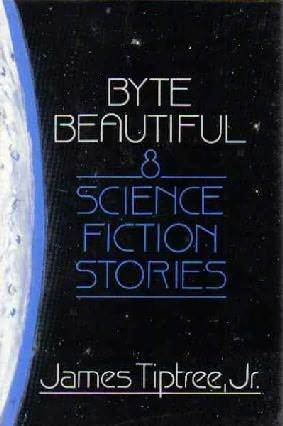
Eight Science Fiction Stories
1985
1985
1983
1981
Science Fiction Stories
1981
1979
1978
1976
1975
1975
1975
1973
1973
1972