Margins


548 Market St PMB 65688, San Francisco California 94104-5401 USA
© 2026 Paratext Inc. All rights reserved

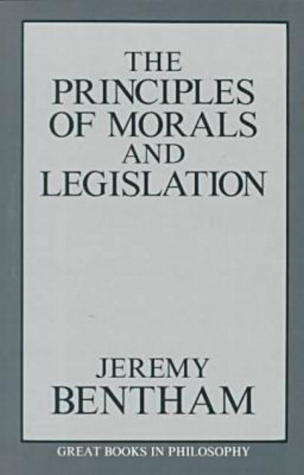
In 1748, Jeremy Bentham was born in London. The great philosopher, utilitarian humanitarian and atheist began learning Latin at age four. He earned his B.A. from Oxford by age 15 or 16, and his M.A. at 18. His Rationale of Punishments and Rewards was published in 1775, followed by his groundbreaking utilitarian work, Introduction to the Principles of Morals and Legislation. Bentham propounded his principle of "the greatest happiness of the greatest number." He worked for political, legal, prison and educational reform. Inheriting a large fortune from his father in 1792, Bentham was free to spend his remaining life promoting progressive causes. The renowned humanitarian was made a citizen of France by the National Assembly in Paris. In published and unpublished treatises, Bentham extensively critiqued religion, the catechism, the use of religious oaths and the bible. Using the pen-name Philip Beauchamp, he co-wrote a freethought treatise, Analysis of the Influence of Natural Religion on the Temporal Happiness of Mankind (1822). D. 1832. More: http://en.wikipedia.org/wiki/Jeremy\_B... http://www.iep.utm.edu/bentham/ http://www.ucl.ac.uk/Bentham-Project/who http://www.econlib.org/library/Enc/bi... http://en.wikiquote.org/wiki/Jeremy\_B... http://www.spartacus.schoolnet.co.uk/... http://utilitarianism.com/bentham.htm http://www.historyguide.org/intellect...
2015
2011
2009
2008
Paederasty
2004
2003
2000
1994
1989
1984
1970
1863
1834
Or The Inspection House
1791
1789
1776