Margins




548 Market St PMB 65688, San Francisco California 94104-5401 USA
© 2026 Paratext Inc. All rights reserved
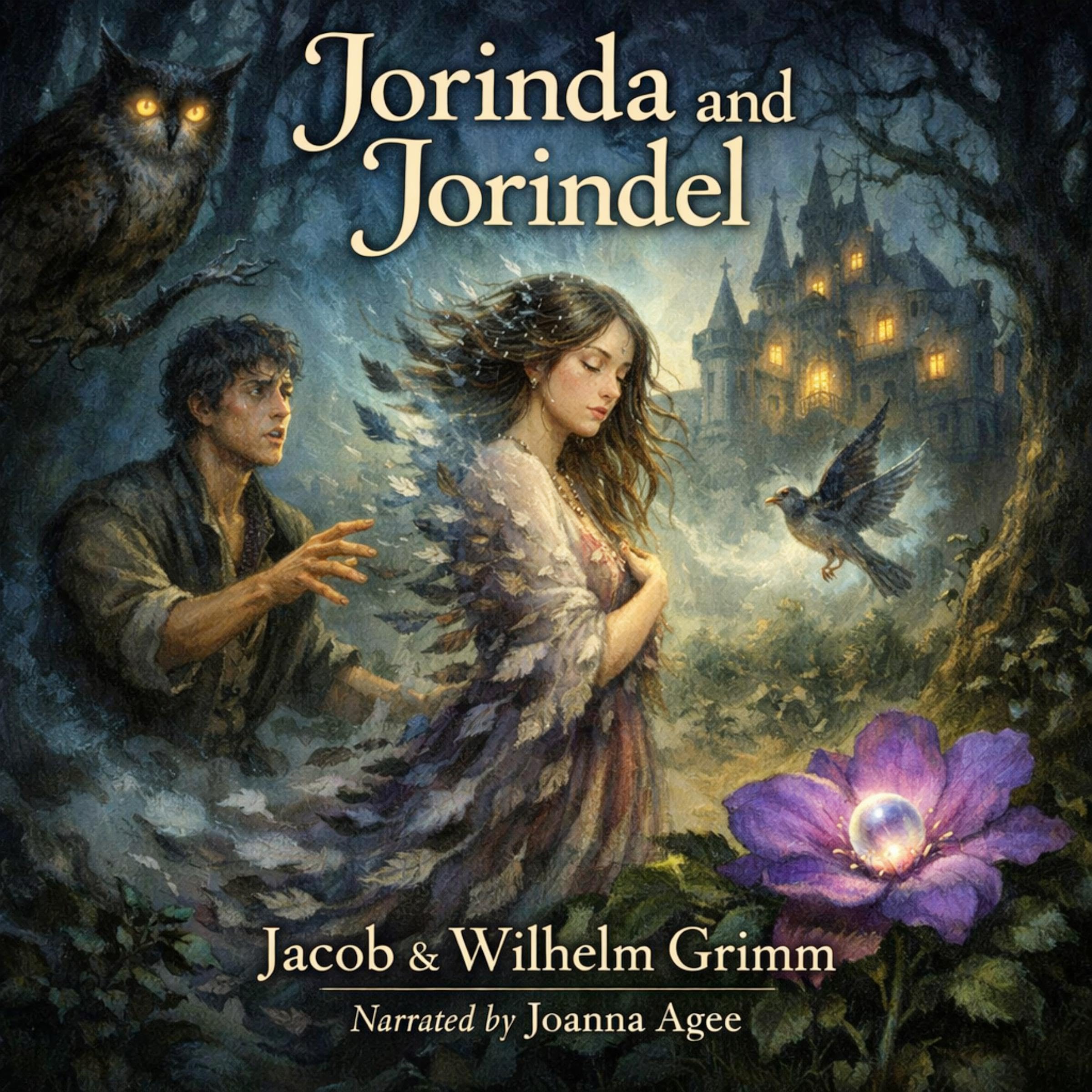
Deep within a shadowed forest stands an ancient castle ruled by a powerful and merciless fairy—one who turns love into captivity and innocence into song. Jorinda and Jorindel are young, devoted, and newly promised to one another when they wander too close to this cursed place. In a single, devastating moment, Jorinda is transformed into a nightingale and imprisoned among hundreds of enchanted birds, while Jorindel is left helpless, bound by magic and grief. Driven by love and guided by a prophetic dream, Jorindel embarks on a quiet but determined quest to break the spell that stole his beloved away. Armed only with hope and a mysterious purple flower, he dares to return to the fairy’s domain—where ancient magic, dark enchantments, and redemption await. One of the Brothers Grimm’s most haunting and romantic fairy tales, Jorinda and Jorindel weaves together themes of forbidden magic, steadfast devotion, and the triumph of love over cruelty. Narrated with elegance and emotional depth by Joanna Agee, this classic tale unfolds like a spell whispered at twilight—beautiful, eerie, and unforgettable.