


Margins
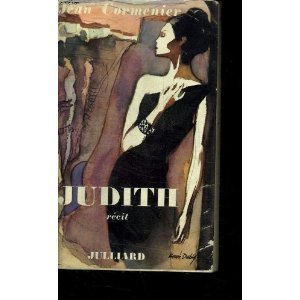
Judith. book cover
Judith.
1963
First Published
3.50
Average Rating
195
Number of Pages

Under siege by the armies of the giant barbarian, Holofernes, the Judean city is about to capitulate—and the people, and prophets, call out to the lovely, virginal Judith as their last hope of salvation. Their belief is that only she can gain audience with Holofernes and, when his attention is diverted by her charms, slay him. At first Judith refuses to believe that God has chosen her for this task, but when she learns that the army has defected, and the men of her people are resigned to defeat, she resolves to go, even refusing the help of Susannah, a prostitute who looks like her and who begs to undertake the mission in her place. At the camp of Holofernes, Judith is at first taunted by an aide who masquerades as his commander, but then the true Holofernes appears—and he proves to be not a barbarian at all, but a man among men to whom Judith finds herself surrendering without restraint An often forgotten classic, Giraudoux boldly does for Judith what Oscar Wilde did for another biblical figure, Salome, years later. Presented in a new, easily portable acting edition, no young actor or stage aficionado should be found without this on their shelf.
Avg Rating
3.50
Number of Ratings
24
5 STARS
17%
4 STARS
29%
3 STARS
42%
2 STARS
13%
1 STARS
0%
goodreads

Author

Jean Giraudoux
Jean Giraudoux
Author · 15 books

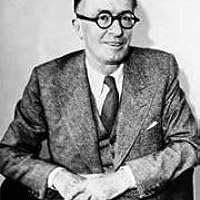
Greek mythology or Biblical stories base dramas, such as Electra (1937), of French writer Hippolyte Jean Giraudoux, who also wrote several novels. He fathered Jean-Pierre Giraudoux. People consider this French novelist, essayist, diplomat. and playwright among the most important French dramatists of the period between World War I and World War II. They note his work for its stylistic elegance and poetic fantasy. The relationship between man and woman or some unattainable ideal in some cases dominates themes of Giraudoux . Léger Giraudoux, father of Jean Giraudoux, worked for the ministry of transport. Giraudoux studied at the Lycée Lakanal in Sceaux and upon graduation traveled extensively in Europe. After his return to France in 1910, he accepted a position with the ministry of foreign affairs. With the outbreak of World War I, he served with distinction and in 1915 became the first writer ever to be awarded the wartime Legion of Honour. He married in 1918 and in the subsequent inter-war period produced the majority of his writing. He first achieved literary success through his novels, notably Siegfried et le Limousin (1922) and Eglantine (1927). An ongoing collaboration with actor and theater director Louis Jouvet, beginning in 1928 with Jouvet's radical streamlining of Siegfried for the stage, stimulated his writing. But it is through his plays that gained him international renown. He became well known in the English-speaking world largely because of the award-winning adaptations of his plays by Christopher Fry (The Trojan War Will Not Take Place) and Maurice Valency (The Madwoman of Chaillot, Ondine, The Enchanted, The Apollo of Bellac). Giraudoux served as a juror with Florence Meyer Blumenthal in awarding the Prix Blumenthal, a grant given between 1919 and 1954 to painters, sculptors, decorators, engravers, writers, and musicians. He is buried in the Cimetière de Passy in Paris. His son, Jean-Pierre Giraudoux, was also a writer.

548 Market St PMB 65688, San Francisco California 94104-5401 USA
© 2026 Paratext Inc. All rights reserved