Margins




548 Market St PMB 65688, San Francisco California 94104-5401 USA
© 2026 Paratext Inc. All rights reserved
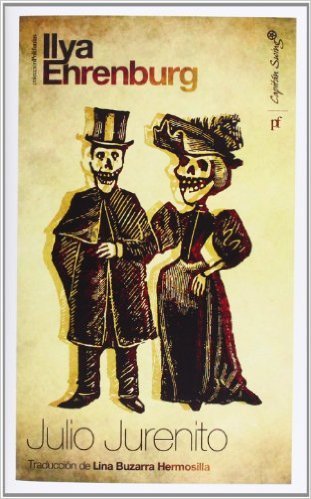
…A piquant, picaresque satire a la Voltaire of both Western capitalism and the Communist Revolution. - TIME A mixture of mockery and prophecy, the book savaged every ideology and religion while foreseeing both the Holocaust and Hiroshima. (Ehrenburg himself predicted the Nazi attack on the Soviet Union to the day—his intimacy with history always bordered on the telepathic.) - Richard Lourie, The NY Times, August 25, 1996 The book deals with the adventures of a Mexican dreamer Julio Jurenito and his wanderings about Europe along with his seven disciples (Ehrenburg himself is the first disciple and the author-narrator). The novel includes authentic characters, such as Mayakovski, Picasso, Chaplin, and Tatlin. This is a biting satire of the European postwar civilization. This extraordinarily sneering book is a modernized Candide, covering Soviet Russia and the European West, after the stress of the WWI years. Its main character Jurenito (he is supposed to be a portrait of the famous Mexican painter, Diego Rivera) and his Negro servant travel, observe, comment, and make the reader roar with laughter at the idiotic inconsistencies of capitalist civilization. A prolific and smart journalist by nature, Ehrenburg combines a satirical vein with a snappy, terse language, and a flair for topical themes with very unsentimental eroticism. Julio Jurenito will probably remain the most vivid illustration, not just in Russian but in the whole of European literature, of the post-WWI sentiments of the harassed western intelligentsia. In this book there is everything: sophistication, cynicism, trenchant satire, sentimental lyricism, and the gay abandon of despair. All this combined makes a brilliant firework of paradoxes, subtle observations of the life of the European bourgeoisie, and sarcastic details. It may be called a confession, a pamphlet, a grotesque, or a poem.