Margins
Kaldan og Schäfer book cover 1
Kaldan og Schäfer book cover 2
Kaldan og Schäfer book cover 3
Kaldan og Schäfer
Series · 5 books · 1963-2022

Books in series

The Corpse Flower book cover
#1

The Corpse Flower

2017

The Girl With the Dragon Tattoo meets Sharp Objects in this internationally bestselling psychological thriller, for fans of Jo Nesbø and Henning Mankell, now for the first time in English A Danish journalist digs deep to uncover a web of lies that stretches back to a grisly murder, but knowing the truth might put an end to her story. It's early September in Copenhagen, the rain has been coming down for weeks, and 36-year-old journalist Heloise Kaldan is in the middle of a nightmare. One of her sources has been caught lying, and she could lose her job over it. And then she receives the first in a series of cryptic and ominous letters from an alleged killer. Wanted in connection with the fatal stabbing of a young lawyer three years earlier, Anna Kiel hasn't been seen by anyone since she left the crime scene covered in blood. The police think she's fled the country and have zero clues as to her motive. But homicide detective Erik Scháfer comes up with the first lead when the reporter who first wrote about the case is found murdered in his apartment. Has Anna Kiel struck again, or is there more than one killer at large? And why does every clue point directly to Heloise Kaldan? Meanwhile, the letters keep coming, and they hint at a connection between Anna and Heloise. As Heloise starts digging deeper, she realizes that, to tell Anna's story, she will have to revisit the darkest parts of her own past—confronting someone she swore she'd never see again.
The Collector book cover
#2

The Collector

1963

Withdrawn, uneducated and unloved, Frederick collects butterflies and takes photographs. He is obsessed with a beautiful stranger, the art student Miranda. When he wins the pools he buys a remote Sussex house and calmly abducts Miranda, believing she will grow to love him in time.
The Collector book cover
#2

The Collector

2018

For fans of Katrine Engberg and Lars Kepler, the second chilling novel in Anne Mette Hancock’s #1 bestselling Danish crime series is a psychological whirlwind that explores the nature of truth and what it means when we can no longer trust what we know to be real. When 10-year-old Lukas disappears from his Copenhagen school, police investigators discover that the boy had a peculiar obsession with pareidolia—a phenomenon that makes him see faces in random things. A photo on his phone posted just hours before his disappearance shows an old barn door that resembles a face. Journalist Heloise Kaldan thinks she recognizes the barn—but from where? When Luke’s blood-flecked jacket is found in the moat at Copenhagen’s Citadel, DNA evidence points to Thomas Strand, an ex-soldier suffering from severe PTSD. But then Strand turns up dead in his apartment, shot in the head execution style. What did the last person to see Lukas really witness that morning in the school yard? Was it really Lukas, or an optical illusion? Can you ever truly trust your eyes?
Ruthless book cover
#3

Ruthless

2020

For fans of Jo Nesbø and Katrine Engberg, international bestselling author Anne Mette Hancock’s third thrilling novel in the series Harlan Coben calls “the best series I’ve read this year,” is a pulse-pounding Scandinavian noir about secrets, buried truths, and what happens when we go digging into the past. When Jan Frischof, a dying elderly man, gives a deathbed confession too unbelievable to be true, journalist Heloise Kaldan immediately knows there’s a deeper story to uncover. Her gut soon proves to be right—Jan immediately backtracks and warns her that they will both be in danger if she asks any more questions. Could this kind and elderly man really be a cold-blooded killer? Heloise quickly realizes that this is a darker, and far more complicated, investigation. Jan is clearly afraid of something, but who or what he’s afraid of could be a dangerous question for Heloise to find the answer to. And that’s the least of her problems: How is a string of disappearances of several young women decades earlier connected to this horrifying confession? Why are the next of kin, not to mention the police, lying to her at every turn? What else could Jan be hiding? Enlisting her friend, detective inspector Erik Schäfer, Heloise begins her descent into the past, unsure of what she will unearth. Will she discover the truth before Jan’s last breath? Or will she soon be joining him in the grave?
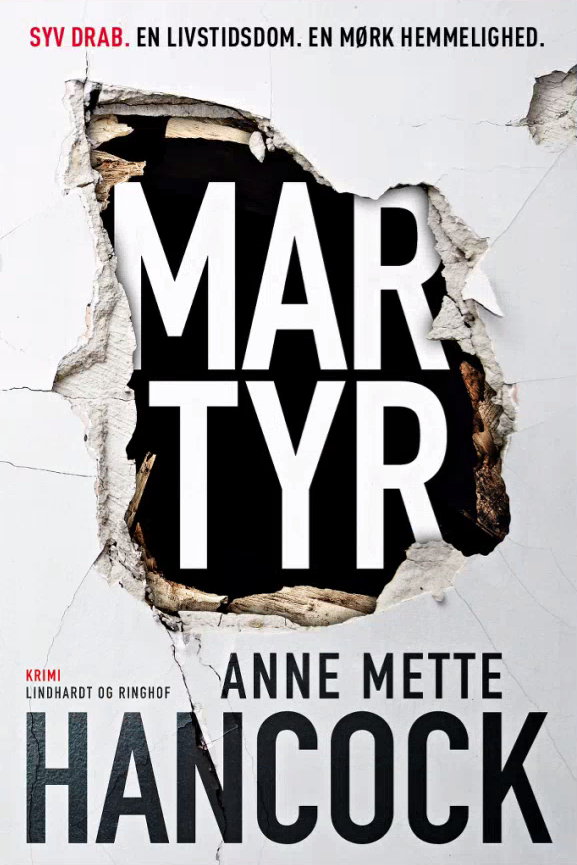
Martyr book cover
#4

Martyr

2022

Syv drab. En morder bag lås og slå. En hædret efterforsker med en mørk hemmelighed. Journalist Heloise Kaldan har succes med sin nye true crime-podcast, som på få måneder er blevet landets mest lyttede radioprogram. Da hendes ven, drabsefterforsker Erik Schäfer, gæster studiet, er det for at tale om en fireogtyve år gammel sag: sagen om billedkunstner Hans Verni ? en af danmarkshistoriens værste seriemordere. Som ung betjent var det nemlig Schäfer, der sendte Verni i livsvarigt fængsel. Noget, han i dag betegner som sin største bedrift. Da liget af en ung kvinde dagen efter udsendelsen dukker op i haven bag Den Katolske Kirke i København, ligner det til forveksling Hans Vernis værk. Schäfer afviser, at der kan være tale om andet end en copycat, men da endnu et kvindelig bliver fundet, dykker Heloise alligevel ned i de gamle sager, og snart står spørgsmålene i kø: Har Schäfer sat en uskyldig mand bag tremmer? Hvad er det, han skjuler? Er den rigtige morder stadig på fri fod? Og er hendes eget liv i fare? MARTYR er en krimi om hævn, retfærdighed og tilgivelse.

Authors

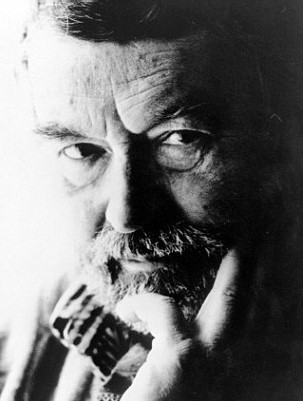
John Fowles
John Fowles
Author · 19 books

John Robert Fowles was born in Leigh-on-Sea, a small town in Essex. He recalled the English suburban culture of the 1930s as oppressively conformist and his family life as intensely conventional. Of his childhood, Fowles said "I have tried to escape ever since." Fowles attended Bedford School, a large boarding school designed to prepare boys for university, from ages 13 to 18. After briefly attending the University of Edinburgh, Fowles began compulsory military service in 1945 with training at Dartmoor, where he spent the next two years. World War II ended shortly after his training began so Fowles never came near combat, and by 1947 he had decided that the military life was not for him. Fowles then spent four years at Oxford, where he discovered the writings of the French existentialists. In particular he admired Albert Camus and Jean-Paul Sartre, whose writings corresponded with his own ideas about conformity and the will of the individual. He received a degree in French in 1950 and began to consider a career as a writer. Several teaching jobs followed: a year lecturing in English literature at the University of Poitiers, France; two years teaching English at Anargyrios College on the Greek island of Spetsai; and finally, between 1954 and 1963, teaching English at St. Godric's College in London, where he ultimately served as the department head. The time spent in Greece was of great importance to Fowles. During his tenure on the island he began to write poetry and to overcome a long-time repression about writing. Between 1952 and 1960 he wrote several novels but offered none to a publisher, considering them all incomplete in some way and too lengthy. In late 1960 Fowles completed the first draft of The Collector in just four weeks. He continued to revise it until the summer of 1962, when he submitted it to a publisher; it appeared in the spring of 1963 and was an immediate best-seller. The critical acclaim and commercial success of the book allowed Fowles to devote all of his time to writing. The Aristos, a collection of philosophical thoughts and musings on art, human nature and other subjects, appeared the following year. Then in 1965, The Magus - drafts of which Fowles had been working on for over a decade - was published. The most commercially successful of Fowles' novels, The French Lieutenant's Woman, appeared in 1969. It resembles a Victorian novel in structure and detail, while pushing the traditional boundaries of narrative in a very modern manner. In the 1970s Fowles worked on a variety of literary projects—including a series of essays on nature—and in 1973 he published a collection of poetry, Poems. Daniel Martin, a long and somewhat autobiographical novel spanning over 40 years in the life of a screenwriter, appeared in 1977, along with a revised version of The Magus. These were followed by Mantissa (1982), a fable about a novelist's struggle with his muse; and A Maggot (1985), an 18th century mystery which combines science fiction and history. In addition to The Aristos, Fowles wrote a variety of non-fiction pieces including many essays, reviews, and forewords/afterwords to other writers' novels. He also wrote the text for several photographic compilations. From 1968, Fowles lived in the small harbour town of Lyme Regis, Dorset. His interest in the town's local history resulted in his appointment as curator of the Lyme Regis Museum in 1979, a position he filled for a decade. Wormholes, a book of essays, was published in May 1998. The first comprehensive biography on Fowles, John Fowles: A Life in Two Worlds, was published in 2004, and the first volume of his journals appeared the same year (followed recently by volume two). John Fowles passed away on November 5, 2005 after a long illness.


548 Market St PMB 65688, San Francisco California 94104-5401 USA
© 2026 Paratext Inc. All rights reserved
Kaldan og Schäfer