Margins
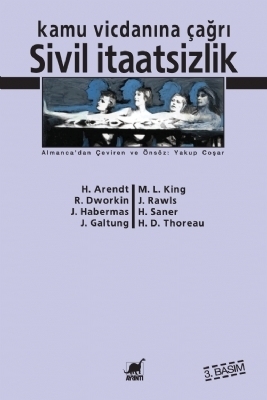
Kamu Vicdanına Çağrı book cover
Kamu Vicdanına Çağrı
Sivil İtaatsizlik
1997
First Published
4.11
Average Rating
240
Number of Pages
...Sivil itaatsizlik, haksızlıklara karşı bütün yasal yolların tükendiği noktada kamu vicdanına çağrıyı amaçlayan bir eylem türü. Düşünen, kendisiyle barışık yaşamak isteyen, "onur"dan hala haberdar olan insanların daha vahim toplumsal felaketlerin önüne geçmek için başvurabilecekleri bir çare. Bireyin, kişisel çıkarlar, parti, grup ve çevre çıkarlarından bağımsız olarak, kendisiyle vicdani hesaplaşmasının sonunda giriştiği "demokratik bir isyan türü". Vicdanın zorladığı bu isyana başka insanların da katılması için düşünsel ortaklığa, ideolojik birliğe gerek yoktur. Karşı olunan konuyu içeren bir ortak anlayışın oluşması, yani kısmi bir düşünsel çakışmanın varlığı yeterlidir... "Düzen" yerine "adalet"ten, "onursuz bir suskunluk" yerine "insana saygı gösteren tartışmacı bir çokseslilikten" yana olanlar için...

Avg Rating
4.11
Number of Ratings
73
5 STARS
37%
4 STARS
41%
3 STARS
19%
2 STARS
1%
1 STARS
1%
goodreads

Authors

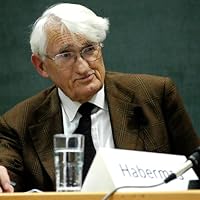
Jurgen Habermas
Jurgen Habermas
Author · 40 books
Jürgen Habermas is a German sociologist and philosopher in the tradition of critical theory and American pragmatism. He is perhaps best known for his work on the concept of the public sphere, the topic of his first book entitled The Structural Transformation of the Public Sphere. His work focuses on the foundations of social theory and epistemology, the analysis of advanced capitalistic societies and democracy, the rule of law in a critical social-evolutionary context, and contemporary politics—particularly German politics. Habermas' theoretical system is devoted to revealing the possibility of reason, emancipation, and rational-critical communication latent in modern institutions and in the human capacity to deliberate and pursue rational interests.
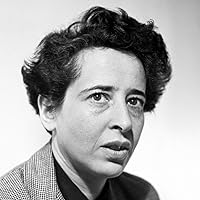
Hannah Arendt
Hannah Arendt
Author · 65 books
Hannah Arendt (1906 – 1975) was one of the most influential political philosophers of the twentieth century. Born into a German-Jewish family, she was forced to leave Germany in 1933 and lived in Paris for the next eight years, working for a number of Jewish refugee organisations. In 1941 she immigrated to the United States and soon became part of a lively intellectual circle in New York. She held a number of academic positions at various American universities until her death in 1975. She is best known for two works that had a major impact both within and outside the academic community. The first, The Origins of Totalitarianism, published in 1951, was a study of the Nazi and Stalinist regimes that generated a wide-ranging debate on the nature and historical antecedents of the totalitarian phenomenon. The second, The Human Condition, published in 1958, was an original philosophical study that investigated the fundamental categories of the vita activa (labor, work, action). In addition to these two important works, Arendt published a number of influential essays on topics such as the nature of revolution, freedom, authority, tradition and the modern age. At the time of her death in 1975, she had completed the first two volumes of her last major philosophical work, The Life of the Mind, which examined the three fundamental faculties of the vita contemplativa (thinking, willing, judging).
Henry David Thoreau
Henry David Thoreau
Author · 105 books

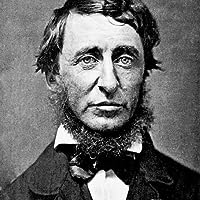
Henry David Thoreau (born David Henry Thoreau) was an American author, naturalist, transcendentalist, tax resister, development critic, philosopher, and abolitionist who is best known for Walden, a reflection upon simple living in natural surroundings, and his essay, Civil Disobedience, an argument for individual resistance to civil government in moral opposition to an unjust state. Thoreau's books, articles, essays, journals, and poetry total over 20 volumes. Among his lasting contributions were his writings on natural history and philosophy, where he anticipated the methods and findings of ecology and environmental history, two sources of modern day environmentalism. In 1817, Henry David Thoreau was born in Massachusetts. He graduated from Harvard University in 1837, taught briefly, then turned to writing and lecturing. Becoming a Transcendentalist and good friend of Emerson, Thoreau lived the life of simplicity he advocated in his writings. His two-year experience in a hut in Walden, on land owned by Emerson, resulted in the classic, Walden: Life in the Woods (1854). During his sojourn there, Thoreau refused to pay a poll tax in protest of slavery and the Mexican war, for which he was jailed overnight. His activist convictions were expressed in the groundbreaking On the Duty of Civil Disobedience (1849). In a diary he noted his disapproval of attempts to convert the Algonquins "from their own superstitions to new ones." In a journal he noted dryly that it is appropriate for a church to be the ugliest building in a village, "because it is the one in which human nature stoops to the lowest and is the most disgraced." (Cited by James A. Haught in 2000 Years of Disbelief.) When Parker Pillsbury sought to talk about religion with Thoreau as he was dying from tuberculosis, Thoreau replied: "One world at a time." Thoreau's philosophy of nonviolent resistance influenced the political thoughts and actions of such later figures as Leo Tolstoy, Mohandas K. Gandhi, and Martin Luther King, Jr. D. 1862. More: http://plato.stanford.edu/entries/tho... http://thoreau.eserver.org/ http://en.wikipedia.org/wiki/Henry\_Da... http://transcendentalism-legacy.tamu.... http://www.biography.com/people/henry...

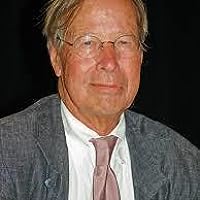
Ronald Dworkin
Ronald Dworkin
Author · 14 books
Ronald Dworkin, QC, FBA was an American philosopher of law. He was a Jeremy Bentham Professor of Law and Philosophy at University College London, Frank Henry Sommer Professor of Law at New York University, and has taught previously at Yale Law School and the University of Oxford. An influential contributor to both philosophy of law and political philosophy, Dworkin received the 2007 Holberg International Memorial Prize in the Humanities for "his pioneering scholarly work" of "worldwide impact." His theory of law as integrity is amongst the most influential contemporary theories about the nature of law.
John Rawls
John Rawls
Author · 11 books

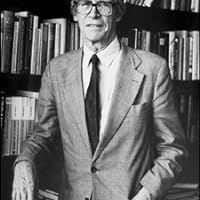
John Bordley Rawls was an American philosopher and a leading figure in moral and political philosophy. He held the James Bryant Conant University Professorship at Harvard. His magnum opus A Theory of Justice (1971) is now regarded as "one of the primary texts in political philosophy." His work in political philosophy, dubbed Rawlsianism, takes as its starting point the argument that "most reasonable principles of justice are those everyone would accept and agree to from a fair position." Rawls employs a number of thought experiments—including the famous veil of ignorance—to determine what constitutes a fair agreement in which "everyone is impartially situated as equals," in order to determine principles of social justice. Rawls received both the Schock Prize for Logic and Philosophy and the National Humanities Medal in 1999, the latter presented by President Bill Clinton, in recognition of how Rawls' thought "helped a whole generation of learned Americans revive their faith in democracy itself."

548 Market St PMB 65688, San Francisco California 94104-5401 USA
© 2026 Paratext Inc. All rights reserved