Margins
Kantelingen book cover 1
Kantelingen book cover 2
Kantelingen book cover 3
Kantelingen
Series · 4 books · 2015-2021

Books in series

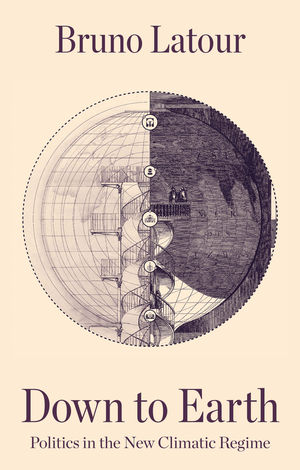
Down to Earth book cover
#1

Down to Earth

Politics in the New Climatic Regime

2017

The present ecological mutation has organized the whole political landscape for the last thirty years. This could explain the deadly cocktail of exploding inequalities, massive deregulation, and conversion of the dream of globalization into a nightmare for most people. What holds these three phenomena together is the conviction, shared by some powerful people, that the ecological threat is real and that the only way for them to survive is to abandon any pretense at sharing a common future with the rest of the world. Hence their flight offshore and their massive investment in climate change denial. The Left has been slow to turn its attention to this new situation. It is still organized along an axis that goes from investment in local values to the hope of globalization and just at the time when, everywhere, people dissatisfied with the ideal of modernity are turning back to the protection of national or even ethnic borders. This is why it is urgent to shift sideways and to define politics as what leads toward the Earth and not toward the global or the national. Belonging to a territory is the phenomenon most in need of rethinking and careful redescription; learning new ways to inhabit the Earth is our biggest challenge. Bringing us down to earth is the task of politics today.
Against Nature book cover
#2

Against Nature

2018

A pithy work of philosophical anthropology that explores why humans find moral orders in natural orders. Why have human beings, in many different cultures and epochs, looked to nature as a source of norms for human behavior? From ancient India and ancient Greece, medieval France and Enlightenment America, up to the latest controversies over gay marriage and cloning, natural orders have been enlisted to illustrate and buttress moral orders. Revolutionaries and reactionaries alike have appealed to nature to shore up their causes. No amount of philosophical argument or political critique deters the persistent and pervasive temptation to conflate the "is" of natural orders with the "ought" of moral orders. In this short, pithy work of philosophical anthropology, Lorraine Daston asks why we continually seek moral orders in natural orders, despite so much good counsel to the contrary. She outlines three specific forms of natural order in the Western philosophical tradition—specific natures, local natures, and universal natural laws—and describes how each of these three natural orders has been used to define and oppose a distinctive form of the unnatural. She argues that each of these forms of the unnatural triggers equally distinctive emotions: horror, terror, and wonder. Daston proposes that human reason practiced in human bodies should command the attention of philosophers, who have traditionally yearned for a transcendent reason, valid for all species, all epochs, even all planets.
After Lockdown book cover
#3

After Lockdown

A Metamorphosis

2021

El testamento literario de Bruno Latour (1947-2022), referente mundial del pensamiento ecologista contemporáneo. «El filósofo más famoso e incomprendido de Francia, ampliamente reconocido como uno de los pensadores contemporáneos más inventivos e influyentes del mundo.» The New York Times «Hemos perdido la antigua libertad, pero ha sido para ganar otra.» En este ensayo en forma de cuento, inspirado en La metamorfosis de Kafka, Bruno Latour, uno de los pensadores más originales e influyentes del mundo, nos invita a desconfinarnos de ciertas ideas arraigadas de la modernidad, como las de «crecimiento económico», «progreso» o «dominio de la naturaleza». No hay duda de que la crisis le ha dado la razón de manera patente en muchas de las teorías que ha defendido a lo largo de los años. En este libro da cuenta de ello elegantemente. Tras la terrible experiencia del confinamiento, tanto los estados como los individuos buscan la manera de regresar lo más rápido posible al mundo anterior. Pero hay lecciones que aprender de esta experiencia, al menos en beneficio de aquellos a quienes podría llamarse terrestres («cualquiera que acepte vivir en una zona crítica y contribuir a su habitabilidad»), conscientes de que la crisis sanitaria está inmersa en otra crisis mucho más grave, la impuesta por el Nuevo Régimen Climático. El confinamiento nos ha ofrecido una gran oportunidad que debemos aprovechar: la de comprender finalmente dónde vivimos y en qué Tierra podremos desenvolvernos, a falta de la antigua. Tras un aterrizaje sin duda violento, los terrestres deben explorar el suelo donde ahora vivirán y redescubrir el gusto por la libertad y la emancipación, pero en un lugar diferente. Ese es el objeto de este ensayo, que consta de breves capítulos, cada uno de los cuales explora una posible figura de esta metafísica del desconfinamiento a la que nos obliga la extraña época en que vivimos. La crítica ha dicho... «El filósofo más famoso e incomprendido de Francia, ampliamente reconocido como uno de los pensadores contemporáneos más originales e influyentes.» The New York Times «Uno de los pensadores más interesantes de la escena intelectual mundial. Sabe cómo llamar nuestra atención sobre la complejidad de los problemas, manteniendo una claridad expositiva fuera de lo común.» La Stampa «Latour adopta el tono de un cuento filosófico lúdico y erudito a la vez. Lo que escribe Latour nos concierne a todos los seres humanos.» Slate Magazine «Uno de los autores más comentados y citados del mundo. Inspira a generaciones de investigadores en filosofía y ciencias sociales. ¿Dónde estoy?, un ensayo más narrativo, es perfecto para iniciarse en su obra.» Philosophie Magazine «Una invitación a inventar nuevas maneras de vivir.» Le Monde

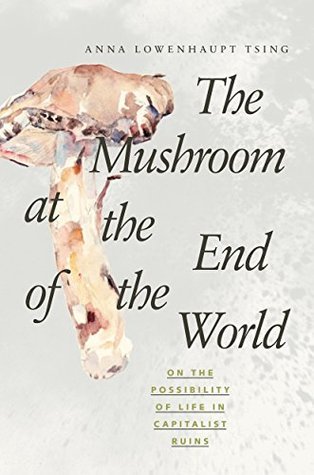
The Mushroom at the End of the World book cover
#4

The Mushroom at the End of the World

On the Possibility of Life in Capitalist Ruins

2015

Matsutake is the most valuable mushroom in the world—and a weed that grows in human-disturbed forests across the northern hemisphere. Through its ability to nurture trees, matsutake helps forests to grow in daunting places. It is also an edible delicacy in Japan, where it sometimes commands astronomical prices. In all its contradictions, matsutake offers insights into areas far beyond just mushrooms and addresses a crucial question: what manages to live in the ruins we have made? A tale of diversity within our damaged landscapes, The Mushroom at the End of the World follows one of the strangest commodity chains of our times to explore the unexpected corners of capitalism. Here, we witness the varied and peculiar worlds of matsutake commerce: the worlds of Japanese gourmets, capitalist traders, Hmong jungle fighters, industrial forests, Yi Chinese goat herders, Finnish nature guides, and more. These companions also lead us into fungal ecologies and forest histories to better understand the promise of cohabitation in a time of massive human destruction. By investigating one of the world's most sought-after fungi, The Mushroom at the End of the World presents an original examination into the relation between capitalist destruction and collaborative survival within multispecies landscapes, the prerequisite for continuing life on earth.

Authors

Lorraine Daston
Lorraine Daston
Author · 12 books
Lorraine Daston (born June 9, 1951, East Lansing, Michigan)[1] is an American historian of science. Executive director of the Max Planck Institute for the History of Science (MPIWG) in Berlin, and visiting professor in the Committee on Social Thought at the University of Chicago, she is considered an authority on Early Modern European scientific and intellectual history. In 1993, she was named a fellow of the American Academy of Arts and Sciences.
Bruno Latour
Bruno Latour
Author · 29 books
Bruno Latour, a philosopher and anthropologist, is the author of Reassembling the Social: An Introduction to Actor-Network Theory, Our Modern Cult of the Factish Gods, An Inquiry into Modes of Existence, and many other books. He curated the ZKM exhibits ICONOCLASH and Making Things Public and coedited the accompanying catalogs, both published by the MIT Press.
Anna Lowenhaupt Tsing
Author · 4 books
Anna Lowenhaupt Tsing is Professor of Anthropology at the University of California, Santa Cruz. She is the author of In the Realm of the Diamond Queen: Marginality in an Out-of-the-Way Place and coeditor of Uncertain Terms: Negotiating Gender in American Culture.
548 Market St PMB 65688, San Francisco California 94104-5401 USA
© 2026 Paratext Inc. All rights reserved
Kantelingen