Margins
Kasidah of Haji Abdu El-Yezdi book cover
Kasidah of Haji Abdu El-Yezdi
1880
First Published
4.07
Average Rating
96
Number of Pages
The Kasidah of Haji Abdu El-Yezdi is a book written by Sir Richard Burton, a British explorer, translator, and writer. The book is a long poem, or kasidah, written in the style of an Arabic ode. It tells the story of Haji Abdu El-Yezdi, a fictional character who is a wise and learned man from the East. The poem is divided into several sections, each of which explores a different aspect of life, such as love, death, and the meaning of existence. The Kasidah is known for its philosophical and spiritual themes, and its exploration of the nature of reality and the human condition. The poem is also notable for its use of vivid imagery and its lyrical language. Overall, the Kasidah of Haji Abdu El-Yezdi is a thought-provoking and inspiring work of literature that continues to be read and appreciated by readers today.1924. This scarce, beautiful poem, fully illustrated asserts that Happiness and Misery are equally divided and that Self-cultivation with due regard to others is the sole an sufficient object of human life.This scarce antiquarian book is a facsimile reprint of the old original and may contain some imperfections such as library marks and notations. Because we believe this work is culturally important, we have made it available as part of our commitment for protecting, preserving, and promoting the world's literature in affordable, high quality, modern editions, that are true to their original work.

Avg Rating
4.07
Number of Ratings
107
5 STARS
45%
4 STARS
27%
3 STARS
21%
2 STARS
4%
1 STARS
3%
goodreads

Author

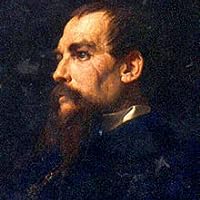
Richard Francis Burton
Author · 33 books

Captain Sir Richard Francis Burton KCMG FRGS was a British geographer, explorer, translator, writer, soldier, orientalist, cartographer, ethnologist, spy, linguist, poet, fencer and diplomat. He was known for his travels and explorations within Asia, Africa and the Americas as well as his extraordinary knowledge of languages and cultures. According to one count, he spoke 29 European, Asian, and African languages. Burton's best-known achievements include travelling in disguise to Mecca, an unexpurgated translation of One Thousand and One Nights (also commonly called The Arabian Nights in English after Andrew Lang's adaptation), bringing the Kama Sutra to publication in English, and journeying with John Hanning Speke as the first Europeans led by Africa's greatest explorer guide, Sidi Mubarak Bombay, utilizing route information by Indian and Omani merchants who traded in the region, to visit the Great Lakes of Africa in search of the source of the Nile. Burton extensively criticized colonial policies (to the detriment of his career) in his works and letters. He was a prolific and erudite author and wrote numerous books and scholarly articles about subjects including human behaviour, travel, falconry, fencing, sexual practices, and ethnography. A unique feature of his books is the copious footnotes and appendices containing remarkable observations and unexpurgated information. He was a captain in the army of the East India Company serving in India (and later, briefly, in the Crimean War). Following this he was engaged by the Royal Geographical Society to explore the east coast of Africa and led an expedition guided by the locals and was the first European to see Lake Tanganyika. In later life he served as British consul in Fernando Po, Santos, Damascus and, finally, Trieste. He was a Fellow of the Royal Geographical Society and was awarded a knighthood (KCMG) in 1886.

548 Market St PMB 65688, San Francisco California 94104-5401 USA
© 2026 Paratext Inc. All rights reserved