


Margins
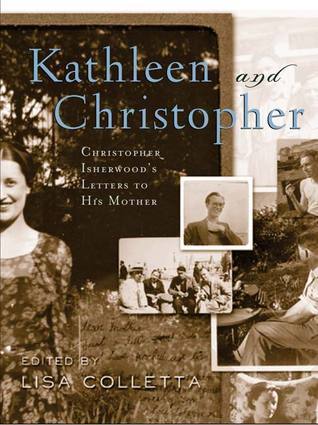
Kathleen and Christopher book cover
Kathleen and Christopher
Christopher Isherwood's Letters to His Mother
2005
First Published
3.89
Average Rating
208
Number of Pages

Opening a window into the most fascinating and, in many ways, most mysterious period in Christopher Isherwood’s life, Kathleen and Christopher collects more than one hundred previously unpublished letters the young author wrote to his mother between 1935 and 1940. Composed while he was still a struggling writer, they offer a brilliant eyewitness account of Europe on the brink of war and an intimate look at the early career of a major literary figure. Because Isherwood destroyed his diaries from these years, these letters—published for the first time and edited and introduced by Lisa Colletta—provide one of the few records of this part of his life not filtered through the lens of time and memory. They contain requests for money and books, descriptions of his travels, stories of his friends W. H. Auden and Stephen Spender, reactions to the critical reception of his Berlin Stories, and a tense account of his failed attempt to save his lover Heinz from conscription into the Nazi military. The final letters in this volume document Isherwood’s journey to Los Angeles, where he permanently settled. Also included are thirty images from Isherwood’s personal photo album and reproductions of postcards from his international travels. Warm, confiding, and sometimes quite caustic, the letters also reveal a closer affection between the young Isherwood and his mother than his biographers have portrayed. While Isherwood acknowledged that it took him a long time to come to terms with his mother’s influence on his life, the letters in Kathleen and Christopher dispute the prevalent idea that theirs was a relationship rife with conflict. Isherwood’s everyday correspondence, written in extraordinary times, reveals a complex yet wholly recognizable and very close bond between mother and son. She was for him, in turns, an agent, a sounding board, and an unbreakable connection to England. Lisa Colletta is assistant professor of English at Babson College. She is the author of Dark Humor and Social Satire in the Modern British Novel.
Avg Rating
3.89
Number of Ratings
19
5 STARS
32%
4 STARS
32%
3 STARS
32%
2 STARS
5%
1 STARS
0%
goodreads

Author

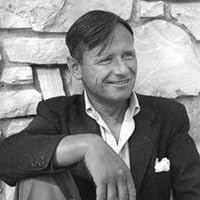
Christopher Isherwood
Author · 32 books

British-born American writer Christopher William Bradshaw Isherwood portrayed Berlin in the early 1930s in his best known works, such as Goodbye to Berlin (1939), the basis for the musical Cabaret (1966). Isherwood was a novelist, playwright, screenwriter, autobiographer, and diarist. With W.H. Auden he wrote three plays—The Dog Beneath the Skin (1932), The Ascent of F6 (1936), and On the Frontier (1938). Isherwood tells the story in his first autobiography, Lions and Shadows . After Isherwood wrote joke answers on his second-year exams, Cambridge University in 1925 asked him to leave. He briefly attended medical school and progressed with his first two novels, All the Conspirators (1928) and The Memorial (1932). In 1930, he moved to Berlin, where he taught English, dabbled in Communism, and enthusiastically explored his homosexuality. His experiences provided the material for Mister Norris Changes Trains (1935) and Goodbye to Berlin (1938), still his most famous book. In Berlin in 1932, he also began an important relationship with Heinz Neddermeyer, a young German with whom he fled the Nazis in 1933. England refused entry to Neddermeyer on his second visit in 1934, and the pair moved restlessly about Europe until the Gestapo arrested Neddermeyer in May 1937 and then finally separated them. In 1938, Isherwood sailed with Auden to China to write Journey to a War (1939), about the Sino-Japanese conflict. They returned to England and Isherwood went on to Hollywood to look for movie-writing work. He also became a disciple of the Ramakrishna monk, Swami Prabhavananda, head of the Vedanta Society of Southern California. He decided not to take monastic vows, but he remained a Hindu for the rest of his life, serving, praying, and lecturing in the temple every week and writing a biography, Ramakrishna and His Disciples (1965). In 1945, Isherwood published Prater Violet, fictionalizing his first movie writing job in London in 1933-1934. In Hollywood, he spent the start of the 1950s fighting his way free of a destructive five-year affair with an attractive and undisciplined American photographer, William Caskey. Caskey took the photographs for Isherwood’s travel book about South America, The Condor and The Cows (1947). Isherwood’s sixth novel, The World in the Evening (1954), written mostly during this period, was less successful than earlier ones. In 1953, he fell in love with Don Bachardy, an eighteen-year-old college student born and raised in Los Angeles. They were to remain together until Isherwood’s death. In 1961, Isherwood and completed the final revisions to his new novel Down There on a Visit (1962). Their relationship nearly ended in 1963, and Isherwood moved out of their Santa Monica house. This dark period underpins Isherwood’s masterpiece A Single Man (1964). Isherwood wrote another novel, A Meeting by the River (1967), about two brothers, but he gave up writing fiction and turned entirely to autobiography. In Kathleen and Frank (1971), he drew on the letters and diaries of his parents. In Christopher and His Kind (1976), he returned to the 1930s to tell, as a publicly avowed homosexual, the real story of his life in Berlin and his wanderings with Heinz Neddermeyer. The book made him a hero of gay liberation and a national celebrity all over again but now in his true, political and personal identity.

548 Market St PMB 65688, San Francisco California 94104-5401 USA
© 2026 Paratext Inc. All rights reserved