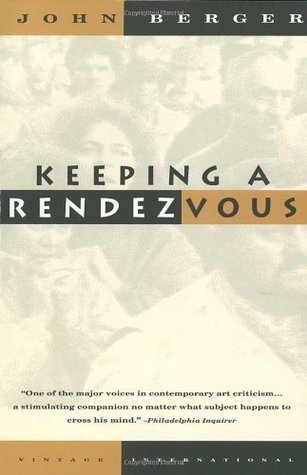
When he stands before Giorgione's La Tempesta, Booker Prize-winning author John Berger sees not only the painting but our whole notion of time, sweeping us away from a lost Eden. A photograph of a gravely joyful crowd gathered on a Prague street in November 1989 provokes reflection on the meaning of democracy and the reunion of a people with long-banished hopes and dreams. With the luminous essays in Keeping a Rendezvous, we are given to see the world as Berger sees it—to explore themes suggested by the work of Jackson Pollock or J. M. W. Turner, to contemplate the wonder of Paris. Rendezvous are between critic and art, artist and subject, subject and the unknown. But most significant are the rendezvous between author and reader, as we discover our perceptions informed by Berger's eloquence and courageous moral imagination.
Author
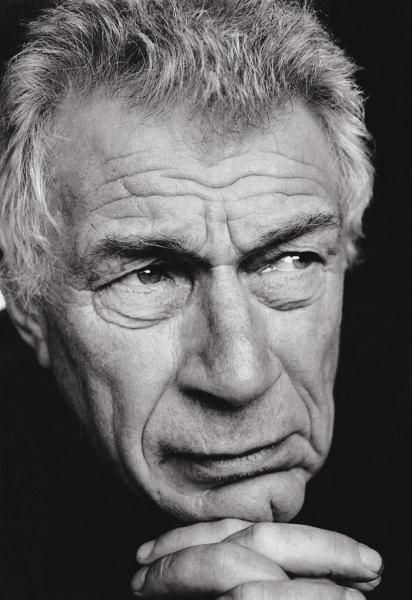
John Peter Berger was an English art critic, novelist, painter and author. His novel G. won the 1972 Booker Prize, and his essay on art criticism Ways of Seeing, written as an accompaniment to a BBC series, is often used as a college text. Later he was self exiled to continental Europe, living between the french Alps in summer and the suburbs of Paris in winter. Since then, his production has increased considerably, including a variety of genres, from novel to social essay, or poetry. One of the most common themes that appears on his books is the dialectics established between modernity and memory and loss, Another of his most remarkable works has been the trilogy titled Into Their Labours, that includes the books Pig Earth (1979), Once In Europa (1983) Lilac And Flag (1990). With those books, Berger makes a meditation about the way of the peasant, that changes one poverty for another in the city. This theme is also observed in his novel King, but there his focus is more in the rural diaspora and the bitter side of the urban way of life.