Margins
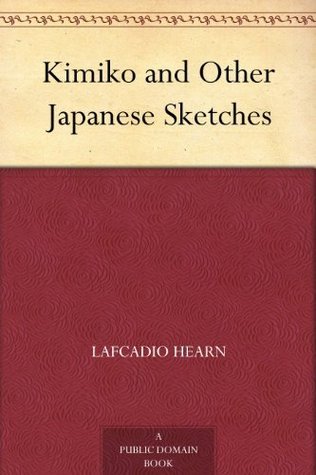
Kimiko and Other Japanese Sketches book cover
Kimiko and Other Japanese Sketches
1923
First Published
4.04
Average Rating
38
Number of Pages
From the beginning of the first chapter: THE name is on a paper-lantern at the entrance of a house in the Street of the Geisha. Seen at night the street is one of the queerest in the world. It is narrow as a gangway; and the dark shining woodwork of the house-fronts, all tightly closed, - each having a tiny sliding door with paper-panes that look just like frosted glass, - makes you think of first-class passenger-cabins. Really the buildings are several stories high; but you do not observe this at once-especially if there be no moon —- because only the lower stories are illuminated up to their awnings, above which all is darlmess. The illumination is made by lamps behind the narrow paper-paned doors, and by the paper-lanterns hanging outside - one at every door. You look down the street between two lines of these lanterns - lines converging farofi into one motionless bar of yellow light. Some of the lanterns are eggshaped, some cylindrical; others foursided or six-sided; and Japanese characters are beautifully Written upon them. The street is very quiet - silent as a display of cabinet-work in some great exhibition after closing-time. This is because the inmates are mostly away - attending banquets and other festivities. Their life is of the night

Avg Rating
4.04
Number of Ratings
28
5 STARS
29%
4 STARS
46%
3 STARS
25%
2 STARS
0%
1 STARS
0%
goodreads

Author

Lafcadio Hearn
Lafcadio Hearn
Author · 59 books

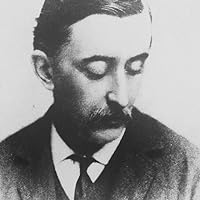
Greek-born American writer Lafcadio Hearn spent 15 years in Japan; people note his collections of stories and essays, including Kokoro (1896), under pen name Koizumi Yakumo. Rosa Cassimati (Ρόζα Αντωνίου Κασιμάτη in Greek), a Greek woman, bore Patrick Lafcadio Hearn (Πατρίκιος Λευκάδιος Χερν in Greek or 小泉八雲 in Japanese), a son, to Charles Hearn, an army doctor from Ireland. After making remarkable works in America as a journalist, he went to Japan in 1890 as a journey report writer of a magazine. He arrived in Yokohama, but because of a dissatisfaction with the contract, he quickly quit the job. He afterward moved to Matsué as an English teacher of Shimané prefectural middle school. In Matsué, he got acquainted with Nishida Sentarô, a colleague teacher and his lifelong friend, and married Koizumi Setsu, a daughter of a samurai. In 1891, he moved to Kumamoto and taught at the fifth high school for three years. Kanô Jigorô, the president of the school of that time, spread judo to the world. Hearn worked as a journalist in Kôbé and afterward in 1896 got Japanese citizenship and a new name, Koizumi Yakumo. He took this name from "Kojiki," a Japanese ancient myth, which roughly translates as "the place where the clouds are born". On that year, he moved to Tôkyô and began to teach at the Imperial University of Tôkyô. He got respect of students, many of whom made a remarkable literary career. In addition, he wrote much reports of Japan and published in America. So many people read his works as an introduction of Japan. He quit the Imperial University in 1903 and began to teach at Waseda University on the year next. Nevertheless, after only a half year, he died of angina pectoris.

548 Market St PMB 65688, San Francisco California 94104-5401 USA
© 2026 Paratext Inc. All rights reserved