


Part of Series
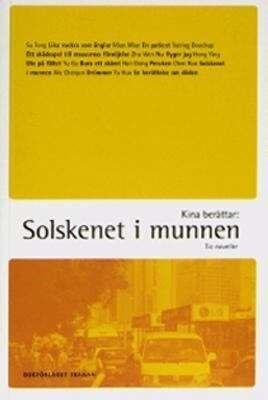
Den här novellsamlingen är ett smakprov på vad dagens unga kinesiska litteratur har att erbjuda. Författarna är alla födda under eller strax före kulturrevolutionen och inledde sina författarkarriärer efter 1980, när den kinesiska politiken redan hade tagit en ny riktning, med ökade internationella kontakter och en friare ekonomi. Några av dem, som Chen Ran, Su Tong och Yu Hua, är mycket etablerade med långa karriärer och många litterära utmärkelser i bagaget. Andra hör till en yngre grupp glamorösa kvinnliga författare som skriver om sex, droger och rockmusik. Ytterligare andra är kritikerrosade men anser sig stå litet utanför det litterära etablissemanget. Här finns satiriska sagor, grymma barndomsskildringar och lättsmält kurtis. Och som en påminnelse om att kineserna inte bara är kineser finns här också en novell av en kinesisk mongolisk-tibetansk författare.
Authors

Su Tong (simplified Chinese: 苏童; traditional Chinese: 蘇童; pinyin: Sū Tóng; born January 23, 1963) is the pen name of Chinese writer Tong Zhonggui (童忠贵 Tóng Zhōngguì). He was born in Suzhou and lives in Nanjing. He entered the Department of Chinese at Beijing Normal University in 1980, and started to publish novels in 1983. He is now vice president of the Jiangsu Writers Association. Known for his controversial writing style, Su is one of the most acclaimed novelists in China. (from Wikipedia) https://en.wikipedia.org/wiki/Su\_Tong

Hong Ying was born in Chongqing in 1962, towards the end of the Great Leap Forward. She began to write at eighteen, leaving home shortly afterwards to spend the next ten years moving around China, exploring her voice as a writer via poems and short stories. After brief periods of study at the Lu Xun Academy in Beijing and Shanghai’s Fudan University, Hong Ying moved to London in 1991 where she as writer. She returned to Beijing in 2000. Best known in English for the novels K: the Art of Love, Summer of Betrayal, Peacock Cries, and her autobiography Daughter of the River, Hong Ying has been published in twenty- nineteen languages and has appeared on the bestseller lists of numerous countries, she won the Prize of Rome for K: the Art of Love in 2005 and many of her books have been or are now in the process of being turned into television series and films. Hong Ying has long been interested in the stories of homosexuals living in China, a theme explored here and in her short story collection, A Lipstick Called Red Pepper: Fiction About Gay and Lesbian Love in China 1993-1998. In her work, she likes to focus on human stories, hardship and history. Her responsibility as a writer, she believes, is in part to explore the lives of marginalised groups struggling for visibility – and for compassion – in contemporary China. Chinese Profile: 虹影

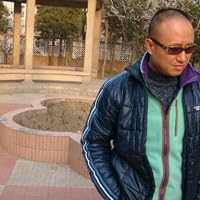
Han Dong’s parents were banished to the countryside during the Cultural Revolution, taking him with them. When the Cultural Revolution ended, he studied philosophy at Shandong University, graduating in 1982. He subsequently taught in Xi’an and Nanjing, finally relinquishing teaching in 1993 and going free-lance as a writer. Han Dong began writing in 1980, and has been a major player on the modern Chinese literary scene since the 1990s. He is well-known as one of China’s most important avant-garde poets, and is becoming increasingly influential as an essayist, short story writer, blogger and novelist.

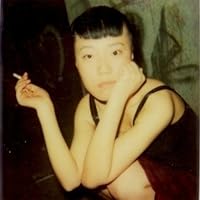
Mian is a young Chinese writer. She writes on China's once-taboo topics and she is a promoter of Shanghai's local music. Her publications have earned her the reputation as China's literary wild child. Her first novel, Candy, has been translated into English. Her other novels include Every good child deserves to eat candy. Her novel We Are Panic was made into a movie, Shanghai Panic, in which she also acted one of the lead roles. In late 2009, she sued Google over the company scanning her books for its online library. She demanded ¥61,000 and a public apology. Google removed the book from its library.
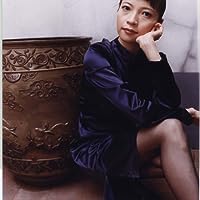
Chen Ran (Chinese: 陈染; pinyin: Chén Rǎn) is a Chinese avant-garde writer. Most of her works appeared in the 1990s and often deal with Chinese feminism. Chen Ran was born in Beijing in April, 1962. Her parents divorced when she was in high school and she since then lived with her mother. As a child she studied music, but when she was 18 her interests turned to literature. Chen Ran studied Chinese language and literature in Beijing Normal University from 1982 to 1986 and graduated when she was 23. She remained with the university as a teacher after graduation for the next four and a half years. She also lectured as an exchange scholar at various foreign universities including Melbourne University in Australia, the University of Berlin in Germany, and London, Oxford, and Edinburgh universities in the UK. Between 1987 and 1989, she published a series of surrealistic short stories with strong philosophical undertones. She now lives and writes in Beijing. She has published several short story collections and is a member of the Chinese Writers Association. She has won number of prizes, such as the first Contemporary China Female Writer's Award. (from Wikipedia)

Librarian Note: There is more than one author in the GoodReads database with this name. See this thread for more information. Born in Fujian (South China) in 1967, Zhu Wen graduated from Nanjing University in 1989. From 1989 to 1994 he worked as an engineer in a thermal power plant, during which time he began writing fiction. Since he became a full-time writer in 1994, his work has been published in many of Mainland China's most prestigious literary magazines, and he has produced several poetry and short story collections, a full-length novel and three films. Over the course of his writing career, Zhu Wen has established himself as a pivotal figure in Post-Mao Chinese literature, to whom other authors of his and younger generations look for inspiration. His success in recreating on the page the brutal absurdities of contemporary China has turned him into a representative voice of the 1990s and beyond.