


Margins
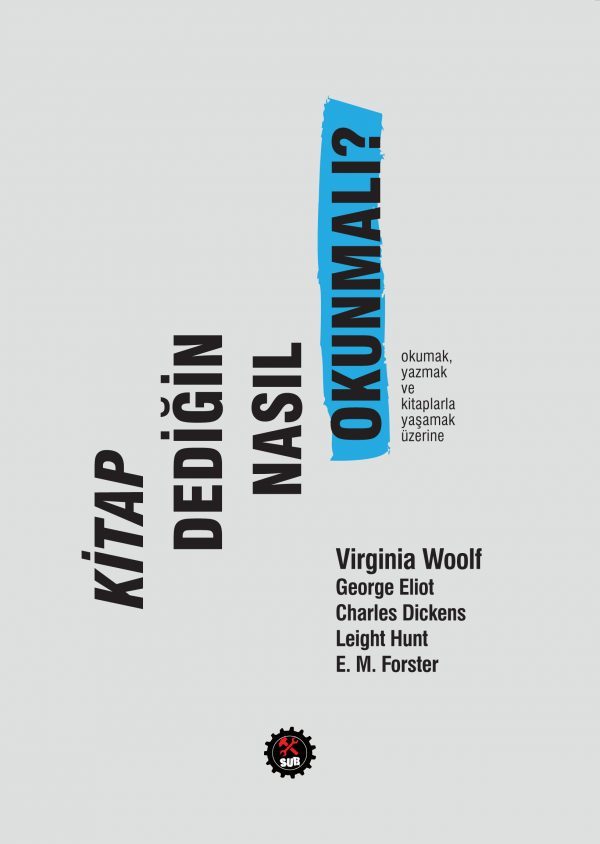
Kitap Dediğin Nasıl Okunmalı? book cover
Kitap Dediğin Nasıl Okunmalı?
1926
First Published
3.55
Average Rating
64
Number of Pages

Londra Kütüphanesi dünyanın en büyük bağımsız kütüphanesidir. Thomas Carlyle tarafından 1841 yılında kurulan yapı hızla; okuyucular, yazarlar ve ilgili herkes için bir cennet haline geldi. Son iki yüzyılın en meşhur figürlerinden bazıları orada yazdı, okudu, düşündü ve yürüdü; George Eliot, Charles Dickens, E.M. Forster, Virginia Woolf ve daha pek çok adı günümüze kalan üyesi vardı. Zamanla bu ünlü üyelerin bazıları, kendiliğinden oluşan bir ağ dahilinde; kitap okuma, yazma ve yaşama sevinçleri ve dahi zorlukları hakkındaki görüşlerini paylaştılar. Gerçek anlamda bir hazine sandığını rafınızda saklamak istemeyebilirsiniz. Biz onu yastığımızın altından ayırmamaya karar verdik.
Avg Rating
3.55
Number of Ratings
11
5 STARS
9%
4 STARS
45%
3 STARS
36%
2 STARS
9%
1 STARS
0%
goodreads

Authors

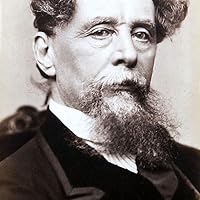
Charles Dickens
Charles Dickens
Author · 429 books

Charles John Huffam Dickens (1812-1870) was a writer and social critic who created some of the world's best-known fictional characters and is regarded as the greatest novelist of the Victorian era. His works enjoyed unprecedented popularity during his lifetime, and by the twentieth century critics and scholars had recognised him as a literary genius. His novels and short stories enjoy lasting popularity. Dickens left school to work in a factory when his father was incarcerated in a debtors' prison. Despite his lack of formal education, he edited a weekly journal for 20 years, wrote 15 novels, five novellas, hundreds of short stories and non-fiction articles, lectured and performed extensively, was an indefatigable letter writer, and campaigned vigorously for children's rights, education, and other social reforms. Dickens was regarded as the literary colossus of his age. His 1843 novella, A Christmas Carol, remains popular and continues to inspire adaptations in every artistic genre. Oliver Twist and Great Expectations are also frequently adapted, and, like many of his novels, evoke images of early Victorian London. His 1859 novel, A Tale of Two Cities, set in London and Paris, is his best-known work of historical fiction. Dickens' creative genius has been praised by fellow writers—from Leo Tolstoy to George Orwell and G. K. Chesterton—for its realism, comedy, prose style, unique characterisations, and social criticism. On the other hand, Oscar Wilde, Henry James, and Virginia Woolf complained of a lack of psychological depth, loose writing, and a vein of saccharine sentimentalism. The term Dickensian is used to describe something that is reminiscent of Dickens and his writings, such as poor social conditions or comically repulsive characters. On 8 June 1870, Dickens suffered another stroke at his home after a full day's work on Edwin Drood. He never regained consciousness, and the next day he died at Gad's Hill Place. Contrary to his wish to be buried at Rochester Cathedral "in an inexpensive, unostentatious, and strictly private manner," he was laid to rest in the Poets' Corner of Westminster Abbey. A printed epitaph circulated at the time of the funeral reads: "To the Memory of Charles Dickens (England's most popular author) who died at his residence, Higham, near Rochester, Kent, 9 June 1870, aged 58 years. He was a sympathiser with the poor, the suffering, and the oppressed; and by his death, one of England's greatest writers is lost to the world." His last words were: "On the ground", in response to his sister-in-law Georgina's request that he lie down. (from Wikipedia)

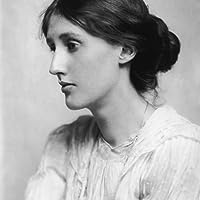
Virginia Woolf
Virginia Woolf
Author · 270 books

(Adeline) Virginia Woolf was an English novelist and essayist regarded as one of the foremost modernist literary figures of the twentieth century. During the interwar period, Woolf was a significant figure in London literary society and a member of the Bloomsbury Group. Her most famous works include the novels Mrs. Dalloway (1925), To the Lighthouse (1927), and Orlando (1928), and the book-length essay A Room of One's Own (1929) with its famous dictum, "a woman must have money and a room of her own if she is to write fiction."

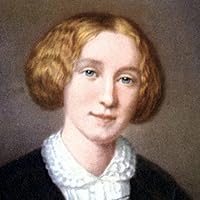
George Eliot
George Eliot
Author · 51 books

Mary Ann Evans, known by her pen name George Eliot, was an English novelist, poet, journalist, translator and one of the leading writers of the Victorian era. She was born in 1819 at a farmstead in Nuneaton, Warwickshire, England, where her father was estate manager. Mary Ann, the youngest child and a favorite of her father's, received a good education for a young woman of her day. Influenced by a favorite governess, she became a religious evangelical as an adolescent. Her first published work was a religious poem. Through a family friend, she was exposed to Charles Hennell's "An Inquiry into the Origins of Christianity". Unable to believe, she conscientiously gave up religion and stopped attending church. Her father shunned her, sending the broken-hearted young dependent to live with a sister until she promised to reexamine her feelings. Her intellectual views did not, however, change. She translated Das Leben Jesu, a monumental task, without signing her name to the 1846 work. After her father's death in 1849, Mary Ann traveled, then accepted an unpaid position with The Westminster Review. Despite a heavy workload, she translated The Essence of Christianity, the only book ever published under her real name. That year, the shy, respectable writer scandalized British society by sending notices to friends announcing she had entered a free "union" with George Henry Lewes, editor of The Leader, who was unable to divorce his first wife. They lived harmoniously together for the next 24 years, but suffered social ostracism and financial hardship. She became salaried and began writing essays and reviews for The Westminster Review. Renaming herself "Marian" in private life and adopting the penname "George Eliot," she began her impressive fiction career, including: Adam Bede (1859), The Mill on the Floss (1860), Silas Marner (1861), Romola (1863), and Middlemarch (1871). Themes included her humanist vision and strong heroines. Her poem, "O May I Join the Choir Invisible" expressed her views about non supernatural immortality: "O may I join the choir invisible/ Of those immortal dead who live again/ In minds made better by their presence. . ." D. 1880. Her 1872 work Middlemarch has been described by Martin Amis and Julian Barnes as the greatest novel in the English language. More: http://en.wikipedia.org/wiki/George\_E... http://www.bbc.co.uk/history/historic... http://www.britannica.com/EBchecked/t... http://www.victorianweb.org/victorian... http://www.biography.com/people/georg... http://www.pbs.org/wgbh/masterpiece/d...

548 Market St PMB 65688, San Francisco California 94104-5401 USA
© 2026 Paratext Inc. All rights reserved