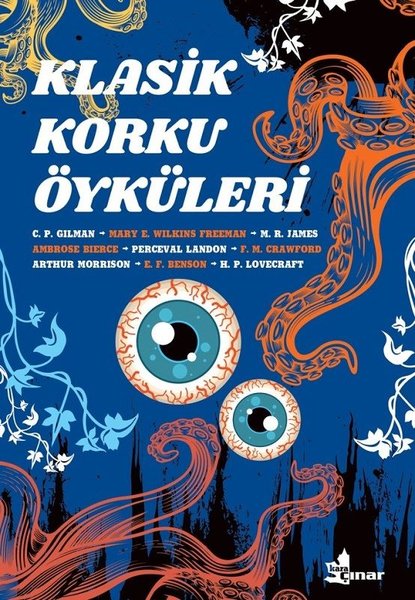



"Bu evde garip bir şey var, hissediyorum." Klasik Korku Öyküleri'nde insana dair dehşet, uygarlığın huzursuzlukları, evin ve ailenin tekinsizliği, ölüm ve bilinmeyenle kurduğumuz ilişkinin kopma noktaları birleşiyor. Klasik korku öyküsünün "edebiyat" hüviyeti kazanmasında pay sahibi olan bu karanlık metinler, usta yazarların zihinlerinden fırlamış kâbuslarla dolu bir geçit töreni sergiliyor. Charlotte Perkins Gilman'ın feminist-gotik öyküsü "Sarı Duvar Kâğıdı", Mary E. Wilkins Freeman'ın önemli eseri "Luella Miller", hayalet öykülerinin üstadı M. R. James'ten "Mezzotint", Ambrose Bierce'ın erken dönem eko-gotik eseri "Evdeki Asma", Perceval Landon'ın unutulmaz hortlak öyküsü "Thurnley Manastırı", F. Marion Crawford'ın korkunç "Çığlık Atan Kurukafa"sı, Arthur Morrison'ın tekinsiz mücevheri "Üst Kattaki Şey", E. F. Benson'ın düşsel ve gotik şaheseri "Kuledeki Oda", H. P. Lovecraft'ın, korku edebiyatı tarihinde dönüm noktası olarak kabul edilen, Cthulhu mitosunun nüvesinin ortaya çıktığı "Dagon" öyküsü bu derlemede bir araya geliyor. "Hayaletlere inanıyorum. Öyle şeylerin var olduğunu biliyoruz, sadece kaideleri bilmiyoruz." -M.R. James-
Authors

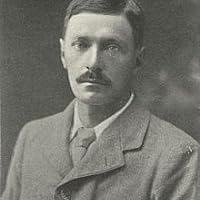
Edward Frederic "E. F." Benson was an English novelist, biographer, memoirist, archaeologist and short story writer. E. F. Benson was the younger brother of A.C. Benson, who wrote the words to "Land of Hope and Glory", Robert Hugh Benson, author of several novels and Roman Catholic apologetic works, and Margaret Benson, an author and amateur Egyptologist. Benson died during 1940 of throat cancer at the University College Hospital, London. He is buried in the cemetery at Rye, East Sussex. Last paragraph from Wikipedia

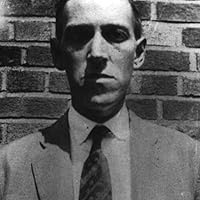
Howard Phillips Lovecraft, of Providence, Rhode Island, was an American author of horror, fantasy and science fiction. Lovecraft's major inspiration and invention was cosmic horror: life is incomprehensible to human minds and the universe is fundamentally alien. Those who genuinely reason, like his protagonists, gamble with sanity. Lovecraft has developed a cult following for his Cthulhu Mythos, a series of loosely interconnected fictions featuring a pantheon of human-nullifying entities, as well as the Necronomicon, a fictional grimoire of magical rites and forbidden lore. His works were deeply pessimistic and cynical, challenging the values of the Enlightenment, Romanticism and Christianity. Lovecraft's protagonists usually achieve the mirror-opposite of traditional gnosis and mysticism by momentarily glimpsing the horror of ultimate reality. Although Lovecraft's readership was limited during his life, his reputation has grown over the decades. He is now commonly regarded as one of the most influential horror writers of the 20th Century, exerting widespread and indirect influence, and frequently compared to Edgar Allan Poe. — Wikipedia

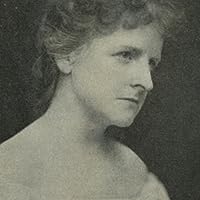
Mary Eleanor Wilkins Freeman was born in Randolph, Massachusetts, and attended Mount Holyoke College (then, Mount Holyoke Female Seminary) in South Hadley, Massachusetts, for one year, from 1870–71. Freeman's parents were orthodox Congregationalists, causing her to have a very strict childhood. Religious constraints play a key role in some of her works. She later finished her education at West Brattleboro Seminary. She passed the greater part of her life in Massachusetts and Vermont. Freeman began writing stories and verse for children while still a teenager to help support her family and was quickly successful. Her best known work was written in the 1880s and 1890s while she lived in Randolph. She produced more than two dozen volumes of published short stories and novels. She is best known for two collections of stories, A Humble Romance and Other Stories (1887) and A New England Nun and Other Stories (1891). Her stories deal mostly with New England life and are among the best of their kind. Freeman is also remembered for her novel Pembroke (1894), and she contributed a notable chapter to the collaborative novel The Whole Family (1908). In 1902 she married Doctor Charles M. Freeman of Metuchen, New Jersey. In April 1926, Freeman became the first recipient of the William Dean Howells Medal for Distinction in Fiction from the American Academy of Arts and Letters. She died in Metuchen and was interred in Hillside Cemetery in Scotch Plains, New Jersey.

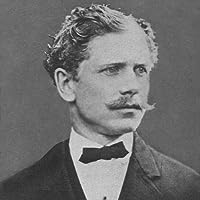
Ambrose Gwinnett Bierce (1842-1914) was an American editorialist, journalist, short story writer, fabulist and satirist. Today, he is best known for his short story, An Occurrence at Owl Creek Bridge and his satirical lexicon, The Devil's Dictionary. The sardonic view of human nature that informed his work – along with his vehemence as a critic, with his motto "nothing matters" – earned him the nickname "Bitter Bierce." Despite his reputation as a searing critic, however, Bierce was known to encourage younger writers, including poet George Sterling and fiction writer W. C. Morrow. Bierce employed a distinctive style of writing, especially in his stories. This style often embraces an abrupt beginning, dark imagery, vague references to time, limited descriptions, the theme of war, and impossible events. Bierce disappeared in December 1913 at the age of 71. He is believed to have traveled to Mexico to gain a firsthand perspective on that country's ongoing revolution. Despite an abundance of theories, Bierce's ultimate fate remains a mystery. He wrote in one of his final letters: "Good-bye. If you hear of my being stood up against a Mexican stone wall and shot to rags, please know that I think it is a pretty good way to depart this life. It beats old age, disease, or falling down the cellar stairs. To be a Gringo in Mexico—ah, that is euthanasia!"

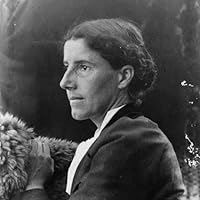
Charlotte Perkins Gilman, also known as Charlotte Perkins Stetson, was a prominent American sociologist, novelist, writer of short stories, poetry, and nonfiction, and a lecturer for social reform. She was a utopian feminist during a time when her accomplishments were exceptional for women, and she served as a role model for future generations of feminists because of her unorthodox concepts and lifestyle. Her best remembered work today is her semi-autobiographical short story, "The Yellow Wallpaper", which she wrote after a severe bout of post-partum depression. She was the daughter of Frederic B. Perkins.