Margins
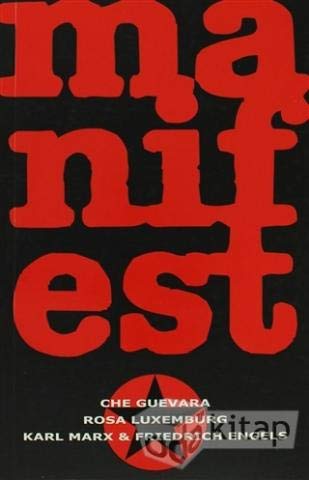
Kominist Manifesto book cover
Kominist Manifesto
2009
First Published
4.33
Average Rating
195
Number of Pages
Avg Rating
4.33
Number of Ratings
3
5 STARS
33%
4 STARS
67%
3 STARS
0%
2 STARS
0%
1 STARS
0%
goodreads

Authors

Karl Marx
Karl Marx
Author · 134 books

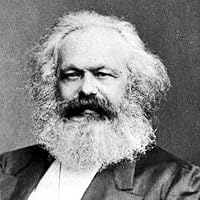
Karl Marx, Ph.D. (University of Jena, 1841) was a social scientist who was a key contributor to the development of Communist theory. Marx was born in Trier, a city then in the Kingdom of Prussia's Province of the Lower Rhine. His father, born Jewish, converted to Protestantism shortly before Karl's birth in response to a prohibition newly introduced into the Rhineland by the Prussian Kingdom on Jews practicing law. Educated at the Universities of Bonn, Jena, and Berlin, Marx founded the Socialist newspaper Vorwärts! in 1844 in Paris. After being expelled from France at the urging of the Prussian government, which "banished" Marx in absentia, Marx studied economics in Brussels. He and Engels founded the Communist League in 1847 and published the Communist Manifesto. After the failed revolution of 1848 in Germany, in which Marx participated, he eventually wound up in London. Marx worked as foreign correspondent for several U.S. publications. His Das Kapital came out in three volumes (1867, 1885 and 1894). Marx organized the International and helped found the Social Democratic Party of Germany. Although Marx was not religious, Bertrand Russell later remarked, "His belief that there is a cosmic force called Dialectical Materialism which governs human history independently of human volitions, is mere mythology" (Portraits from Memory, 1956). Marx once quipped, "All I know is that I am not a Marxist" (according to Engels in a letter to C. Schmidt; see Who's Who in Hell by Warren Allen Smith). D. 1883. Marx began co-operating with Bruno Bauer on editing Hegel's Philosophy of Religion in 1840. Marx was also engaged in writing his doctoral thesis, The Difference Between the Democritean and Epicurean Philosophy of Nature, which he completed in 1841. It was described as "a daring and original piece of work in which Marx set out to show that theology must yield to the superior wisdom of philosophy": the essay was controversial, particularly among the conservative professors at the University of Berlin. Marx decided, instead, to submit his thesis to the more liberal University of Jena, whose faculty awarded him his PhD in April 1841. As Marx and Bauer were both atheists, in March 1841 they began plans for a journal entitled Archiv des Atheismus (Atheistic Archives), but it never came to fruition. Marx has been described as one of the most influential figures in human history. Marx is typically cited, with Émile Durkheim and Max Weber, as one of the three principal architects of modern social science. More: http://en.wikipedia.org/wiki/Karl\_Marx http://plato.stanford.edu/entries/marx/ http://www.econlib.org/library/Enc/bi... http://www.marxists.org/archive/marx/... http://www.historyguide.org/intellect... http://www.bbc.co.uk/history/historic... http://www.spartacus.schoolnet.co.uk/... http://www.britannica.com/EBchecked/t...

Ernesto Che Guevara
Ernesto Che Guevara
Author · 46 books

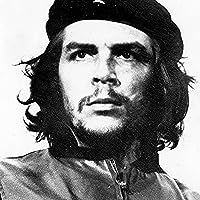
Ernesto "Che" Guevara, commonly known as El Che or simply Che, was a Marxist revolutionary, physician, author, intellectual, guerrilla leader, diplomat, and military theorist. A major figure of the Cuban Revolution, since his death Guevara's stylized visage has become an ubiquitous countercultural symbol and global icon within popular culture. His belief in the necessity of world revolution to advance the interests of the poor prompted his involvement in Guatemala's social reforms under President Jacobo Arbenz, whose eventual CIA-assisted overthrow solidified Guevara's radical ideology. Later, while living in Mexico City, he met Raúl and Fidel Castro, joined their movement, and travelled to Cuba with the intention of overthrowing the U.S.-backed Batista regime. Guevara soon rose to prominence among the insurgents, was promoted to second-in-command, and played a pivotal role in the successful two year guerrilla campaign that topled the Cuban government. After serving in a number of key roles in the new government, Guevara left Cuba in 1965 to foment revolution abroad, first unsuccessfully in Congo-Kinshasa and later in Bolivia, where he was captured by CIA-assisted Bolivian forces and executed. Guevara remains both a revered and reviled historical figure, polarized in the collective imagination in a multitude of biographies, memoirs, essays, documentaries, songs, and films. Time magazine named him one of the 100 most influential people of the 20th century, while an Alberto Korda photograph of him entitled "Guerrillero Heroico," was declared "the most famous photograph in the world" by the Maryland Institute of Art.

548 Market St PMB 65688, San Francisco California 94104-5401 USA
© 2026 Paratext Inc. All rights reserved