Margins
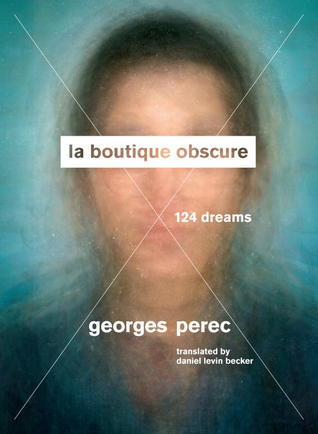
La Boutique Obscure book cover
La Boutique Obscure
124 Dreams
1973
First Published
3.39
Average Rating
272
Number of Pages
The beguiling, never-before-translated dream diary of Georges Perec In "La Boutique Obscure" Perec once again revolutionized literary form, creating the world's first "nocturnal autobiography." From 1968 until 1972—the period when he wrote his most well-known works—the beloved French stylist recorded his dreams. But as you might expect, his approach was far from orthodox. Avoiding the hazy psychoanalysis of most dream journals, he challenged himself to translate his visions and subconscious churnings directly into prose. In laying down the nonsensical leaps of the imagination, he finds new ways to express the texture and ambiguity of dreams—those qualities that prove so elusive. Beyond capturing a universal experience for the first time and being a fine document of literary invention, "La Boutique Obscure" contains the seeds of some of Perec's most famous books. It is also an intimate portrait of one of the great innovators of modern literature.

Avg Rating
3.39
Number of Ratings
410
5 STARS
11%
4 STARS
34%
3 STARS
39%
2 STARS
13%
1 STARS
2%
goodreads

Author

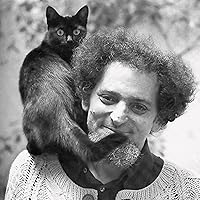
Georges Perec
Georges Perec
Author · 28 books

Georges Perec was a highly-regarded French novelist, filmmaker, and essayist. He was a member of the Oulipo group. Many of his novels and essays abound with experimental wordplay, lists, and attempts at classification, and they are usually tinged with melancholy. Born in a working-class district of Paris, Perec was the only son of Icek Judko and Cyrla (Schulewicz) Peretz, Polish Jews who had emigrated to France in the 1920s. He was a distant relative of the Yiddish writer Isaac Leib Peretz. Perec's first novel, Les Choses (Things: A Story of the Sixties) was awarded the Prix Renaudot in 1965. In 1978, Perec won the prix Médicis for Life: A User's Manual (French title, La Vie mode d'emploi), possibly his best-known work. The 99 chapters of this 600 page piece move like a knight's tour of a chessboard around the room plan of a Paris apartment building, describing the rooms and stairwell and telling the stories of the inhabitants. Cantatrix Sopranica L. is a spoof scientific paper detailing experiments on the "yelling reaction" provoked in sopranos by pelting them with rotten tomatoes. All the references in the paper are multi-lingual puns and jokes, e.g. "(Karybb et Scyla, 1973)". Perec is also noted for his constrained writing: his 300-page novel La disparition (1969) is a lipogram, written without ever using the letter "e". It has been translated into English by Gilbert Adair under the title A Void (1994). The silent disappearance of the letter might be considered a metaphor for the Jewish experience during the Second World War. Since the name 'Georges Perec' is full of 'e's, the disappearance of the letter also ensures the author's own 'disappearance'. His novella Les revenentes (1972) is a complementary univocalic piece in which the letter "e" is the only vowel used. This constraint affects even the title, which would conventionally be spelt Revenantes. An English translation by Ian Monk was published in 1996 as The Exeter Text: Jewels, Secrets, Sex in the collection Three. It has been remarked by Jacques Roubaud that these two novels draw words from two disjoint sets of the French language, and that a third novel would be possible, made from the words not used so far (those containing both "e" and a vowel other than "e"). W ou le souvenir d'enfance, (W, or, the Memory of Childhood, 1975) is a semi-autobiographical work which is hard to classify. Two alternating narratives make up the volume: one, a fictional outline of a totalitarian island country called "W", patterned partly on life in a concentration camp; and the second, descriptions of childhood. Both merge towards the end when the common theme of the Holocaust is explained. Perec was a heavy smoker throughout his life, and was diagnosed with lung cancer in 1981. He died the following year in Ivry-sur-Seine at only forty-five-years old. His ashes are held at the columbarium of the Père Lachaise Cemetery. David Bellos wrote an extensive biography of Perec: Georges Perec: A Life in Words, which won the Académie Goncourt's bourse for biography in 1994.

548 Market St PMB 65688, San Francisco California 94104-5401 USA
© 2025 Paratext Inc. All rights reserved