


Margins
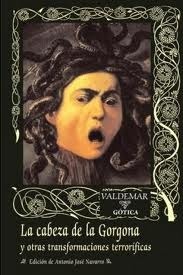
La cabeza de la Gorgona y otras transformaciones terroríficas book cover
La cabeza de la Gorgona y otras transformaciones terroríficas
2011
First Published
3.90
Average Rating
496
Number of Pages

Una bella muchacha que se transforma en una decrépita momia egipcia, una madre rechazada por la sociedad que alumbra hijos deformes y los vende a los “freakshows”, el atroz descubrimiento de que la Gorgona existe… Hombres-lobo, mujeres-pantera y mujeres-serpiente, alienígenas agresivos y polimorfos, brillantes científicos convertidos en mosca y gente poseída por el Demonio… Estos y otros pesadillescos engendros son los protagonistas de La cabeza de la Gorgona y otras transformaciones terroríficas, una antología de cuentos de horror que descubre la fascinación del hombre por los monstruos. Si en la actualidad la teratología –literalmente, «la ciencia de los monstruos»– ha demostrado que las alteraciones/deformaciones del cuerpo humano son resultado de sus errores genéticos, de la variedad de sus mutaciones, en la antigüedad el monstruo era el contravalor de la vida. Rezumaba negativismo, era una cosa demoníaca, un atentado al Orden, que ponía en cuestión todo aquello que se consideraba «normal». Los relatos de autores como Louisa May Alcott, Guy de Maupassant, J.D. Beresford, John W. Campbell Jr., Val Lewton, George Langelaan, Joseph Payne Brennan, Vicente Muñoz Puelles o José María Latorre inciden en esta idea, pero aportan además su peculiar visión dramática, poética, en torno a cuestiones ligadas a la monstruosidad. Es decir, exploran los oscuros márgenes de lo que es humano, convirtiendo a sus monstruos en aquello de nosotros mismos que no queremos aceptar, que no deseamos ver.
Avg Rating
3.90
Number of Ratings
58
5 STARS
24%
4 STARS
47%
3 STARS
26%
2 STARS
2%
1 STARS
2%
goodreads

Authors

George Langelaan
Author · 8 books
He is best known for his 1957 short story The Fly, which was the basis for the 1958 and 1986 sci-fi/horror films and a 2008 opera of the same name.
Kate Prichard
Author · 2 books

Katherine O'Brien Ryall Prichard. See also E. Heron. Mother of H. Hesketh-Prichard, aka H. Heron.

Joseph Payne Brennan
Author · 15 books

Joseph Payne Brennan was an American writer of fantasy and horror fiction, and also a poet. Brennan's first professional sale came in December 1940 with the publication of the poem, "When Snow Is Hung", which appeared in the Christian Science Monitor Home Forum, and he continued writing poetry up until the time of his death. He is the father of Noel-Anne Brennan who has published several fantasy novels.

John W. Campbell Jr.
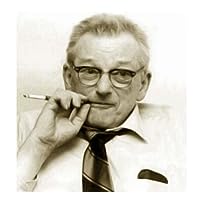
Author · 39 books

John Wood Campbell, Jr. was an influential figure in American science fiction. As editor of Astounding Science Fiction (later called Analog Science Fiction and Fact), from late 1937 until his death, he is generally credited with shaping the so-called Golden Age of Science Fiction. Isaac Asimov called Campbell "the most powerful force in science fiction ever, and for the first ten years of his editorship he dominated the field completely." As a writer, Campbell published super-science space opera under his own name and moody, less pulpish stories as Don A. Stuart. He stopped writing fiction after he became editor of Astounding. Known Pseudonyms/Alternate Names: Don A. Stuart Karl van Campen John Campbell J. W. C., Jr. John W. Campbell John Wood Campbell

H. Hesketh-Prichard
H. Hesketh-Prichard
Author · 6 books

See also H. Heron. Major Hesketh Vernon Prichard, later Hesketh-Prichard, DSO, MC, FRGS, FZS (17 November 1876 – 14 June 1922) was an explorer, adventurer, big-game hunter and marksman who made a significant contribution to sniping practice within the British Army during the First World War. Concerned not only with improving the quality of marksmanship, the measures he introduced to counter the threat of German snipers were credited by a contemporary with saving the lives of over 3,500 Allied soldiers. During his lifetime, he also explored territory never seen before, played cricket at first-class level, including on overseas tours, wrote short stories and novels (one of which was turned into a Douglas Fairbanks film) and was a successful newspaper correspondent and travel writer. His many activities brought him into the highest social and professional circles. Despite a lifetime's passion for shooting, he was an active campaigner for animal welfare and succeeded in seeing legal measures introduced for their protection.

W.C. Morrow
W.C. Morrow
Author · 6 books
William Chambers Morrow (7 July 1854, Selma, Alabama – 1923) was an American writer, now noted mainly for his short stories of horror and suspense.
Guy de Maupassant
Guy de Maupassant
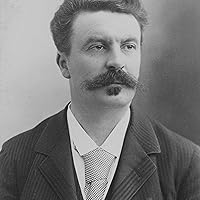
Author · 292 books
Henri René Albert Guy de Maupassant was a popular 19th-century French writer. He is one of the fathers of the modern short story. A protege of Flaubert, Maupassant's short stories are characterized by their economy of style and their efficient effortless dénouement. He also wrote six short novels. A number of his stories often denote the futility of war and the innocent civilians who get crushed in it - many are set during the Franco-Prussian War of the 1870s.
Louisa May Alcott
Louisa May Alcott
Author · 226 books

People best know American writer Louisa May Alcott for Little Women (1868), her largely autobiographical novel. As A.M. Barnard: Behind a Mask, or a Woman's Power (1866) The Abbot's Ghost, or Maurice Treherne's Temptation (1867) A Long Fatal Love Chase (1866 – first published 1995) First published anonymously: A Modern Mephistopheles (1877) Philosopher-teacher Amos Bronson Alcott, educated his four daughters, Anna, Louisa, Elizabeth and May and Abigail May, wife of Amos, reared them on her practical Christianity. Louisa spent her childhood in Boston and Concord, Massachusetts, where visits to library of Ralph Waldo Emerson, excursions into nature with Henry David Thoreau, and theatricals in the barn at Hillside (now "Wayside") of Nathaniel Hawthorne enlightened her days. Like Jo March, her character in Little Women, young Louisa, a tomboy, claimed: "No boy could be my friend till I had beaten him in a race, ... and no girl if she refused to climb trees, leap fences...." Louisa wrote early with a passion. She and her sisters often acted out her melodramatic stories of her rich imagination for friends. Louisa preferred to play the "lurid" parts in these plays, "the villains, ghosts, bandits, and disdainful queens." At 15 years of age in 1847, the poverty that plagued her family troubled her, who vowed: "I will do something by and by. Don’t care what, teach, sew, act, write, anything to help the family; and I’ll be rich and famous and happy before I die, see if I won’t!" Confronting a society that offered little opportunity to women, seeking employment, Louisa determined "...I will make a battering-ram of my head and make my way through this rough and tumble world." Whether as a teacher, seamstress, governess, or household servant, Louisa ably found work for many years. Career of Louisa as an author began with poetry and short stories in popular magazines. In 1854, people published Flower Fables, her first book, at 22 years of age. From her post as a nurse in Washington, District of Columbia, during the Civil War, she wrote home letters that based Hospital Sketches (1863), a milestone along her literary path. Thomas Niles, a publisher in Boston, asked 35-year-old Louisa in 1867 to write "a book for girls." She wrote Little Women at Orchard House from May to July 1868. Louisa and her sisters came of age in the novel, set in New England during Civil War. From her own individuality, Jo March, the first such American juvenile heroine, acted as a living, breathing person rather than the idealized stereotype that then prevailed in fiction of children. Louisa published more than thirty books and collections of stories. Only two days after her father predeceased her, she died, and survivors buried her body in Sleepy Hollow cemetery in Concord.

José María Latorre
José María Latorre
Author · 9 books

José María Latorre Fortuño (Zaragoza, 19 de septiembre de 1945 - 14 de noviembre de 2014) fue un autor de guiones para el cine y televisión, crítico cinematográfico y escritor de terror y suspense español. Con más de treinta títulos publicados, su escritura se caracteriza por su estilo sobrio y un lenguaje cuidado y conciso, fundamental para crear ambientes opresivos, en que ningún detalle sobra. Entre sus cuentos macabros, se cuentan La noche de Cagliostro (imaginaria aventura del célebre médico y ocultista veneciano Alessandro di Cagliostro), Silencio, El lecho vacío y Recuerda mis sueños. Su relato Instantáneas ha sido traducido al polaco e italiano; estas historias se encuentran reunidas en el volumen La noche de Cagliostro y otros relatos de terror, publicado por Valdemar, prestigiosa editorial del género.

548 Market St PMB 65688, San Francisco California 94104-5401 USA
© 2026 Paratext Inc. All rights reserved