Authors

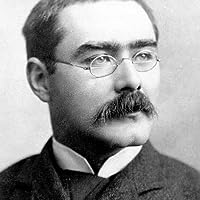
Joseph Rudyard Kipling was a journalist, short-story writer, poet, and novelist. Kipling's works of fiction include The Jungle Book (1894), Kim (1901), and many short stories, including The Man Who Would Be King (1888). His poems include Mandalay (1890), Gunga Din (1890), The Gods of the Copybook Headings (1919), The White Man's Burden (1899), and If— (1910). He is regarded as a major innovator in the art of the short story; his children's books are classics of children's literature; and one critic described his work as exhibiting "a versatile and luminous narrative gift". Kipling was one of the most popular writers in the United Kingdom, in both prose and verse, in the late 19th and early 20th centuries. Henry James said: "Kipling strikes me personally as the most complete man of genius (as distinct from fine intelligence) that I have ever known." In 1907, at the age of 41, he was awarded the Nobel Prize in Literature, making him the first English-language writer to receive the prize, and its youngest recipient to date. He was also sounded out for the British Poet Laureateship and on several occasions for a knighthood, both of which he declined. Awarded the Nobel Prize in Literature in 1907 "in consideration of the power of observation, originality of imagination, virility of ideas and remarkable talent for narration which characterize the creations of this world-famous author." Kipling kept writing until the early 1930s, but at a slower pace and with much less success than before. On the night of 12 January 1936, Kipling suffered a haemorrhage in his small intestine. He underwent surgery, but died less than a week later on 18 January 1936 at the age of 70 of a perforated duodenal ulcer. Kipling's death had in fact previously been incorrectly announced in a magazine, to which he wrote, "I've just read that I am dead. Don't forget to delete me from your list of subscribers."

José María Latorre Fortuño (Zaragoza, 19 de septiembre de 1945 - 14 de noviembre de 2014) fue un autor de guiones para el cine y televisión, crítico cinematográfico y escritor de terror y suspense español. Con más de treinta títulos publicados, su escritura se caracteriza por su estilo sobrio y un lenguaje cuidado y conciso, fundamental para crear ambientes opresivos, en que ningún detalle sobra. Entre sus cuentos macabros, se cuentan La noche de Cagliostro (imaginaria aventura del célebre médico y ocultista veneciano Alessandro di Cagliostro), Silencio, El lecho vacío y Recuerda mis sueños. Su relato Instantáneas ha sido traducido al polaco e italiano; estas historias se encuentran reunidas en el volumen La noche de Cagliostro y otros relatos de terror, publicado por Valdemar, prestigiosa editorial del género.

Guy Newell Boothby was born in Adelaide, South Australia, the son of Thomas Wilde Boothby, a Member of the South Australian House of Assembly. At six years of age he travelled with his mother to England and was educated at Lord Weymouth's Grammar School, Salisbury and at Christ's Hospital, London between 1874 and 1883. When his education was over he returned to Australia where he eventually became secretary to the Mayor of Adelaide, Lewis Cohen. He was dissatisfied with his prospects in Adelaide and consequently he moved to Brisbane where he hoped his prospects would be better. In the meantime he wrote a series of comic operas and plays, all of which were relatively unsuccessful. He was of a roving disposition and at age 24 he travelled across Australia from north to south and later he travelled extensively in the East. By 1894 he had married Rose Alice Bristowe and he and his wife moved to England in that year, which was notable for the publication of his first book, 'On the Wallaby, or, Through the East and Across Australia', an account of his and his brother's travels in Australia. He was given advice and encouragement in his writing by none other than Rudyard Kipling and the year 1895 saw the publication of three novels, the most significant of which was 'A Bid for Fortune: or, Dr Nikola's Vendetta'. This introduced probably his best known character, Dr Nikola, a ruthless, unscrupulous figure, with his ubiquitous large cat, who was to feature in five of his novels over the ensuing years. The book was an instant success and brought him a certain amount of fame. Dr Nikola had first appeared in serial form in the Windosr Magazine. Over the next 10 years he was to write another 50 books and a further five were published posthumously, the last of which was 'In the Power of the Sultan' (1908). He was so prodigious that the story circulated that he spoke his tales into a phonograph, from which they were later transcribed by secretaries. He is perhaps remembered also for introducing one of the early gentlemen crooks of literature when he featured Simon Carne in 'A Prince of Swindlers' in 1897. Carne had originally appeared in Pearson's Magazine and as a gentleman crook he pre-dated another of his kind in A J Raffles by two years. Boothby's novels were often set in Australia (not surprisingly) and were classed as 'fast-paced thrillers' although some felt that although exciting in plot they were 'hastily and carelessly written'. In addition they were said to have been enjoyed by those who 'care for frank sensationalism carried to its furtherest limits'. Despite these comments his books were extremely popular and made him one of the most successful novelists of his day. Boothby, who was also a successful breeder of prize dogs, died suddenly of pneumonia at his home, Winsley Lodge, Watkin Road, Bournemouth in 1905. He left a widow and three children. Gerry Wolstenholme February 2012

See also H. Heron. Major Hesketh Vernon Prichard, later Hesketh-Prichard, DSO, MC, FRGS, FZS (17 November 1876 – 14 June 1922) was an explorer, adventurer, big-game hunter and marksman who made a significant contribution to sniping practice within the British Army during the First World War. Concerned not only with improving the quality of marksmanship, the measures he introduced to counter the threat of German snipers were credited by a contemporary with saving the lives of over 3,500 Allied soldiers. During his lifetime, he also explored territory never seen before, played cricket at first-class level, including on overseas tours, wrote short stories and novels (one of which was turned into a Douglas Fairbanks film) and was a successful newspaper correspondent and travel writer. His many activities brought him into the highest social and professional circles. Despite a lifetime's passion for shooting, he was an active campaigner for animal welfare and succeeded in seeing legal measures introduced for their protection.
Katherine O'Brien Ryall Prichard. See also E. Heron. Mother of H. Hesketh-Prichard, aka H. Heron.

Escritor, novelista, cuentista, profesor de cine y artista plástico hispano-argentino. Su obra, publicada por editoriales como Valdemar de Madrid, Laertes de Barcelona y Green Integer de Estados Unidos, ha sido extensamente divulgada y traducida al inglés, alemán, francés e italiano. En diversos idiomas, Romero tiene publicados alrededor de 150 relatos en papel en revistas literarias, así como unos cincuenta relatos en Internet. Este autor aparece mencionado en la Historia natural de los cuentos de miedo como representante destacado del género fantástico en el ámbito hispanoamericano: Romero «recrea en gran estilo inquietudes cotidianas, a veces kafkianas, claustrofóbicas (en El momento del unicornio, 1996), y a veces grotescamente desaforadas ("El banquete del señorito")». El crítico Miguel Baquero ha señalado como principal virtud del hispano-argentino: «Desde su primera novela, Signos de descomposición, [...] se ha mostrado como un verdadero maestro a la hora de establecer un ritmo "in crescendo" en las narraciones, a la hora de mantener el pulso con una firmeza asombrosa en progresión continua hasta el clímax final». Baquero ha señalado asimismo como uno de sus grandes méritos «la forma en que sabe crear los escenarios de sus novelas: unos ambientes decadentes en los que se da la mano lo más refinado y lo más sórdido de la sociedad, los salones más lujosos y, a unos metros, las cloacas humanas más inmundas, las damiselas vestidas con miriñaques y los monstruos circenses». Su libro de relatos Canción de cuna para una mosca doméstica recibió el "Premio Tiflos de Cuentos" en 1995. En 1998 recibió el "Antonio Machado" de narraciones breves. También le fueron concedidos los premios "Hucha de Plata", en su convocatoria de 1994, y el "Ciudad de Huelva" de 1996.

AKA Arthur Sarsfield Ward (real name); Michael Furey. Arthur Henry Sarsfield Ward (15 February 1883 - 1 June 1959), better known as Sax Rohmer, was a prolific English novelist. He is best remembered for his series of novels featuring the master criminal Dr. Fu Manchu. Born in Birmingham to a working class family, Rohmer initially pursued a career as a civil servant before concentrating on writing full-time. He worked as a poet, songwriter, and comedy sketch writer in Music Hall before creating the Sax Rohmer persona and pursuing a career writing weird fiction. Like his contemporaries Algernon Blackwood and Arthur Machen, Rohmer claimed membership to one of the factions of the qabbalistic Hermetic Order of the Golden Dawn. Rohmer also claimed ties to the Rosicrucians, but the validity of his claims has been questioned. His physician and family friend, Dr. R. Watson Councell may have been his only legitimate connection to such organizations. It is believed that Rohmer may have exaggerated his association in order to boost his literary reputation as an occult writer. His first published work came in 1903, when the short story The Mysterious Mummy was sold to Pearson's Weekly. He gradually transitioned from writing for Music Hall performers to concentrating on short stories and serials for magazine publication. In 1909 he married Rose Elizabeth Knox. He published his first novel Pause! anonymously in 1910. After penning Little Tich in 1911 (as ghostwriter for the Music Hall entertainer) he issued the first Fu Manchu novel, The Mystery of Dr. Fu-Manchu, was serialized from October 1912 - June 1913. It was an immediate success with its fast-paced story of Denis Nayland Smith and Dr. Petrie facing the worldwide conspiracy of the 'Yellow Peril'. The Fu Manchu stories, together with his more conventional detective series characters—Paul Harley, Gaston Max, Red Kerry, Morris Klaw, and The Crime Magnet—made Rohmer one of the most successful and well-paid authors of the 1920s and 1930s. Rohmer also wrote several novels of supernatural horror, including Brood of the Witch-Queen. Rohmer was very poor at managing his wealth, however, and made several disastrous business decisions that hampered him throughout his career. His final success came with a series of novels featuring a female variation on Fu Manchu, Sumuru. After World War II, the Rohmers moved to New York only returning to London shortly before his death. Rohmer died in 1959 due to an outbreak of influenza ("Asian Flu"). There were thirteen books in the Fu Manchu series in all (not counting the posthumous The Wrath of Fu Manchu. The Sumuru series consist of five books. His wife published her own mystery novel, Bianca in Black in 1954 under the pen name, Elizabeth Sax Rohmer. Some editions of the book mistakenly credit her as Rohmer's daughter. Elizabeth Sax Rohmer and Cay Van Ash, her husband's former assistant, wrote a biography of the author, Master of Villainy, published in 1972.


Sir Arthur Ignatius Conan Doyle was born the third of ten siblings on 22 May 1859 in Edinburgh, Scotland. His father, Charles Altamont Doyle, a talented illustrator, was born in England of Irish descent, and his mother, born Mary Foley, was Irish. They were married in 1855. Although he is now referred to as "Conan Doyle", the origin of this compound surname (if that is how he meant it to be understood) is uncertain. His baptism record in the registry of St Mary's Cathedral in Edinburgh gives 'Arthur Ignatius Conan' as his Christian name, and simply 'Doyle' as his surname. It also names Michael Conan as his godfather. At the age of nine Conan Doyle was sent to the Roman Catholic Jesuit preparatory school, Hodder Place, Stonyhurst. He then went on to Stonyhurst College, leaving in 1875. From 1876 to 1881 he studied medicine at the University of Edinburgh. This required that he provide periodic medical assistance in the towns of Aston (now a district of Birmingham) and Sheffield. While studying, Conan Doyle began writing short stories. His first published story appeared in "Chambers' Edinburgh Journal" before he was 20. Following his graduation, he was employed as a ship's doctor on the SS Mayumba during a voyage to the West African coast. He completed his doctorate on the subject of tabes dorsalis in 1885. In 1885 Conan Doyle married Louisa (or Louise) Hawkins, known as "Touie". She suffered from tuberculosis and died on 4 July 1906. The following year he married Jean Elizabeth Leckie, whom he had first met and fallen in love with in 1897. Due to his sense of loyalty he had maintained a purely platonic relationship with Jean while his first wife was alive. Jean died in London on 27 June 1940. Conan Doyle fathered five children. Two with his first wife—Mary Louise (28 January 1889 – 12 June 1976), and Arthur Alleyne Kingsley, known as Kingsley (15 November 1892 – 28 October 1918). With his second wife he had three children—Denis Percy Stewart (17 March 1909 – 9 March 1955), second husband in 1936 of Georgian Princess Nina Mdivani (circa 1910 – 19 February 1987; former sister-in-law of Barbara Hutton); Adrian Malcolm (19 November 1910–3 June 1970) and Jean Lena Annette (21 December 1912–18 November 1997). Conan Doyle was found clutching his chest in the hall of Windlesham, his house in Crowborough, East Sussex, on 7 July 1930. He had died of a heart attack at age 71. His last words were directed toward his wife: "You are wonderful." The epitaph on his gravestone in the churchyard at Minstead in the New Forest, Hampshire, reads: STEEL TRUE BLADE STRAIGHT ARTHUR CONAN DOYLE KNIGHT PATRIOT, PHYSICIAN & MAN OF LETTERS Conan Doyle's house, Undershaw, located in Hindhead, south of London, where he had lived for a decade, had been a hotel and restaurant between 1924 and 2004. It now stands empty while conservationists and Conan Doyle fans fight to preserve it. A statue honours Conan Doyle at Crowborough Cross in Crowborough, where Conan Doyle lived for 23 years. There is also a statue of Sherlock Holmes in Picardy Place, Edinburgh, close to the house where Conan Doyle was born. Series: * Sherlock Holmes
Pseudonym of Kate Prichard. Often wrote with her son H. Hesketh-Prichard, aka H. Heron.
Pseudonym of H. Hesketh-Prichard. Often wrote with his mother Kate Prichard, aka E. Heron

Charles Webster Leadbeater (/ˈlɛdˌbɛtər/; 16 February 1854 – 1 March 1934) was an influential member of the Theosophical Society, author on occult subjects and co-initiator with J. I. Wedgwood of the Liberal Catholic Church. Originally a priest of the Church of England, his interest in spiritualism caused him to end his affiliation with Anglicanism in favour of the Theosophical Society, where he became an associate of Annie Besant. He became a high-ranking officer of the society, but resigned in 1906 amid a scandal. Accusations of his detractors were never proven and, with Besant's assistance, he was readmitted a few years later. Leadbeater went on to write over 69 books and pamphlets that examined in detail the hidden side of life as well as maintain regular speaking engagements. His efforts on behalf of the society assured his status as one of its leading members until his death in 1934.