


Margins
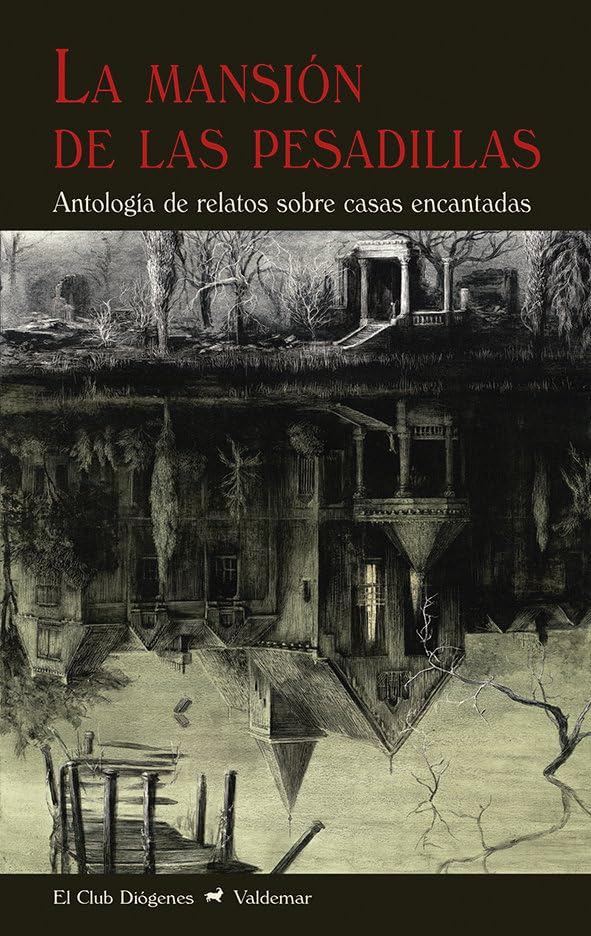
La mansión de las pesadillas book cover
La mansión de las pesadillas
Antología de relatos sobre casas encantadas
2024
First Published
3.98
Average Rating
704
Number of Pages

Hija predilecta del relato de fantasmas, la historia de casa encantada presenta rasgos peculiares que la dotan de una identidad propia, con su evolución y sus clásicos. Ningún escenario está libre de ser embrujado. Castillo o mansión, residencia o apartamento, incluso el camarote de un barco, y hasta una casa de muñecas. En cuanto a la forma, van desde la crónica realista hasta el tono intimista de un diario, a veces incluso con rasgos irónicos o humorísticos. El lector aficionado encontrará en estas historias variantes argumentales que muestran ciertas similitudes aunque cada una de ellas elabora su propia versión en función del estilo del autor, la época... Los veinticinco relatos de esta antología se han agrupado en cuatro apartados en función de la variante temática de cada uno. Así, el TEATRO DEL MIEDO agrupa las historias sobre fenómenos que parecen reproducir escenas trágicas del pasado, LA NOCHE EN VELA los relatos en los que el protagonista decide pasar una noche en una casa encantada para desentrañar su misterio, FANTASMAS DEL PASADO historias que narran apariciones e incidentes relacionados con algún morador ya desaparecido, y finalmente POLTERGEIST, que incluye relatos en los que son los objetos, puertas, mobiliario, etc. de la casa encantada los que parecen cobrar vida. El volumen reúne relatos de autores como Poe, Bierce, Benson, Blackwood, Lovecraft, Charlotte Perkins o Mrs Riddell.
Avg Rating
3.98
Number of Ratings
50
5 STARS
22%
4 STARS
58%
3 STARS
16%
2 STARS
4%
1 STARS
0%
goodreads

Authors

Algernon Blackwood
Algernon Blackwood
Author · 132 books

Blackwood was born in Shooter's Hill (today part of south-east London, but then part of northwest Kent) and educated at Wellington College. His father was a Post Office administrator who, according to Peter Penzoldt, "though not devoid of genuine good-heartedness, had appallingly narrow religious ideas." Blackwood had a varied career, farming in Canada, operating a hotel, as a newspaper reporter in New York City, and, throughout his adult life, an occasional essayist for various periodicals. In his late thirties, he moved back to England and started to write stories of the supernatural. He was very successful, writing at least ten original collections of short stories and eventually appearing on both radio and television to tell them. He also wrote fourteen novels, several children's books, and a number of plays, most of which were produced but not published. He was an avid lover of nature and the outdoors, and many of his stories reflect this. Lovecraft wrote of Blackwood: "He is the one absolute and unquestioned master of weird atmosphere." His powerful story "The Willows," which effectively describes another dimension impinging upon our own, was reckoned by Lovecraft to be not only "foremost of all" Blackwood's tales but the best "weird tale" of all time. Among his thirty-odd books, Blackwood wrote a series of stories and short novels published as John Silence, Physician Extraordinary (1908), which featured a "psychic detective" who combined the skills of a Sherlock Holmes and a psychic medium. Blackwood also wrote light fantasy and juvenile books. The son of a preacher, Blackwood had a life-long interest in the supernatural, the occult, and spiritualism, and firmly believed that humans possess latent psychic powers. The autobiography Episodes Before Thirty (1923) tells of his lean years as a journalist in New York. In the late 1940s, Blackwood had a television program on the BBC on which he read . . . ghost stories!

Charlotte Riddell
Charlotte Riddell
Author · 16 books

See J.H. Riddell Charlotte Riddell aka Mrs J.H. Riddell was a one of the most popular and influential writers of the Victorian period. The author of 56 books, novels and short stories, she was also part owner and editor of the St. James' Magazine, one of the most prestigious literary magazines of the 1860s. (from Wikipedia)

Charlotte Perkins Gilman
Author · 92 books

Charlotte Perkins Gilman, also known as Charlotte Perkins Stetson, was a prominent American sociologist, novelist, writer of short stories, poetry, and nonfiction, and a lecturer for social reform. She was a utopian feminist during a time when her accomplishments were exceptional for women, and she served as a role model for future generations of feminists because of her unorthodox concepts and lifestyle. Her best remembered work today is her semi-autobiographical short story, "The Yellow Wallpaper", which she wrote after a severe bout of post-partum depression. She was the daughter of Frederic B. Perkins.

Ambrose Bierce
Ambrose Bierce
Author · 175 books

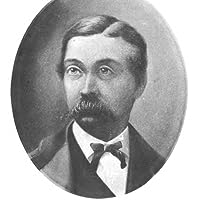
Ambrose Gwinnett Bierce (1842-1914) was an American editorialist, journalist, short story writer, fabulist and satirist. Today, he is best known for his short story, An Occurrence at Owl Creek Bridge and his satirical lexicon, The Devil's Dictionary. The sardonic view of human nature that informed his work – along with his vehemence as a critic, with his motto "nothing matters" – earned him the nickname "Bitter Bierce." Despite his reputation as a searing critic, however, Bierce was known to encourage younger writers, including poet George Sterling and fiction writer W. C. Morrow. Bierce employed a distinctive style of writing, especially in his stories. This style often embraces an abrupt beginning, dark imagery, vague references to time, limited descriptions, the theme of war, and impossible events. Bierce disappeared in December 1913 at the age of 71. He is believed to have traveled to Mexico to gain a firsthand perspective on that country's ongoing revolution. Despite an abundance of theories, Bierce's ultimate fate remains a mystery. He wrote in one of his final letters: "Good-bye. If you hear of my being stood up against a Mexican stone wall and shot to rags, please know that I think it is a pretty good way to depart this life. It beats old age, disease, or falling down the cellar stairs. To be a Gringo in Mexico—ah, that is euthanasia!"

W. F. Harvey
W. F. Harvey
Author · 19 books

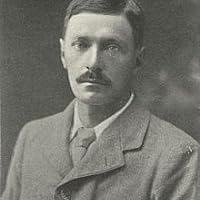
William Fryer Harvey was an English writer of short stories, most notably in the macabre and horror genres. Among his best-known stories are "August Heat" and "The Beast with Five Fingers", described by horror historian Les Daniels as "minor masterpieces". Born into a wealthy Quaker family in Yorkshire, he attended the Quaker schools at Bootham in Yorkshire and at Leighton Park in Reading before going on to Balliol College, Oxford. He took a degree in medicine at Leeds. Ill health dogged him, however, and he devoted himself to personal projects such as his first book of short stories, Midnight House (1910). In World War I he initially joined the Friends' Ambulance Unit, but later served as a surgeon-lieutenant in the Royal Navy, and received the Albert Medal for Lifesaving.[4] Lung damage received during the rescue leading to the award troubled him for the rest of his life, but he continued to write both short stories and his cheerful and good-natured memoir We Were Seven. Harvey was a practicising Quaker. Before the war he had shown interest in adult education, on the staff of the Working Men's College, Fircroft, Selly Oak, Birmingham. He returned to Fircroft in 1920, becoming Warden, but by 1925 ill-health forced his retirement. In 1928 he published a second collection of short stories, The Beast with Five Fingers, and in 1933 he published a third, Moods and Tenses. He lived in Switzerland with his wife for much of this time, but nostalgia for his home country caused his return to England. He moved to Letchworth in 1935 and died there in 1937 at the age of 52. After a funeral service at the local Friends Meeting House Harvey was buried in the churchyard of St Mary the Virgin in Old Letchworth. The release of the film The Beast with Five Fingers (1946), directed by Robert Florey and starring Peter Lorre, inspired by what was perhaps his most famous and praised short story, caused a resurgence of interest in Harvey's work. In 1951 a posthumous fourth collection of his stories, The Arm of Mrs Egan and Other Stories, appeared, including a set of twelve stories left in manuscript at the time of his death, headed "Twelve Strange Cases". In 2009 Wordsworth Editions printed an omnibus volume of Harvey's stories, titled The Beast with Five Fingers, in its Tales of Mystery and the Supernatural series (ISBN 978-1-84022-179-4). The volume contains 45 stories and an introduction by David Stuart Davies. [https://en.m.wikipedia.org/wiki/W.\_F....]

J. Sheridan Le Fanu
J. Sheridan Le Fanu
Author · 112 books
Joseph Thomas Sheridan Le Fanu was an Irish writer of Gothic tales and mystery novels. He was the leading ghost-story writer of the nineteenth century and was central to the development of the genre in the Victorian era. M.R. James described Le Fanu as "absolutely in the first rank as a writer of ghost stories". Three of his best-known works are Uncle Silas, Carmilla and The House by the Churchyard.
E.F. Benson
E.F. Benson
Author · 95 books

Edward Frederic "E. F." Benson was an English novelist, biographer, memoirist, archaeologist and short story writer. E. F. Benson was the younger brother of A.C. Benson, who wrote the words to "Land of Hope and Glory", Robert Hugh Benson, author of several novels and Roman Catholic apologetic works, and Margaret Benson, an author and amateur Egyptologist. Benson died during 1940 of throat cancer at the University College Hospital, London. He is buried in the cemetery at Rye, East Sussex. Last paragraph from Wikipedia

Edward Bulwer-Lytton
Author · 21 books

Edward George Earle Lytton Bulwer-Lytton, 1st Baron Lytton PC, was an English novelist, poet, playwright, and politician. Lord Lytton was a florid, popular writer of his day, who coined such phrases as "the great unwashed", "pursuit of the almighty dollar", "the pen is mightier than the sword", and the infamous incipit "It was a dark and stormy night." He was the youngest son of General William Earle Bulwer of Heydon Hall and Wood Dalling, Norfolk and Elizabeth Barbara Lytton, daughter of Richard Warburton Lytton of Knebworth, Hertfordshire. He had two brothers, William Earle Lytton Bulwer (1799–1877) and Henry, afterwards Lord Dalling and Bulwer. Lord Lytton's original surname was Bulwer, the names 'Earle' and 'Lytton' were middle names. On 20 February 1844 he assumed the name and arms of Lytton by royal licence and his surname then became 'Bulwer-Lytton'. His widowed mother had done the same in 1811. His brothers were always simply surnamed 'Bulwer'.

H.R. Wakefield
H.R. Wakefield
Author · 6 books

Herbert Russell Wakefield was an English short story writer, novelist, publisher, and civil servant. Wakefield is best known for his ghost stories, but he produced work outside the field. He was greatly interested in the criminal mind and wrote two non-fiction criminology studies Used These Alternate Names: H.R. Wakefield, H. Russell Wakefield, Рассел Уэйкфилд?, Herbert Russell Wakefield, Herbert R. Wakefield, Henry Russell Wakefield, Henry R. Wakefield, Sir H. Russell Wakefield, Horace Russell Wakefield

Fitz-James O'Brien
Fitz-James O'Brien
Author · 20 books

He was born Michael O'Brien in County Cork, and was very young when the family moved to Limerick, Ireland. He attended the University of Dublin, and is believed to have been at one time a soldier in the British Army. On leaving college he went to London, and in the course of four years spent his inheritance of £8,000, meanwhile editing a periodical in aid of the World's Fair of 1851. About 1852 he came to the United States, in the process changing his name to Fitz James and thenceforth he devoted his attention to literature. While he was in college he had shown an aptitude for writing verse, and two of his poems—"Loch Ine" and "Irish Castles"—were published in The Ballads of Ireland (1856). His earliest writings in the United States were contributed to The Lantern, which was then edited by John Brougham. Subsequently he wrote for The Home Journal, The New York Times, and The American Whig Review. His first important literary connection was with Harper's Magazine, and beginning in February 1853, with The Two Skulls, he contributed more than sixty articles in prose and verse to that periodical. He likewise wrote for the New York Saturday Press, Putnam's Magazine, Vanity Fair, and The Atlantic Monthly. To the latter he sent "The Diamond Lens" (1858) and "The Wondersmith" (1859), which are unsurpassed as creations of the imagination, and are unique among short magazine stories. "The Diamond Lens" is probably his most famous short story, and tells the story of a scientist who invents a powerful microscope discovers a beautiful female in a microscopic world inside a drop of water. "The Wondersmith" is an early predecessor of robot rebellion, where toys possessed by evil spirits are transformed into living automatons who turns against their creators. His 1858 short called "Horrors Unknown" has been referred to as "the single most striking example of surrealistic fiction to pre-date Alice in Wonderland" (Sam Moskowitz, 1971). "What Was It? A Mystery" (1859) is one of the earliest known examples of invisibility in fiction. His pen was also employed in writing plays. For James W. Wallack he made A Gentleman from Ireland, that held the boards for a generation. He also wrote and adapted other pieces for the theatres, but they had a shorter existence. In New York he at once associated with the brilliant set of Bohemians of that day, among whom he was ranked as the most able. At the weekly dinners that were given by John Brougham, or at the nightly suppers at Pfaff's on Broadway, he was the soul of the entertainment. In 1861 he joined the 7th regiment of the New York National Guard, hoping to be sent to the front, and he was in Camp Cameron before Washington for six weeks. When his regiment returned to New York he received an appointment on the staff of General Frederick W. Lander. He was severely wounded in a skirmish on February 26, 1862, and lingered until April, when he died at Cumberland, Maryland. From Wikipedia.

H.P. Lovecraft
H.P. Lovecraft
Author · 650 books

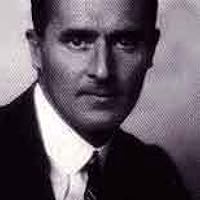
Howard Phillips Lovecraft, of Providence, Rhode Island, was an American author of horror, fantasy and science fiction. Lovecraft's major inspiration and invention was cosmic horror: life is incomprehensible to human minds and the universe is fundamentally alien. Those who genuinely reason, like his protagonists, gamble with sanity. Lovecraft has developed a cult following for his Cthulhu Mythos, a series of loosely interconnected fictions featuring a pantheon of human-nullifying entities, as well as the Necronomicon, a fictional grimoire of magical rites and forbidden lore. His works were deeply pessimistic and cynical, challenging the values of the Enlightenment, Romanticism and Christianity. Lovecraft's protagonists usually achieve the mirror-opposite of traditional gnosis and mysticism by momentarily glimpsing the horror of ultimate reality. Although Lovecraft's readership was limited during his life, his reputation has grown over the decades. He is now commonly regarded as one of the most influential horror writers of the 20th Century, exerting widespread and indirect influence, and frequently compared to Edgar Allan Poe. — Wikipedia

Ralph Adams Cram
Author · 9 books
Ralph Adams Cram (December 16, 1863 – September 22, 1942) was a prolific and influential American architect of collegiate and ecclesiastical buildings, often in the Gothic Revival style. Cram & Ferguson and Cram, Goodhue & Ferguson are partnerships in which he worked.
William Hope Hodgson
Author · 69 books
William Hope Hodgson was an English author. He produced a large body of work, consisting of essays, short fiction, and novels, spanning several overlapping genres including horror, fantastic fiction, and science fiction. Early in his writing career he dedicated effort to poetry, although few of his poems were published during his lifetime. He also attracted some notice as a photographer and achieved some renown as a bodybuilder. Hodgson served with the British Army durng World War One. He died, at age 40, at Ypres, killed by German artillery fire.
548 Market St PMB 65688, San Francisco California 94104-5401 USA
© 2026 Paratext Inc. All rights reserved