



Margins
La signora delle camelie - La traviata book cover
La signora delle camelie - La traviata
2013
First Published
4.07
Average Rating
301
Number of Pages

La presente edizione contiene il romanzo di Alexandre Dumas figlio “La signora delle camelie”, e il libretto dell’opera di Giuseppe Verdi, “La traviata”, che il librettista Francesco Maria Piave trasse da Dumas. Una delle più grandi storie d’amore di tutti i tempi, "La signora delle Camelie-Traviata" ha affascinato generazioni di lettori e di appassionati d’opera in tutto il mondo. La trama del romanzo Marguerite Gautier (nell’opera Voletta Valery) è una delle cortigiane più ambite di Parigi. Il giovane Armand Duval (Alfredo Germont nell’opera) s’innamora di lei. I due diventano amanti. Ma le convenzioni sociali costringono la protagonista a rinunciare al suo amore per salvaguardare l’onore della famiglia di Armand. Con grande sofferenza, la giovane ritorna alla vita mondana. Ma la tisi di cui soffre la consumerà. Tra i soggetti dell’Ottocento letterario di maggior successo e longevità, “La signora delle Camelie” può considerarsi il più popolare mito femminile d’epoca borghese. Il ritratto sottile e commovente che Dumas fa della sua eroina, cortigiana riscattata dal sacrificio e dall’amore, verrà poi trasposto in musica da Giuseppe Verdi, che le donerà l’immortalità sulle ali del canto. Questo ebook contiene: - La signora delle Camelie (romanzo di Alexandre Dumas figlio) - La traviata (libretto di Francesco Maria Piave per l'opera di Giuseppe Verdi)
Avg Rating
4.07
Number of Ratings
60
5 STARS
45%
4 STARS
28%
3 STARS
18%
2 STARS
5%
1 STARS
3%
goodreads

Author

Alexandre Dumas fils
Author · 5 books

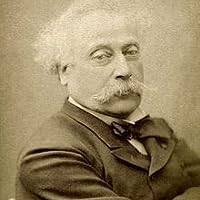
Alexandre Dumas (fils) (son) was born in Paris, France, the illegitimate child of Marie-Laure-Catherine Labay (1794-1868), a dressmaker, and novelist Alexandre Dumas. During 1831 his father legally recognized him and ensured that the young Dumas received the best education possible at the Institution Goubaux and the Collège Bourbon. At that time, the law allowed the elder Dumas to take the child away from his mother. Her agony inspired Dumas fils to write about tragic female characters. In almost all of his writings, he emphasized the moral purpose of literature and in his play The Illegitimate Son (1858) he espoused the belief that if a man fathers an illegitimate child then he has an obligation to legitimize the child and marry the woman. Dumas' paternal great-grandparents were a French nobleman and a Haitian woman. In boarding schools, Dumas fils was constantly taunted by his classmates. These issues all profoundly influenced his thoughts, behaviour, and writing. During 1844 Dumas moved to Saint-Germain-en-Laye to live with his father. There, he met Marie Duplessis, a young courtesan who would be the inspiration for his romantic novel The Lady of the Camellias. Adapted into a play, it was titled in English (especially in the United States) as Camille and is the basis for Verdi's 1853 opera, La Traviata. Although he admitted that he had done the adaptation because he needed the money, he had a great success with the play. Thus began the career of Dumas fils as a dramatist, which was not only more renowned than that of his father during his lifetime but also dominated the serious French stage for most of the second half of the 19th century. After this, he virtually abandoned writing novels (though his semi-autobiographical L'Affaire Clemenceau (1867) achieved some success). On 31 December 1864, in Moscow, Dumas married Nadjeschda von Knorring (1826 – April 1895), daughter of Johan Reinhold von Knorring and wife, and widow of Alexander, Prince Naryschkine. The couple had two daughters: Marie-Alexandrine-Henriette Dumas, born 20 November 1860, who married Maurice Lippmann and was the mother of Serge Napoléon Lippmann (1886–1975) and Auguste Alexandre Lippmann (1881–1960); and Jeanine Dumas (3 May 1867–), who married Ernest d' Hauterive (1864–1957), son of George Lecourt d' Hauterive and wife (married in 1861) Léontine de Leusse. After Naryschkine's death, he married in June 1895 Henriette Régnier de La Brière (1851–1934), without issue. During 1874, he was admitted to the Académie française, and in 1894 he was awarded the Légion d'honneur. Alexandre Dumas fils died at Marly-le-Roi, Yvelines, on November 27, 1895 and was interred in the Cimetière de Montmartre in Paris. His grave is, perhaps coincidentally, only some 100 metres away from that of Marie Duplessis.

548 Market St PMB 65688, San Francisco California 94104-5401 USA
© 2026 Paratext Inc. All rights reserved