


Margins
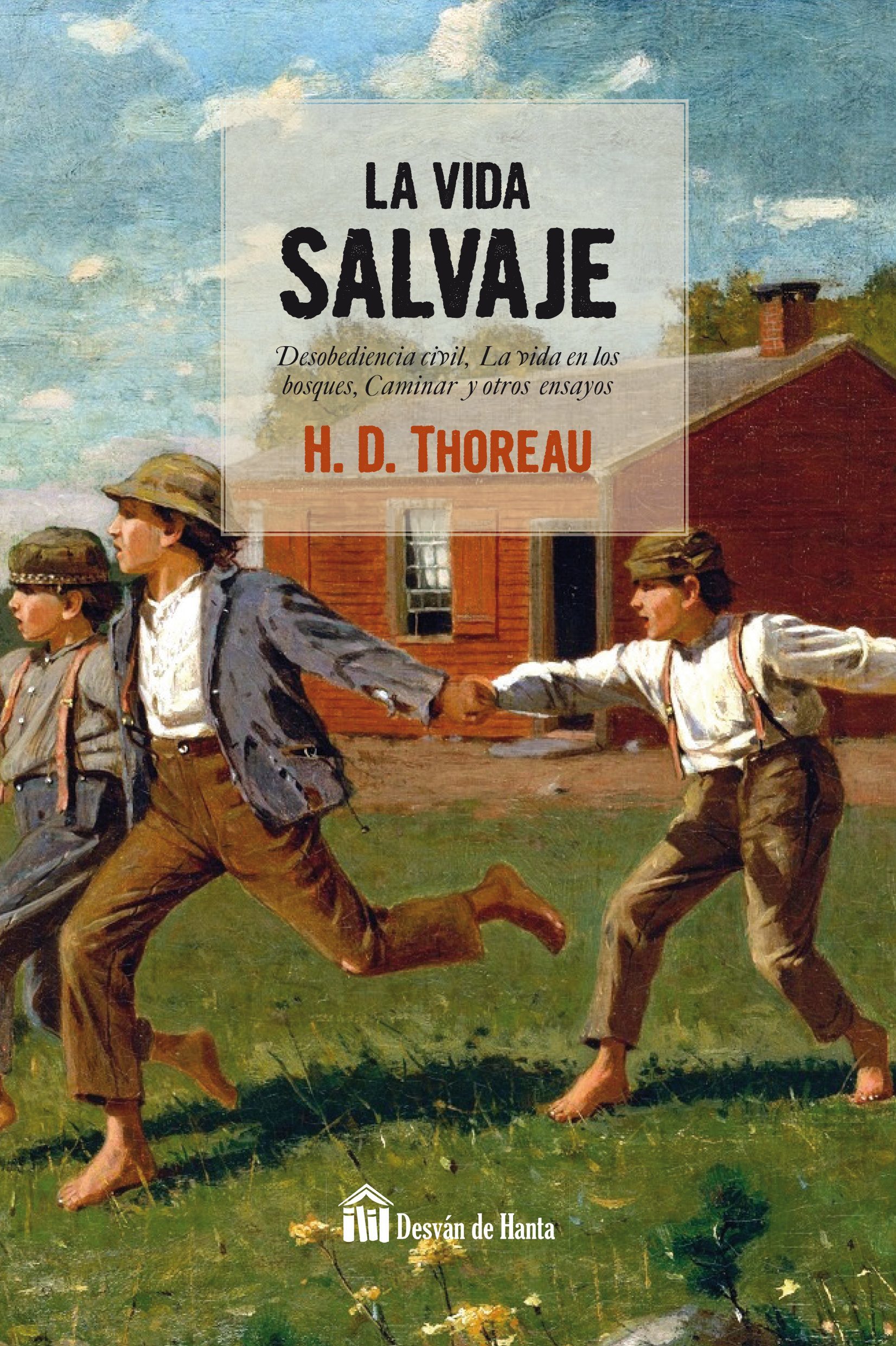
La vida salvaje book cover
La vida salvaje
2016
First Published
3.80
Average Rating
357
Number of Pages

En la semblanza que precede a esta obra, R. W. Emerson, su amigo del alma y la persona que mejor lo conoció, recuerda que Thoreau «en poco tiempo agotó todo lo que puede dar de sí este mundo». La vida en los bosques de Thoreau es, ciertamente, una de las más memorables expresiones del malestar en la civilización, el momento fundacional una nueva cultura, a veces denominada contracultura. El ejemplo de Thoreau, la valentía de atreverse a ser uno mismo huyendo del engranaje social, la integridad de sus principios políticos (Thoreau se negó a pagar impuestos debido a su oposición a la guerra contra México y a la esclavitud en Estados Unidos, por lo que fue encarcelad), su extraordinaria sensibilidad para captar «el poema de la creación» y su empatía con la Naturaleza, su comunión auténtica con la vida salvaje, inspiró a personajes como Walt Withman, Leo Tolstói, Luther King o Mahatma Gandhi, y Henry Miller dijo de él: «Visto desde la cumbre de nuestra decadencia, casi nos parece un antiguo romano. La palabra virtud recobra su significado cuando se la asocia a su nombre... Abriendo los ojos, descubrió que la vida proporciona todo lo necesario para la paz y la felicidad del hombre; solamente hace falta usar lo que tenemos al alcance de la mano».
Avg Rating
3.80
Number of Ratings
5
5 STARS
20%
4 STARS
40%
3 STARS
40%
2 STARS
0%
1 STARS
0%
goodreads

Author

Henry David Thoreau
Henry David Thoreau
Author · 105 books

Henry David Thoreau (born David Henry Thoreau) was an American author, naturalist, transcendentalist, tax resister, development critic, philosopher, and abolitionist who is best known for Walden, a reflection upon simple living in natural surroundings, and his essay, Civil Disobedience, an argument for individual resistance to civil government in moral opposition to an unjust state. Thoreau's books, articles, essays, journals, and poetry total over 20 volumes. Among his lasting contributions were his writings on natural history and philosophy, where he anticipated the methods and findings of ecology and environmental history, two sources of modern day environmentalism. In 1817, Henry David Thoreau was born in Massachusetts. He graduated from Harvard University in 1837, taught briefly, then turned to writing and lecturing. Becoming a Transcendentalist and good friend of Emerson, Thoreau lived the life of simplicity he advocated in his writings. His two-year experience in a hut in Walden, on land owned by Emerson, resulted in the classic, Walden: Life in the Woods (1854). During his sojourn there, Thoreau refused to pay a poll tax in protest of slavery and the Mexican war, for which he was jailed overnight. His activist convictions were expressed in the groundbreaking On the Duty of Civil Disobedience (1849). In a diary he noted his disapproval of attempts to convert the Algonquins "from their own superstitions to new ones." In a journal he noted dryly that it is appropriate for a church to be the ugliest building in a village, "because it is the one in which human nature stoops to the lowest and is the most disgraced." (Cited by James A. Haught in 2000 Years of Disbelief.) When Parker Pillsbury sought to talk about religion with Thoreau as he was dying from tuberculosis, Thoreau replied: "One world at a time." Thoreau's philosophy of nonviolent resistance influenced the political thoughts and actions of such later figures as Leo Tolstoy, Mohandas K. Gandhi, and Martin Luther King, Jr. D. 1862. More: http://plato.stanford.edu/entries/tho... http://thoreau.eserver.org/ http://en.wikipedia.org/wiki/Henry\_Da... http://transcendentalism-legacy.tamu.... http://www.biography.com/people/henry...

548 Market St PMB 65688, San Francisco California 94104-5401 USA
© 2026 Paratext Inc. All rights reserved