


Margins
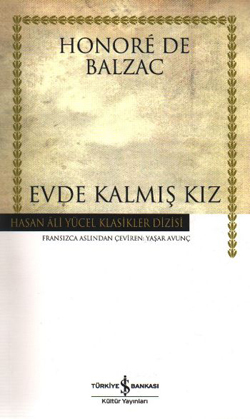
La vieille fille book cover
La vieille fille
1836
First Published
3.33
Average Rating
136
Number of Pages

Part of Series

Une petite ville assoupie dans ses habitudes, un microcosme de l’ancienne France, une vieille fille riche, Marie-Victoire Cormon, qui hésite entre deux prétendants, le chevalier de Valois et l’ex-citoyen banquier du Bousquier. Le chevalier est vieux, coquet, sans un sou, fidèle aux bourbons. Du Bousquier est arriviste, libéral, au bord de la ruine mais encore à peu près présentable. Grave conflit, lutte de clans : la monarchie contre la révolution, l’ancien temps et sa noblesse contre la richesse acquise dans la tourmente révolutionnaire. Et la ville se divise, car Mademoiselle Cormon est sans doute la plus importante fortune du pays. Or l’âge venant, cette dernière a le désir de fonder un foyer et d’enfanter avant qu’il ne soit trop tard. Le chevalier ou le révolutionnaire ? La manière ou l’opportunisme ? Comment choisir alors qu’en face ses prétendants ne visent que sa fortune ? Balzac trace dans ce roman l’une de ses plus fines descriptions de la société provinciale française : incisive, profonde, détaillée. C’est sans doute dans cette œuvre qu’il saisit le plus finement l’âme de la société française de l’époque et qui, aujourd’hui, lui survit grandement.

Avg Rating
3.33
Number of Ratings
411
5 STARS
11%
4 STARS
31%
3 STARS
41%
2 STARS
13%
1 STARS
4%
goodreads

Author

Honore de Balzac
Honore de Balzac
Author · 173 books

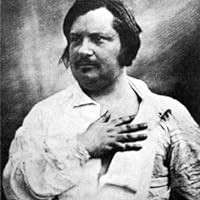
Honoré de Balzac was a nineteenth-century French novelist and playwright. His magnum opus was a sequence of almost 100 novels and plays collectively entitled La Comédie humaine, which presents a panorama of French life in the years after the fall of Napoléon Bonaparte in 1815. Due to his keen observation of fine detail and unfiltered representation of society, Balzac is regarded as one of the founders of realism in European literature. He is renowned for his multi-faceted characters; even his lesser characters are complex, morally ambiguous and fully human. Inanimate objects are imbued with character as well; the city of Paris, a backdrop for much of his writing, takes on many human qualities. His writing influenced many famous authors, including the novelists Marcel Proust, Émile Zola, Charles Dickens, Gustave Flaubert, Henry James and Jack Kerouac, as well as important philosophers such as Friedrich Engels. Many of Balzac's works have been made into films, and they continue to inspire other writers. An enthusiastic reader and independent thinker as a child, Balzac had trouble adapting himself to the teaching style of his grammar school. His willful nature caused trouble throughout his life, and frustrated his ambitions to succeed in the world of business. When he finished school, Balzac was apprenticed as a legal clerk, but he turned his back on law after wearying of its inhumanity and banal routine. Before and during his career as a writer, he attempted to be a publisher, printer, businessman, critic, and politician. He failed in all of these efforts. La Comédie Humaine reflects his real-life difficulties, and includes scenes from his own experience. Balzac suffered from health problems throughout his life, possibly due to his intense writing schedule. His relationship with his family was often strained by financial and personal drama, and he lost more than one friend over critical reviews. In 1850, he married Ewelina Hańska, his longtime paramour; he passed away five months later.

548 Market St PMB 65688, San Francisco California 94104-5401 USA
© 2025 Paratext Inc. All rights reserved